
肝脏修复与再生的分子机制:从生理学到治疗学
Molecular mechanisms in liver repair and regeneration: from physiology to therapeutics.
作者信息
Ma Xiao, Huang Tengda, Chen Xiangzheng, Li Qian, Liao Mingheng, Fu Li, Huang Jiwei, Yuan Kefei, Wang Zhen, Zeng Yong
机构信息
Division of Liver Surgery, Department of General Surgery and Laboratory of Liver Surgery, and State Key Laboratory of Biotherapy, West China Hospital, Sichuan University, Chengdu, Sichuan Province, China.
出版信息
Signal Transduct Target Ther. 2025 Feb 8;10(1):63. doi: 10.1038/s41392-024-02104-8.
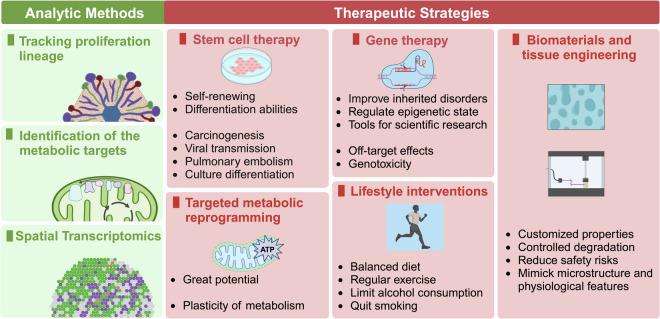
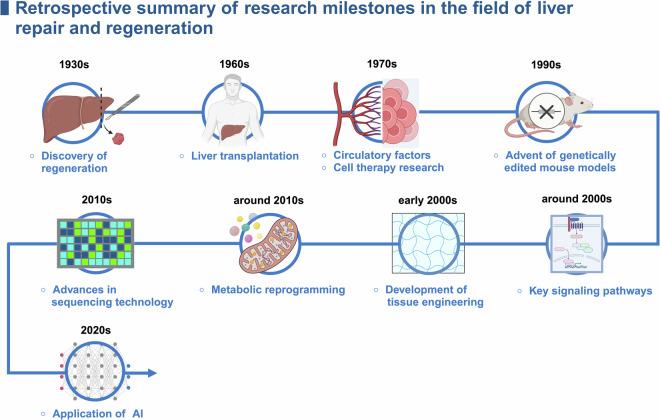
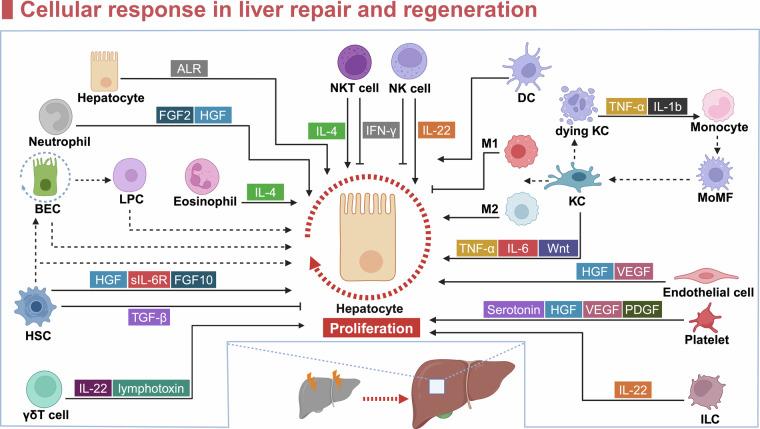
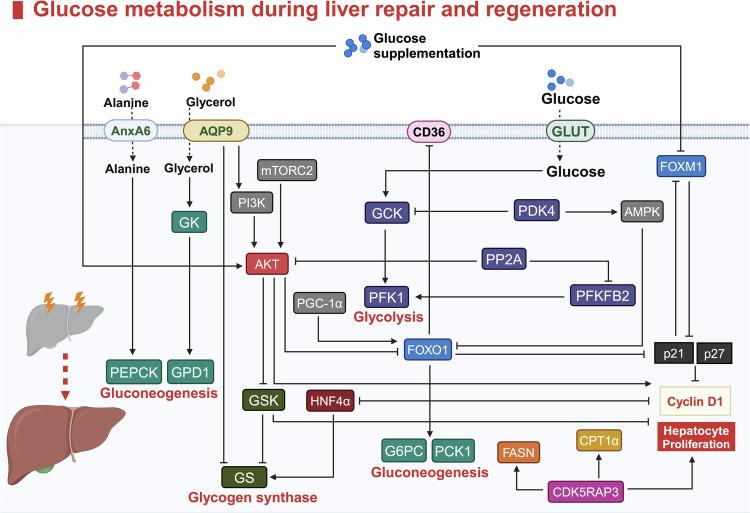
Liver repair and regeneration are crucial physiological responses to hepatic injury and are orchestrated through intricate cellular and molecular networks. This review systematically delineates advancements in the field, emphasizing the essential roles played by diverse liver cell types. Their coordinated actions, supported by complex crosstalk within the liver microenvironment, are pivotal to enhancing regenerative outcomes. Recent molecular investigations have elucidated key signaling pathways involved in liver injury and regeneration. Viewed through the lens of metabolic reprogramming, these pathways highlight how shifts in glucose, lipid, and amino acid metabolism support the cellular functions essential for liver repair and regeneration. An analysis of regenerative variability across pathological states reveals how disease conditions influence these dynamics, guiding the development of novel therapeutic strategies and advanced techniques to enhance liver repair and regeneration. Bridging laboratory findings with practical applications, recent clinical trials highlight the potential of optimizing liver regeneration strategies. These trials offer valuable insights into the effectiveness of novel therapies and underscore significant progress in translational research. In conclusion, this review intricately links molecular insights to therapeutic frontiers, systematically charting the trajectory from fundamental physiological mechanisms to innovative clinical applications in liver repair and regeneration.
肝脏修复和再生是对肝损伤至关重要的生理反应,通过复杂的细胞和分子网络进行调控。本综述系统地阐述了该领域的进展,强调了不同肝细胞类型所发挥的重要作用。它们在肝脏微环境内复杂的相互作用支持下的协同作用,对于提高再生效果至关重要。最近的分子研究阐明了参与肝损伤和再生的关键信号通路。从代谢重编程的角度来看,这些通路突出了葡萄糖、脂质和氨基酸代谢的变化如何支持肝脏修复和再生所必需的细胞功能。对不同病理状态下再生变异性的分析揭示了疾病状况如何影响这些动态过程,为开发增强肝脏修复和再生的新型治疗策略和先进技术提供了指导。将实验室研究结果与实际应用相结合,最近的临床试验突出了优化肝脏再生策略的潜力。这些试验为新型疗法的有效性提供了有价值的见解,并强调了转化研究的重大进展。总之,本综述将分子见解与治疗前沿紧密联系起来,系统地描绘了从基本生理机制到肝脏修复和再生创新临床应用的轨迹。




 Zotero 插件