
PRMT5在高危神经母细胞瘤中驱动的与癌症相关的持续性可变RNA剪接事件。
Sustained cancer-relevant alternative RNA splicing events driven by PRMT5 in high-risk neuroblastoma.
作者信息
Bate-Eya Laurel Tabe, Albayrak Gulsah, Carr Simon Mark, Shrestha Amit, Kanapin Alexander, Samsonova Anastasia, La Thangue Nicholas Barrie
机构信息
Laboratory of Cancer Biology, Department of Oncology, University of Oxford, UK.
Institute of Translational Biomedicine, Saint Petersburg State University, Russia.
出版信息
Mol Oncol. 2025 Mar;19(3):741-763. doi: 10.1002/1878-0261.13702. Epub 2024 Jul 17.
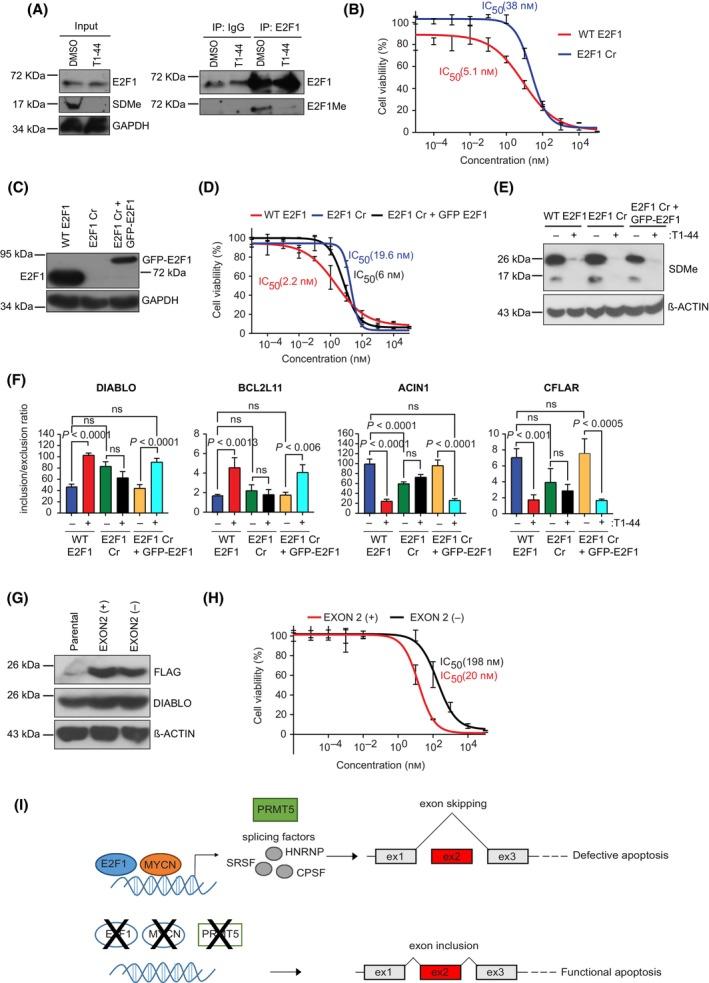
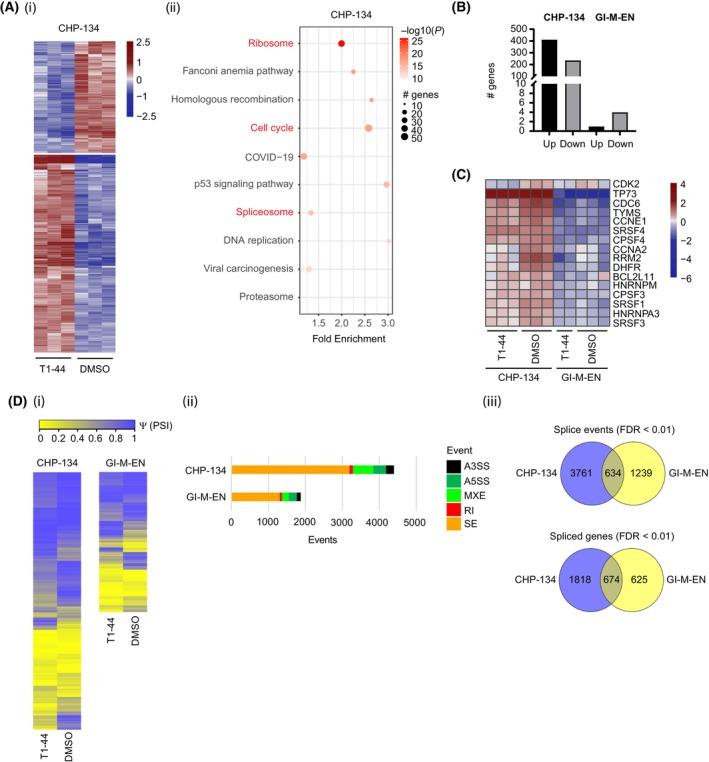
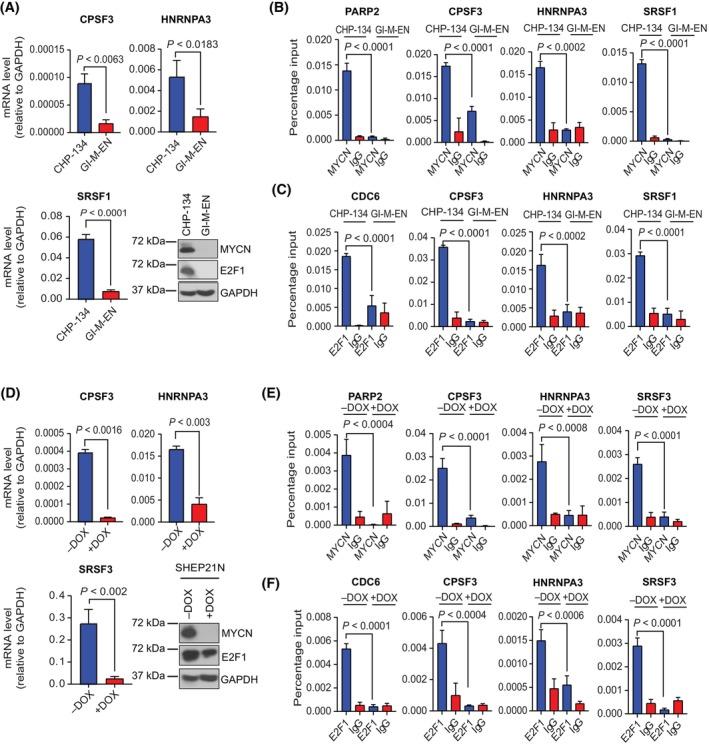
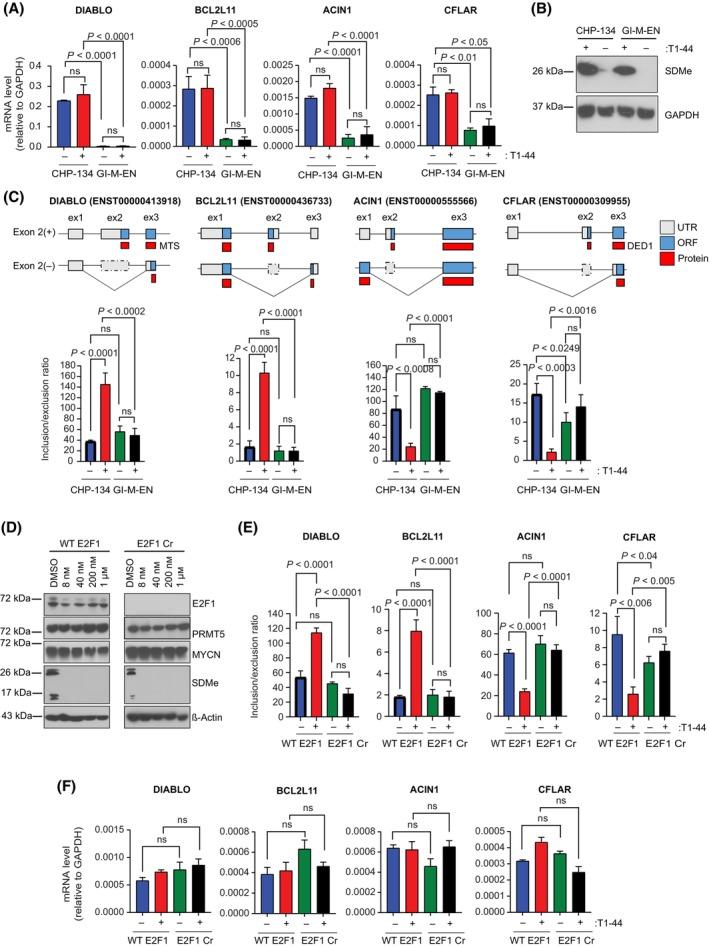
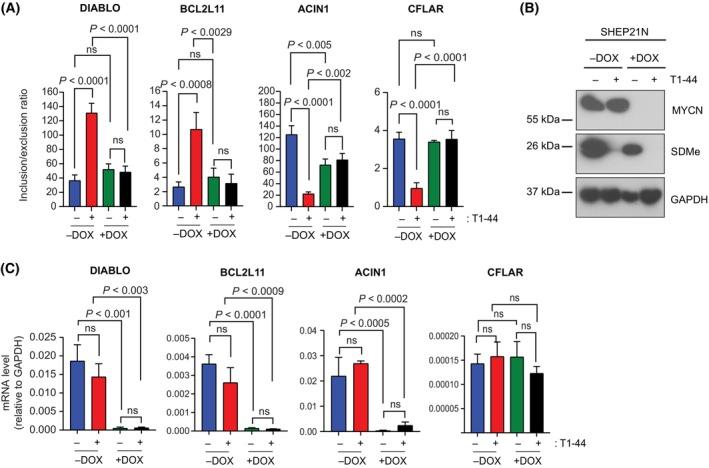
Protein arginine methyltransferase 5 (PRMT5) is over-expressed in a wide variety of cancers and is implicated as having a key oncogenic role, achieved in part through its control of the master transcription regulator E2F1. We investigated the relevance of PRMT5 and E2F1 in neuroblastoma (NB) and found that elevated expression of PRMT5 and E2F1 occurs in poor prognosis high-risk disease and correlates with an amplified Myelocytomatosis viral-related oncogene, neuroblastoma-derived (MYCN) gene. Our results show that MYCN drives the expression of splicing factor genes that, together with PRMT5 and E2F1, lead to a deregulated alternative RNA splicing programme that impedes apoptosis. Pharmacological inhibition of PRMT5 or inactivation of E2F1 restores normal splicing and renders NB cells sensitive to apoptosis. Our findings suggest that a sustained cancer-relevant alternative RNA splicing programme desensitises NB cells to apoptosis, and identify PRMT5 as a potential therapeutic target for high-risk disease.
蛋白质精氨酸甲基转移酶5(PRMT5)在多种癌症中过度表达,并被认为具有关键的致癌作用,部分原因是它对主要转录调节因子E2F1的控制。我们研究了PRMT5和E2F1在神经母细胞瘤(NB)中的相关性,发现PRMT5和E2F1的高表达出现在预后不良的高危疾病中,并且与扩增的成髓细胞瘤病毒相关癌基因、神经母细胞瘤衍生(MYCN)基因相关。我们的结果表明,MYCN驱动剪接因子基因的表达,这些基因与PRMT5和E2F1一起导致失调的可变RNA剪接程序,从而阻碍细胞凋亡。PRMT5的药理学抑制或E2F1的失活可恢复正常剪接,并使NB细胞对细胞凋亡敏感。我们的研究结果表明,持续的与癌症相关的可变RNA剪接程序使NB细胞对细胞凋亡不敏感,并确定PRMT5为高危疾病的潜在治疗靶点。


 Zotero 插件