
被忽视、被轻视和被淡化:免疫反应的逆转。
Overlooked, dismissed, and downplayed: reversion of immunoreactivity.
机构信息
Victorian Tuberculosis Program, Royal Melbourne Hospital, at the Peter Doherty Institute for Infection and Immunity, Melbourne, Australia
TB Modelling Group, TB Centre, London School of Hygiene and Tropical Medicine, London, UK.
出版信息
Eur Respir Rev. 2024 Jul 24;33(173). doi: 10.1183/16000617.0007-2024. Print 2024 Jul.
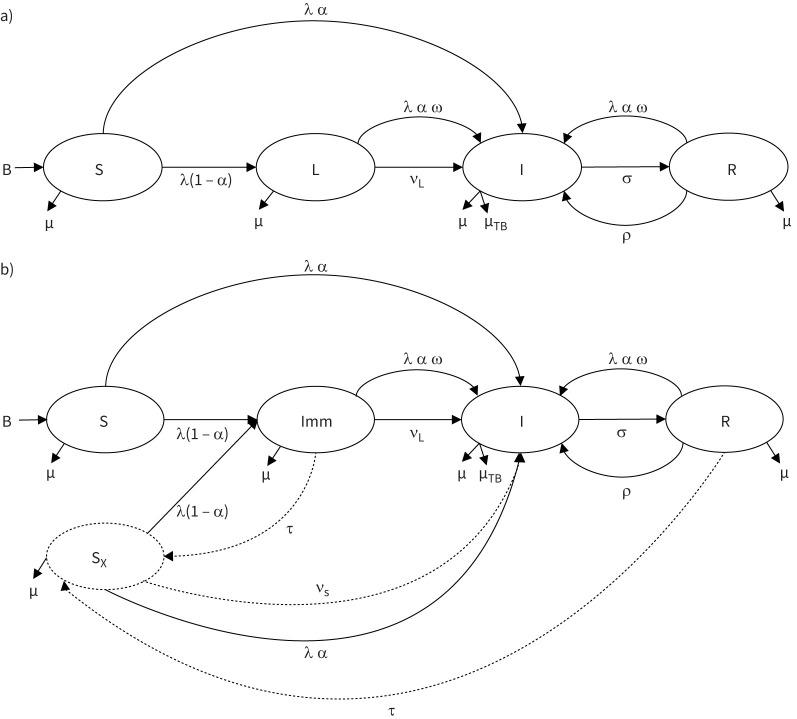
Tuberculosis (TB) is caused by (). Following infection, immune responses to antigens can be measured using the tuberculin skin test or an interferon-γ release assay. The gain of immunoreactivity, a change from a negative to a positive tuberculin skin test or interferon-γ release assay result, is called conversion and has long been used as a measure of exposure. However, the loss of immunoreactivity (reversion; a positive followed by a negative result) has often been overlooked. Instead, in clinical and epidemiological circles, immunoreactivity is commonly considered to persist lifelong and confer a lifetime of disease risk. We present a critical review, describing the evidence for reversion from cohort studies, ecological studies and studies of TB progression risk. We outline the inconsistent reasons why reversion has been dismissed from common understanding and present evidence demonstrating that, just as conversion predominantly indicates prior exposure to antigens, so its opposite, reversion, suggests the reduction or absence of exposure (endogenous or exogenous). immunoreactivity is dynamic in both individuals and populations and this is why it is useful for stratifying short-term TB progression risk. The neglect of reversion has shaped TB research and policy at all levels, influencing clinical management and skewing infection risk estimation and transmission modelling, leading to an underestimation of the contribution of re-exposure to the burden of TB, a serious oversight for an infectious disease. More than a century after it was first demonstrated, it is time to incorporate reversion into our understanding of the natural history of TB.
结核病(TB)是由()引起的。感染后,可以使用结核菌素皮肤试验或干扰素-γ释放试验来测量针对()抗原的免疫反应。()免疫反应的获得,即从结核菌素皮肤试验或干扰素-γ释放试验结果阴性变为阳性的变化,称为转化,长期以来一直被用作()暴露的衡量标准。然而,()免疫反应的丧失(逆转;阳性后转为阴性结果)往往被忽视。相反,在临床和流行病学领域,()免疫反应通常被认为是终身存在的,并带来终身的疾病风险。我们提出了一个批判性的回顾,描述了从队列研究、生态学研究和结核病进展风险研究中得出的逆转证据。我们概述了为什么逆转一直被排除在普遍理解之外的不一致原因,并提出了证据表明,正如转化主要表明先前接触过()抗原一样,其相反的情况,即逆转,表明接触(内源性或外源性)的减少或消失。()免疫反应在个体和人群中都是动态的,这就是为什么它可以用于分层短期结核病进展风险。对逆转的忽视已经影响了各个层面的结核病研究和政策,影响了临床管理,并扭曲了()感染风险估计和传播模型,导致对再暴露对结核病负担的贡献的低估,这是对传染病的严重忽视。在首次证明这一现象一个多世纪后,现在是时候将逆转纳入我们对结核病自然史的理解了。


 Zotero 插件