
现代细菌对抗菌肽耐药性的分子机制:最新综述
Molecular Mechanisms of Bacterial Resistance to Antimicrobial Peptides in the Modern Era: An Updated Review.
作者信息
Tajer Layla, Paillart Jean-Christophe, Dib Hanna, Sabatier Jean-Marc, Fajloun Ziad, Abi Khattar Ziad
机构信息
Laboratory of Applied Biotechnology (LBA3B), Azm Center for Research in Biotechnology and Its Applications, Department of Cell Culture, EDST, Lebanese University, Tripoli 1300, Lebanon.
CNRS, Architecture et Réactivité de l'ARN, UPR 9002, Université de Strasbourg, 2 Allée Konrad Roentgen, F-67000 Strasbourg, France.
出版信息
Microorganisms. 2024 Jun 21;12(7):1259. doi: 10.3390/microorganisms12071259.
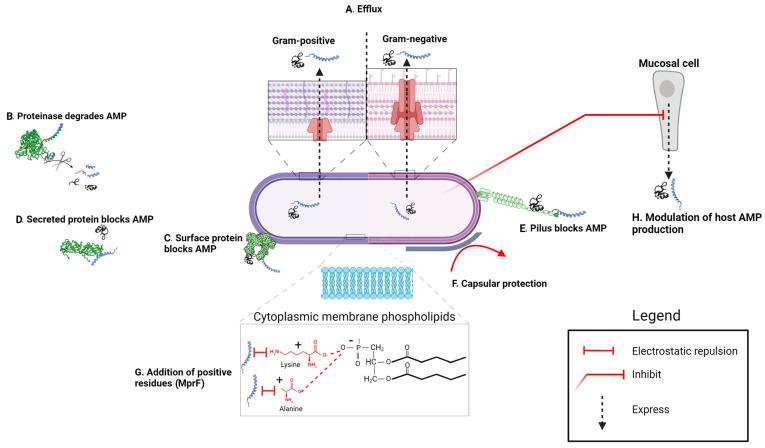
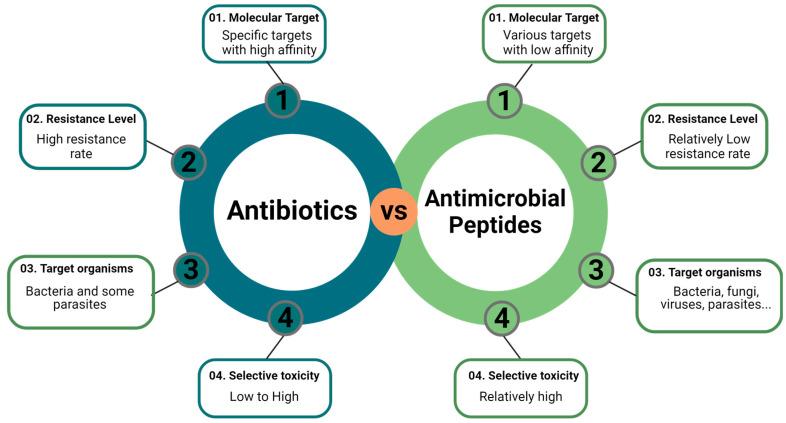
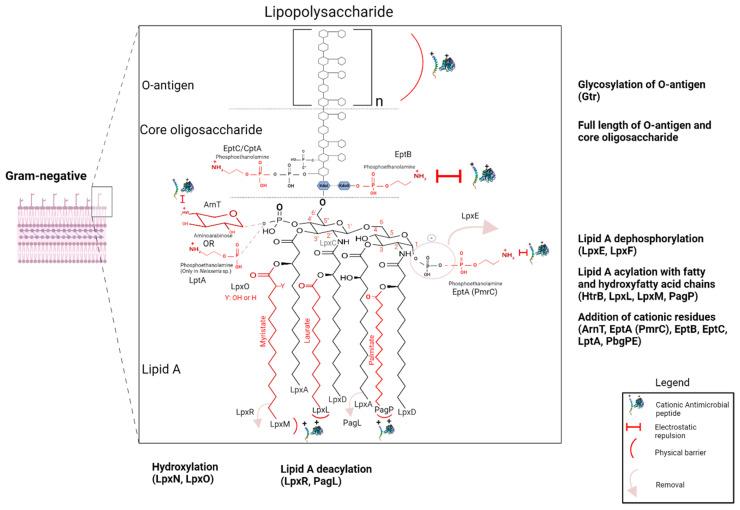
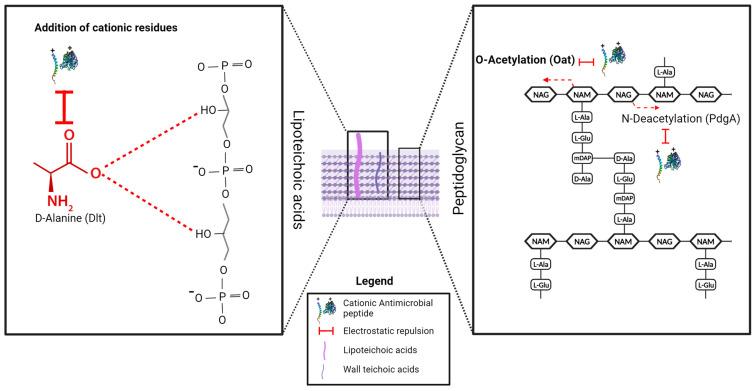
Antimicrobial resistance (AMR) poses a serious global health concern, resulting in a significant number of deaths annually due to infections that are resistant to treatment. Amidst this crisis, antimicrobial peptides (AMPs) have emerged as promising alternatives to conventional antibiotics (ATBs). These cationic peptides, naturally produced by all kingdoms of life, play a crucial role in the innate immune system of multicellular organisms and in bacterial interspecies competition by exhibiting broad-spectrum activity against bacteria, fungi, viruses, and parasites. AMPs target bacterial pathogens through multiple mechanisms, most importantly by disrupting their membranes, leading to cell lysis. However, bacterial resistance to host AMPs has emerged due to a slow co-evolutionary process between microorganisms and their hosts. Alarmingly, the development of resistance to last-resort AMPs in the treatment of MDR infections, such as colistin, is attributed to the misuse of this peptide and the high rate of horizontal genetic transfer of the corresponding resistance genes. AMP-resistant bacteria employ diverse mechanisms, including but not limited to proteolytic degradation, extracellular trapping and inactivation, active efflux, as well as complex modifications in bacterial cell wall and membrane structures. This review comprehensively examines all constitutive and inducible molecular resistance mechanisms to AMPs supported by experimental evidence described to date in bacterial pathogens. We also explore the specificity of these mechanisms toward structurally diverse AMPs to broaden and enhance their potential in developing and applying them as therapeutics for MDR bacteria. Additionally, we provide insights into the significance of AMP resistance within the context of host-pathogen interactions.
抗菌耐药性(AMR)是一个严重的全球健康问题,每年导致大量因感染而死亡,这些感染对治疗具有抗性。在这场危机中,抗菌肽(AMPs)已成为传统抗生素(ATBs)的有前景的替代品。这些阳离子肽由所有生命王国自然产生,在多细胞生物的先天免疫系统以及细菌种间竞争中发挥关键作用,对细菌、真菌、病毒和寄生虫具有广谱活性。抗菌肽通过多种机制靶向细菌病原体,最重要的是破坏它们的膜,导致细胞裂解。然而,由于微生物与其宿主之间缓慢的共同进化过程,细菌对宿主抗菌肽产生了抗性。令人担忧的是,在治疗多重耐药感染(如粘菌素)时,对最后手段抗菌肽产生抗性的原因是该肽的滥用以及相应抗性基因的高水平基因转移。耐抗菌肽的细菌采用多种机制,包括但不限于蛋白水解降解、细胞外捕获和失活、主动外排,以及细菌细胞壁和膜结构的复杂修饰。本综述全面研究了迄今为止在细菌病原体中描述的由实验证据支持的对抗菌肽的所有组成型和诱导型分子抗性机制。我们还探讨了这些机制对结构多样的抗菌肽的特异性,以拓宽和增强它们在开发和应用于多重耐药菌治疗方面的潜力。此外,我们还深入探讨了抗菌肽抗性在宿主 - 病原体相互作用背景下的重要性。
 Zotero 插件