
炎症细胞因子与不同病理类型肺癌因果关系的双向孟德尔随机化研究
Bidirectional Mendelian Randomization of Causal Relationship between Inflammatory Cytokines and Different Pathological Types of Lung Cancer.
作者信息
Hu Xinhang, Xie Shouzhi, Yi Xuyang, Ouyang Yifan, Zhao Wangcheng, Yang Zhi, Zhang Zhe, Wang Li, Huang Xingchun, Peng Muyun, Yu Fenglei
机构信息
Department of Thoracic Surgery, Second Xiangya Hospital, Central South University, Changsha 410000, China.
出版信息
J Cancer. 2024 Jul 16;15(15):4969-4984. doi: 10.7150/jca.98301. eCollection 2024.
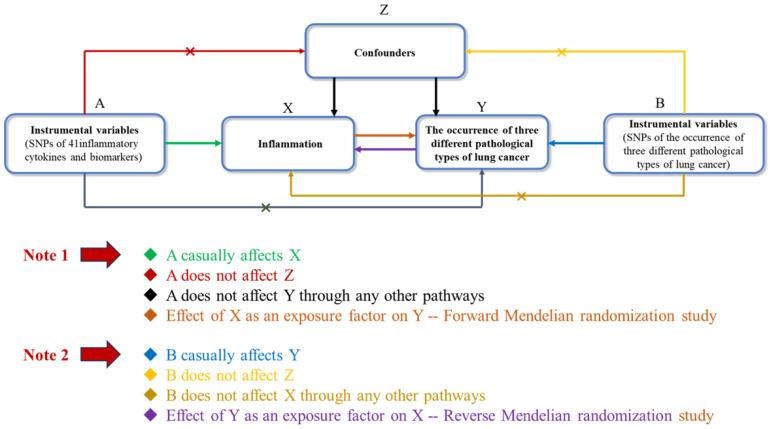
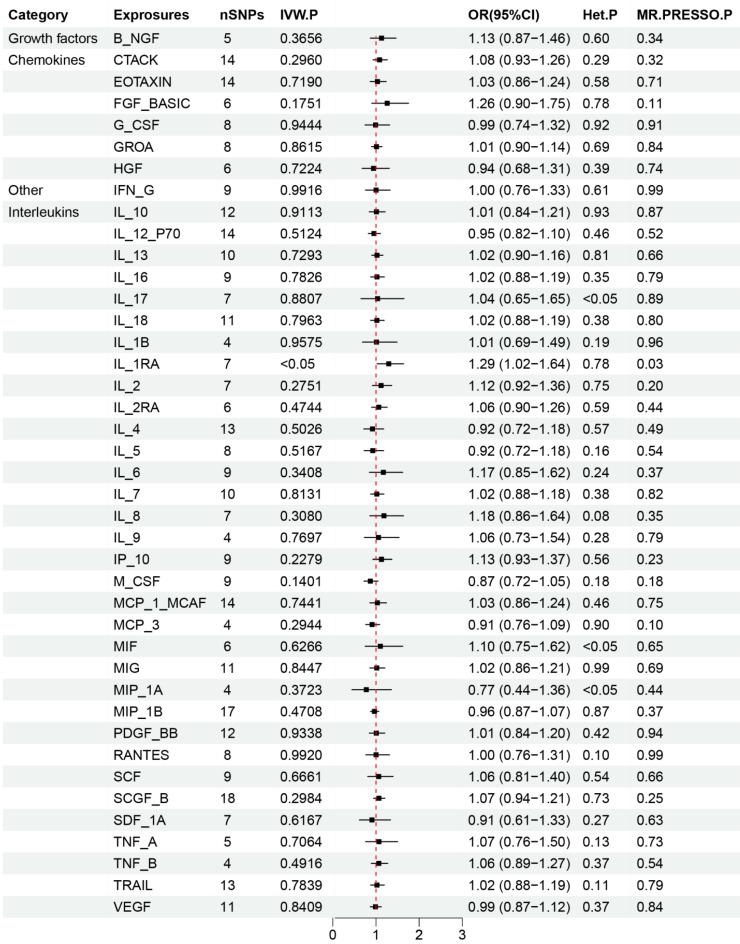
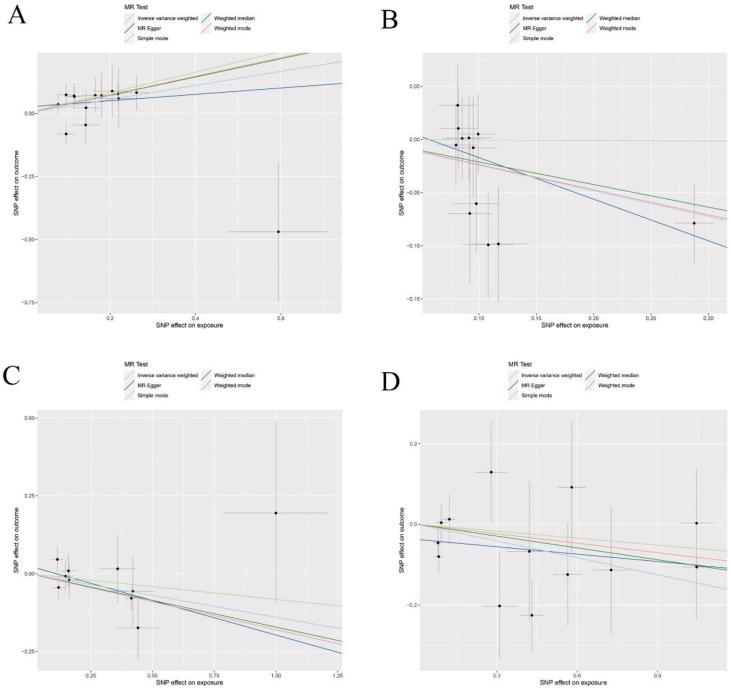
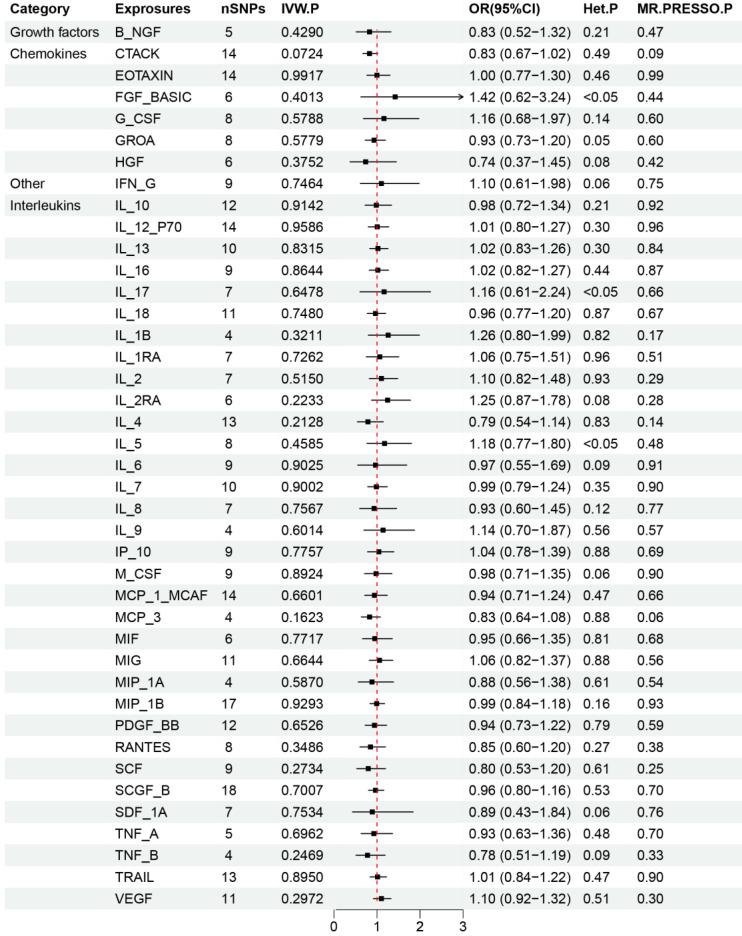
Prior research has proposed a potential association between lung cancer and inflammatory cytokines, yet the specific causal relationship remains unclear, especially across various lung cancer pathologies. This study utilized bidirectional Mendelian randomization (MR) to explore these causal connections, unveiling novel insights. Our research revealed distinctive inflammatory cytokine profiles for each subtype of lung cancer and identified potential biomarkers that could refine diagnostic and therapeutic approaches. We applied two-sample Mendelian randomization, leveraging genetic variance data from three extensive genome-wide association studies (GWAS) focusing on different lung cancer types (lung adenocarcinoma: 1590 cases and 314,193 controls of healthy individuals of European descent; lung squamous cell carcinoma: 1510 cases and 314,193 controls of European ancestry; small cell lung cancer: 717 cases and 314,193 controls of European ancestry). A separate GWAS summary on inflammatory cytokines from 8,293 healthy participants was also included. The inverse variance weighting method was utilized to examine causal relationships, with robustness confirmed through multiple sensitivity analyses, including MR-Egger, weighted median, and MR-PRESSO. Our analysis revealed that elevated levels of IL_1RA were associated with an increased risk of lung adenocarcinoma (OR: 1.29, 95% CI: 1.02-1.64, = 0.031), while higher MCP_1_MCAF levels correlated with a decreased risk of lung squamous cell carcinoma (OR: 0.77, 95% CI: 0.61-0.98, = 0.031). Furthermore, IL_10, IL_13, and TRAIL levels were positively associated with lung squamous cell carcinoma risk (IL_10: OR: 1.27, 95% CI: 1.06-1.53, = 0.012; IL_13: OR: 1.15, 95% CI: 1.06-1.53, = 0.036; TRAIL: OR: 1.15, 95% CI: 1.06-1.53, = 0.043). No association was found between inflammatory cytokine levels and small cell lung cancer development, whereas SDF_1A and B-NGF were linked to an increased risk of this cancer type (SDF_1A: OR: 1.13, 95% CI: 1.05-1.21, = 0.001; B-NGF: OR: 1.13, 95% CI: 1.01-1.27, = 0.029). No significant relationship was observed between the 41 circulating inflammatory cytokines and lung adenocarcinoma or squamous cell carcinoma development. Our findings indicate distinct associations between specific inflammatory cytokines and different types of lung cancer. Elevated IL_1RA levels are a risk marker for lung adenocarcinoma, whereas higher MCP_1_MCAF levels appear protective against lung squamous cell carcinoma. Conversely, elevated levels of IL_10, IL_13, and TRAIL are linked with an increased risk of lung squamous cell carcinoma. The relationships of SDF_1A and B-NGF with small-cell lung cancer highlight the complexity of inflammatory markers in cancer development. This study provides a nuanced understanding of the role of inflammatory cytokines in lung cancer, underscoring their potential in refining diagnosis and treatment strategies.
先前的研究提出肺癌与炎性细胞因子之间可能存在关联,但具体的因果关系仍不明确,尤其是在各种肺癌病理类型中。本研究利用双向孟德尔随机化(MR)来探索这些因果联系,揭示了新的见解。我们的研究揭示了每种肺癌亚型独特的炎性细胞因子谱,并确定了可能改善诊断和治疗方法的潜在生物标志物。我们应用了两样本孟德尔随机化,利用了来自三项广泛的全基因组关联研究(GWAS)的遗传变异数据,这些研究聚焦于不同类型的肺癌(肺腺癌:1590例病例和314,193例欧洲血统健康个体对照;肺鳞状细胞癌:1510例病例和314,193例欧洲血统对照;小细胞肺癌:717例病例和314,193例欧洲血统对照)。还纳入了一项来自8293名健康参与者的关于炎性细胞因子的单独GWAS汇总数据。采用逆方差加权法来检验因果关系,并通过包括MR-Egger、加权中位数和MR-PRESSO在内的多种敏感性分析来确认稳健性。我们的分析显示,IL_1RA水平升高与肺腺癌风险增加相关(比值比:1.29,95%置信区间:1.02 - 1.64,P = 0.031),而较高的MCP_1_MCAF水平与肺鳞状细胞癌风险降低相关(比值比:0.77,95%置信区间:0.61 - 0.98,P = 0.031)。此外,IL_10、IL_13和TRAIL水平与肺鳞状细胞癌风险呈正相关(IL_10:比值比:1.27,95%置信区间:1.06 - 1.53,P = 0.012;IL_13:比值比:1.15,95%置信区间:1.06 - 1.53,P = 0.036;TRAIL:比值比:1.15,95%置信区间:1.06 - 1.53,P = 0.043)。未发现炎性细胞因子水平与小细胞肺癌发生之间存在关联,而SDF_1A和B - NGF与该癌症类型风险增加相关(SDF_1A:比值比:1.13,95%置信区间:1.05 - 1.21,P = 0.001;B - NGF:比值比:1.13,95%置信区间:1.01 - 1.27,P = 0.029)。未观察到41种循环炎性细胞因子与肺腺癌或肺鳞状细胞癌发生之间存在显著关系。我们的研究结果表明特定炎性细胞因子与不同类型肺癌之间存在不同的关联。IL_1RA水平升高是肺腺癌的一个风险标志物,而较高的MCP_1_MCAF水平似乎对肺鳞状细胞癌具有保护作用。相反,IL_10、IL_13和TRAIL水平升高与肺鳞状细胞癌风险增加相关。SDF_1A和B - NGF与小细胞肺癌的关系凸显了癌症发展中炎性标志物的复杂性。本研究对炎性细胞因子在肺癌中的作用提供了细致入微的理解,强调了它们在完善诊断和治疗策略方面的潜力。



 Zotero 插件