
人体外骨骼交互肖像。
Human-exoskeleton interaction portrait.
机构信息
Department of Mechanical and Mechatronics Engineering, University of Waterloo, Waterloo, ON, N2L 3G1, Canada.
Mechanics and Ocean Engineering Department, Hamburg University of Technology, 21071, Hamburg, Germany.
出版信息
J Neuroeng Rehabil. 2024 Sep 4;21(1):152. doi: 10.1186/s12984-024-01447-1.
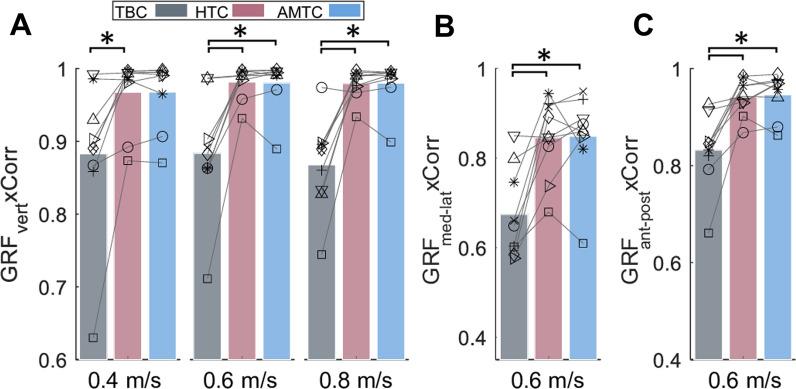
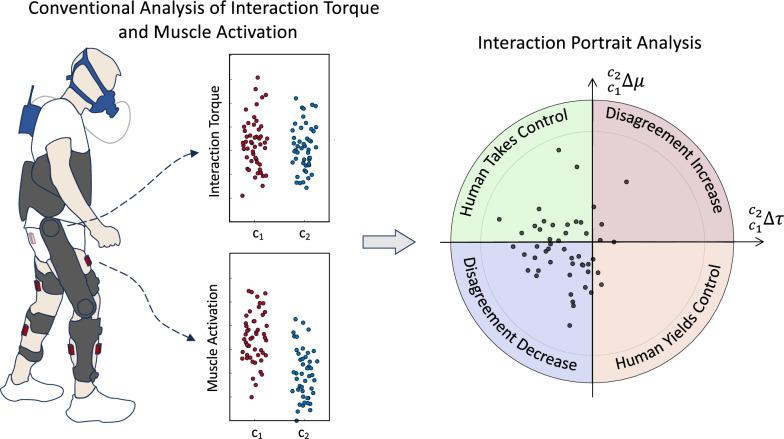
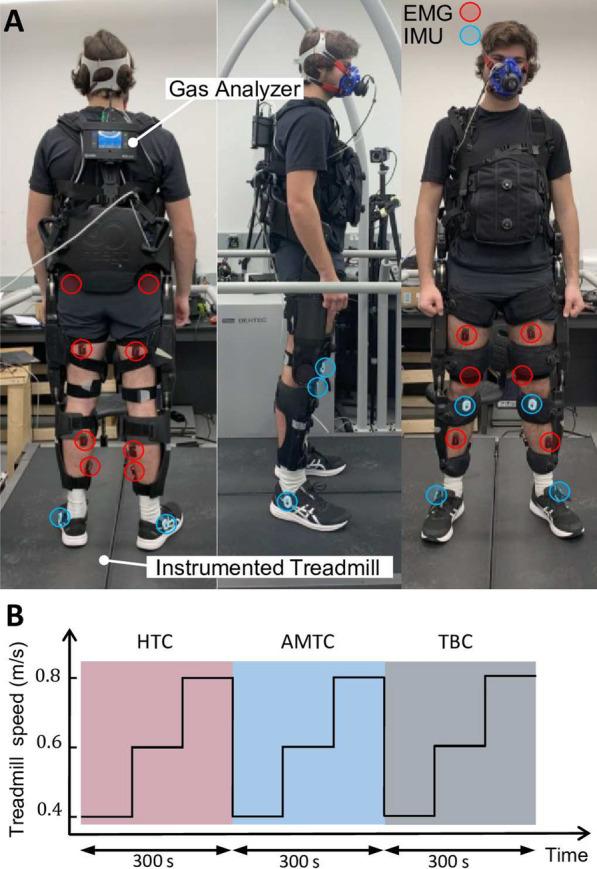
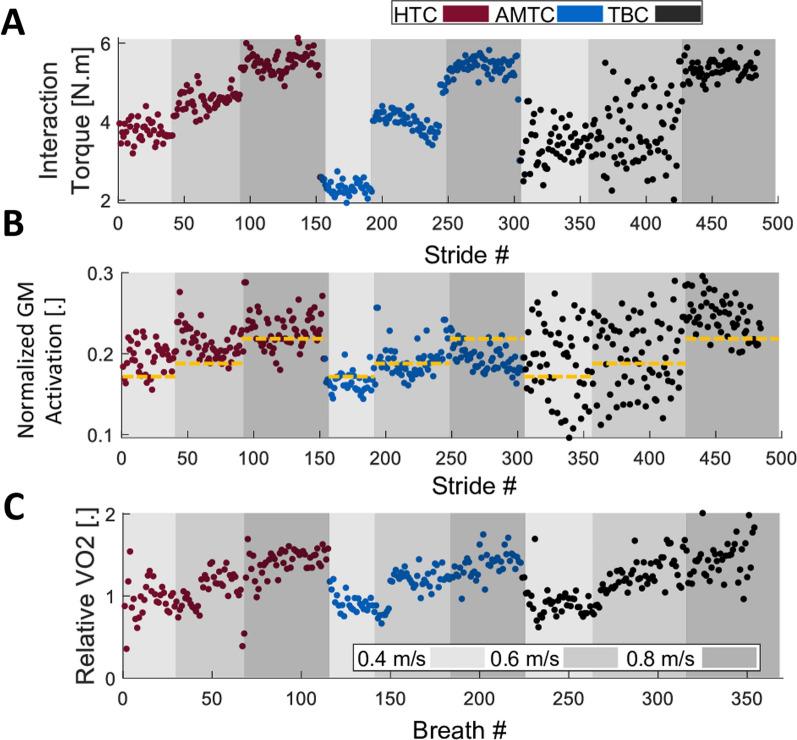
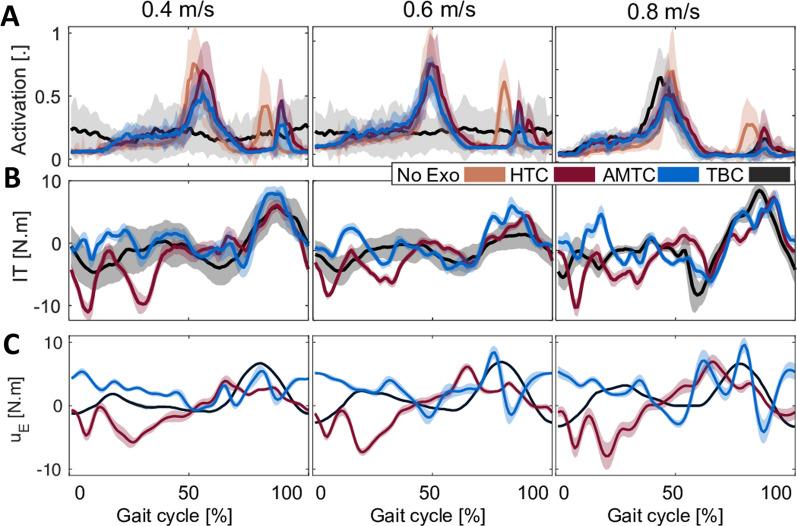
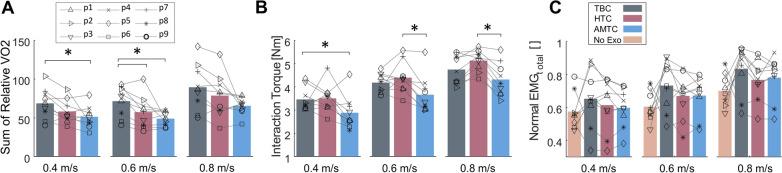
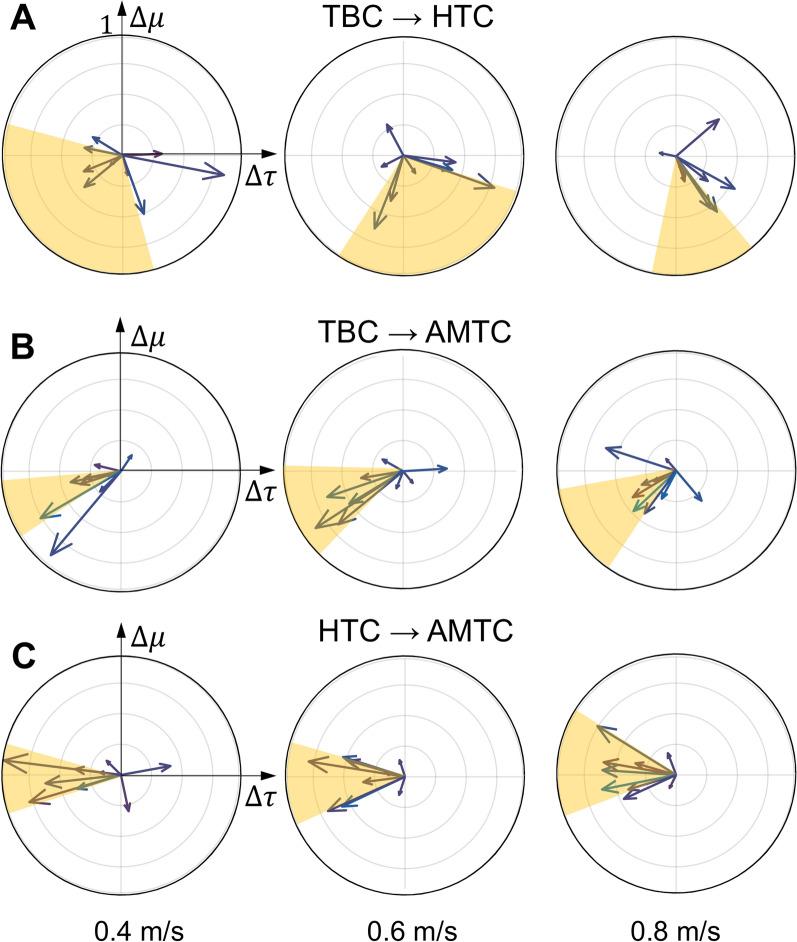
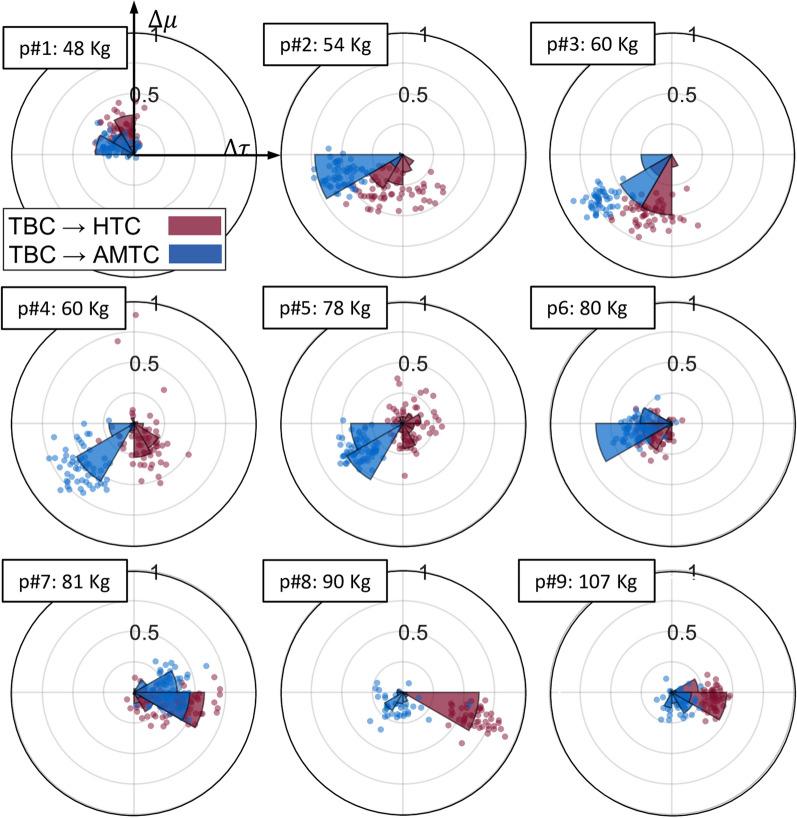
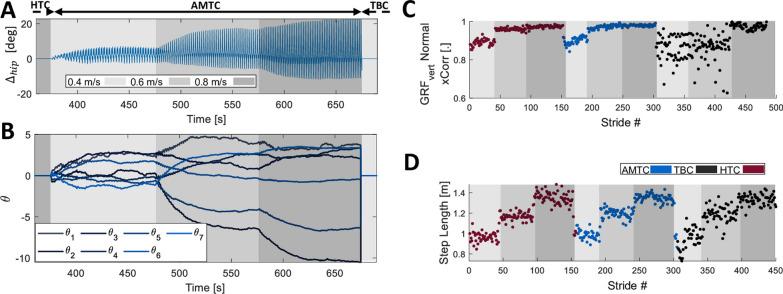
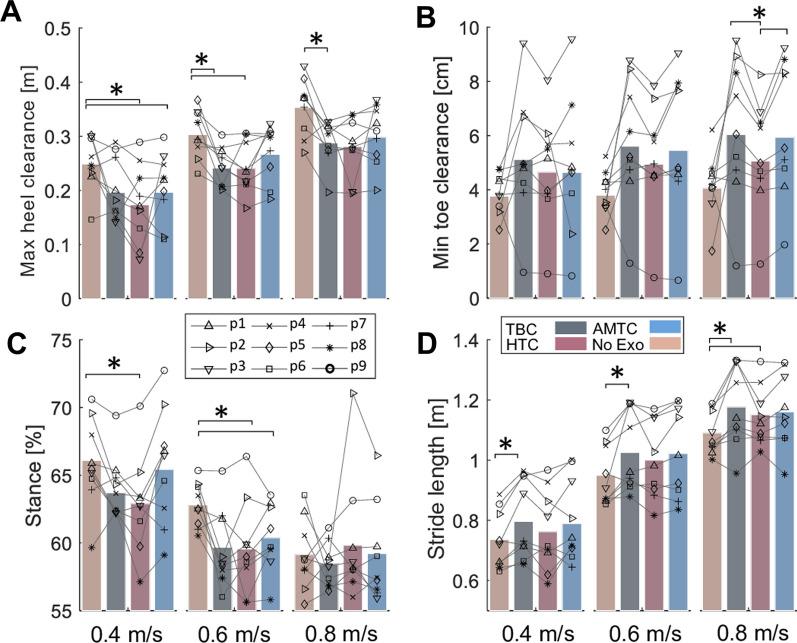
Human-robot physical interaction contains crucial information for optimizing user experience, enhancing robot performance, and objectively assessing user adaptation. This study introduces a new method to evaluate human-robot interaction and co-adaptation in lower limb exoskeletons by analyzing muscle activity and interaction torque as a two-dimensional random variable. We introduce the interaction portrait (IP), which visualizes this variable's distribution in polar coordinates. We applied IP to compare a recently developed hybrid torque controller (HTC) based on kinematic state feedback and a novel adaptive model-based torque controller (AMTC) with online learning, proposed herein, against a time-based controller (TBC) during treadmill walking at varying speeds. Compared to TBC, both HTC and AMTC significantly lower users' normalized oxygen uptake, suggesting enhanced user-exoskeleton coordination. IP analysis reveals that this improvement stems from two distinct co-adaptation strategies, unidentifiable by traditional muscle activity or interaction torque analyses alone. HTC encourages users to yield control to the exoskeleton, decreasing overall muscular effort but increasing interaction torque, as the exoskeleton compensates for user dynamics. Conversely, AMTC promotes user engagement through increased muscular effort and reduces interaction torques, aligning it more closely with rehabilitation and gait training applications. IP phase evolution provides insight into each user's interaction strategy formation, showcasing IP analysis's potential in comparing and designing novel controllers to optimize human-robot interaction in wearable robots.
人机物理交互包含了优化用户体验、提升机器人性能和客观评估用户适应性的关键信息。本研究提出了一种新的方法,通过分析肌肉活动和交互扭矩作为二维随机变量,来评估下肢外骨骼中的人机交互和协同适应。我们引入了交互肖像(IP),以极坐标可视化该变量的分布。我们应用 IP 比较了最近开发的基于运动状态反馈的混合扭矩控制器(HTC)和一种新的基于自适应模型的扭矩控制器(AMTC)与基于时间的控制器(TBC)在不同速度下跑步机行走的性能。与 TBC 相比,HTC 和 AMTC 显著降低了用户的归一化耗氧量,表明用户-外骨骼的协调性得到了增强。IP 分析表明,这种改进源于两种不同的协同适应策略,单凭传统的肌肉活动或交互扭矩分析无法识别。HTC 鼓励用户将控制交给外骨骼,减少整体肌肉用力,但增加交互扭矩,因为外骨骼补偿了用户的动力学。相反,AMTC 通过增加肌肉用力和降低交互扭矩来促进用户的参与,使其更符合康复和步态训练应用的要求。IP 相位演化提供了对每个用户交互策略形成的深入了解,展示了 IP 分析在比较和设计新的控制器以优化可穿戴机器人人机交互方面的潜力。


 Zotero 插件