
识别帕金森病的潜在因果效应:英国生物银行中基于多基因风险评分的全表型关联和孟德尔随机化研究
Identifying potential causal effects of Parkinson's disease: A polygenic risk score-based phenome-wide association and mendelian randomization study in UK Biobank.
作者信息
Shi Changhe, Ma Dongrui, Li Mengjie, Wang Zhiyun, Hao Chenwei, Liang Yuanyuan, Feng Yanmei, Hu Zhengwei, Hao Xiaoyan, Guo Mengnan, Li Shuangjie, Zuo Chunyan, Sun Yuemeng, Tang Mibo, Mao Chengyuan, Zhang Chan, Xu Yuming, Sun Shilei
机构信息
Department of Neurology, The First Affiliated Hospital of Zhengzhou University, Zhengzhou University, Zhengzhou, Henan, China.
Henan Key Laboratory of Cerebrovascular Diseases, The First Affiliated Hospital of Zhengzhou University, Zhengzhou University, Zhengzhou, Henan, China.
出版信息
NPJ Parkinsons Dis. 2024 Sep 6;10(1):166. doi: 10.1038/s41531-024-00780-5.
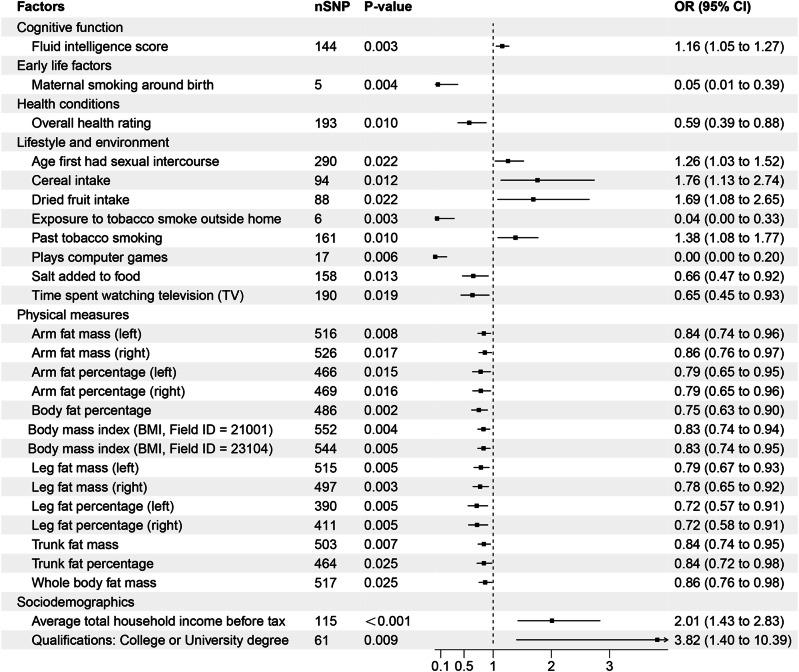
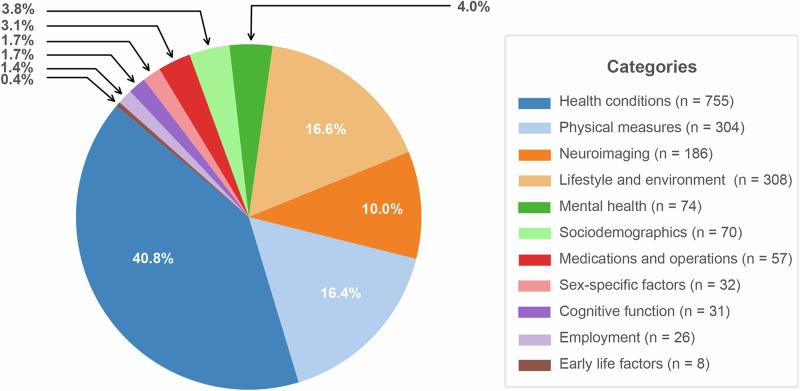
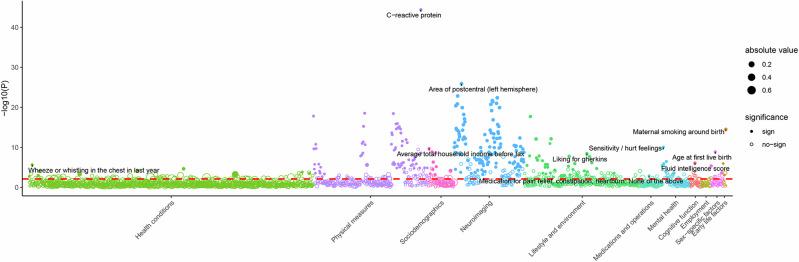
There is considerable uncertainty regarding the associations between various risk factors and Parkinson's Disease (PD). This study systematically screened and validated a wide range of potential PD risk factors from 502,364 participants in the UK Biobank. Baseline data for 1851 factors across 11 categories were analyzed through a phenome-wide association study (PheWAS). Polygenic risk scores (PRS) for PD were used to diagnose Parkinson's Disease and identify factors associated with PD diagnosis through PheWAS. Two-sample Mendelian randomization (MR) analysis was employed to assess causal relationships. PheWAS results revealed 267 risk factors significantly associated with PD-PRS among the 1851 factors, and of these, 27 factors showed causal evidence from MR analysis. Compelling evidence suggests that fluid intelligence score, age at first sexual intercourse, cereal intake, dried fruit intake, and average total household income before tax have emerged as newly identified risk factors for PD. Conversely, maternal smoking around birth, playing computer games, salt added to food, and time spent watching television have been identified as novel protective factors against PD. The integration of phenotypic and genomic data may help to identify risk factors and prevention targets for PD.
关于各种风险因素与帕金森病(PD)之间的关联存在相当大的不确定性。本研究从英国生物银行的502364名参与者中系统地筛选并验证了一系列潜在的PD风险因素。通过全表型关联研究(PheWAS)分析了11个类别的1851个因素的基线数据。使用PD的多基因风险评分(PRS)来诊断帕金森病,并通过PheWAS识别与PD诊断相关的因素。采用两样本孟德尔随机化(MR)分析来评估因果关系。PheWAS结果显示,在1851个因素中,有267个风险因素与PD-PRS显著相关,其中27个因素显示出MR分析的因果证据。有力证据表明,流体智力得分、首次性交年龄、谷物摄入量、干果摄入量和税前家庭平均总收入已成为新发现的PD风险因素。相反,出生前后母亲吸烟、玩电脑游戏、食物中添加的盐以及看电视的时间已被确定为预防PD的新保护因素。表型和基因组数据的整合可能有助于识别PD的风险因素和预防靶点。
 Zotero 插件