
鉴定 COVID-19 和脓毒症发病机制中的关键调控基因:一项观察性研究。
Identification of key regulatory genes in the pathogenesis of COVID-19 and sepsis: An observational study.
机构信息
Department of Infection, Nanchong Central Hospital, Nanchong, Sichuan, China.
Department of Otolaryngology, Affiliated Hospital of North Sichuan Medical College, Nanchong, Sichuan, China.
出版信息
Medicine (Baltimore). 2024 May 31;103(22):e38378. doi: 10.1097/MD.0000000000038378.
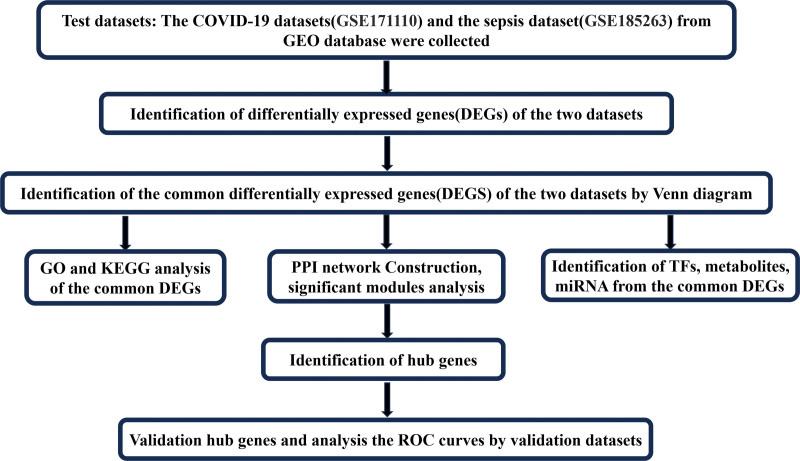
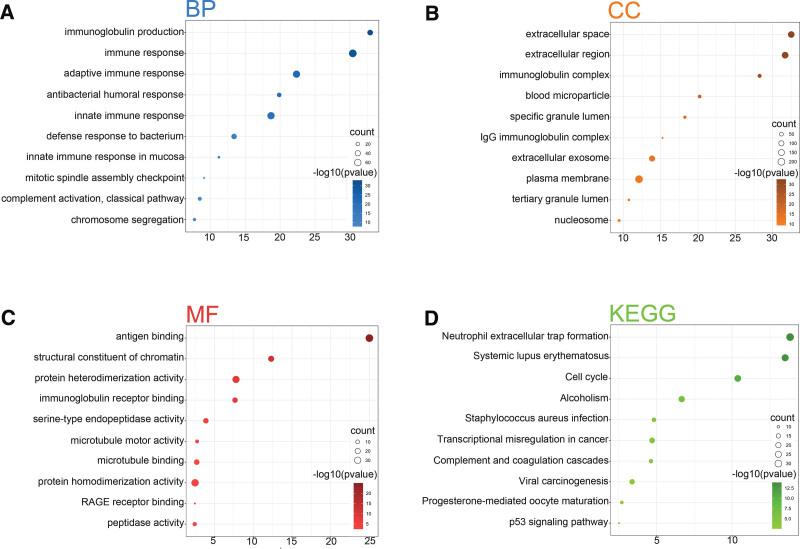
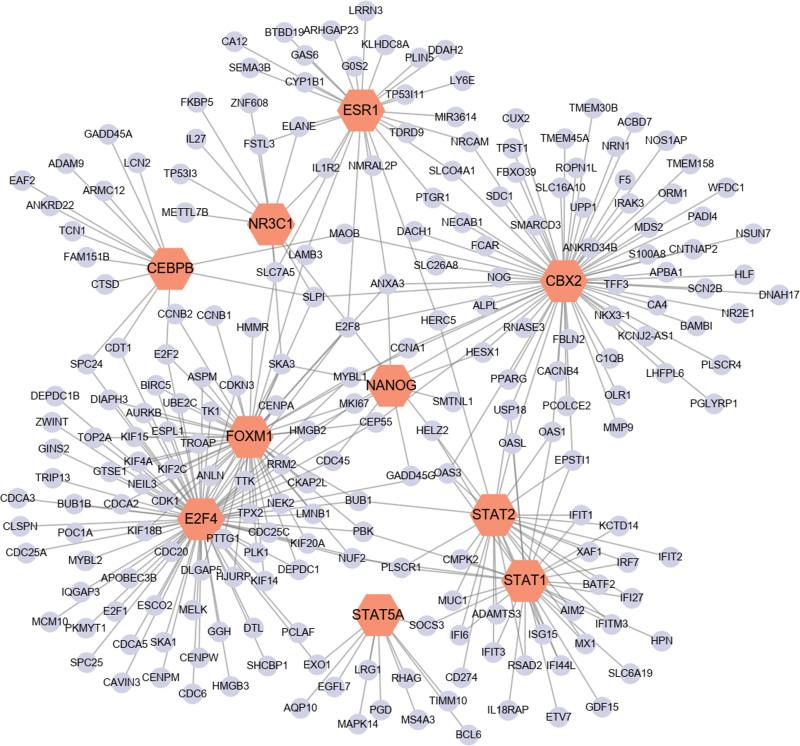
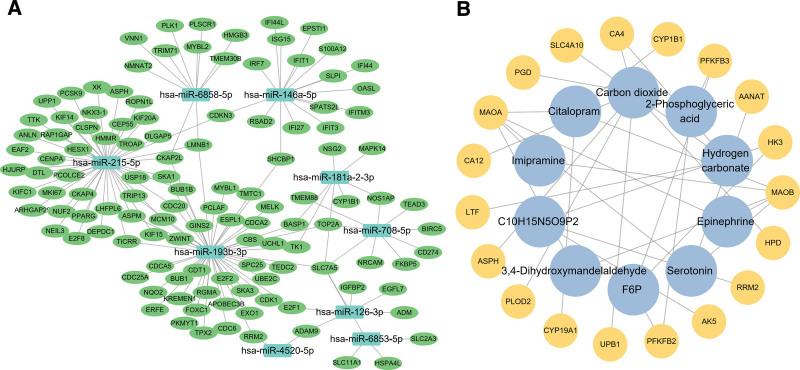
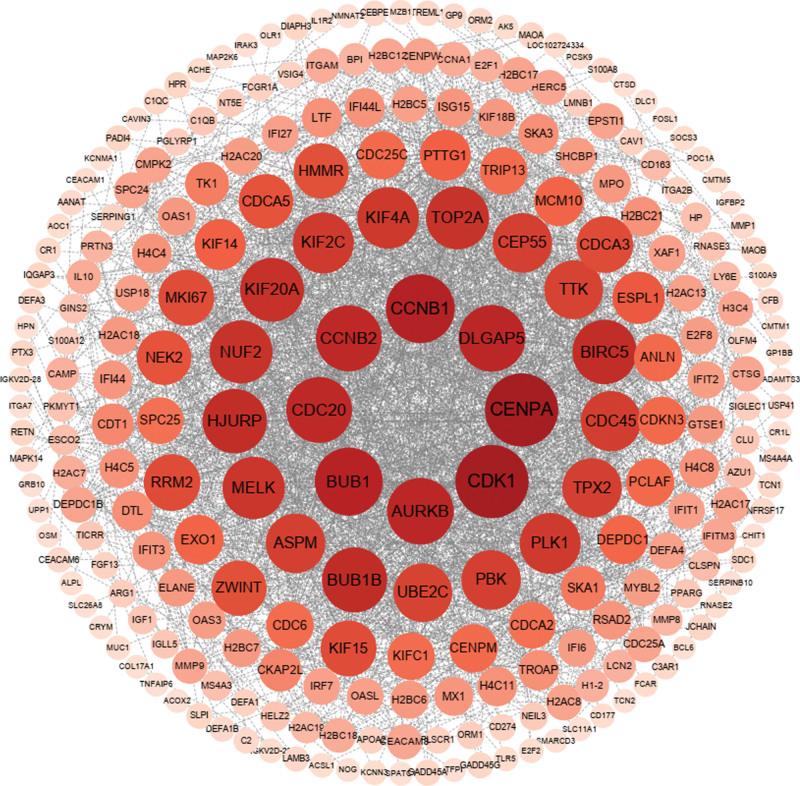
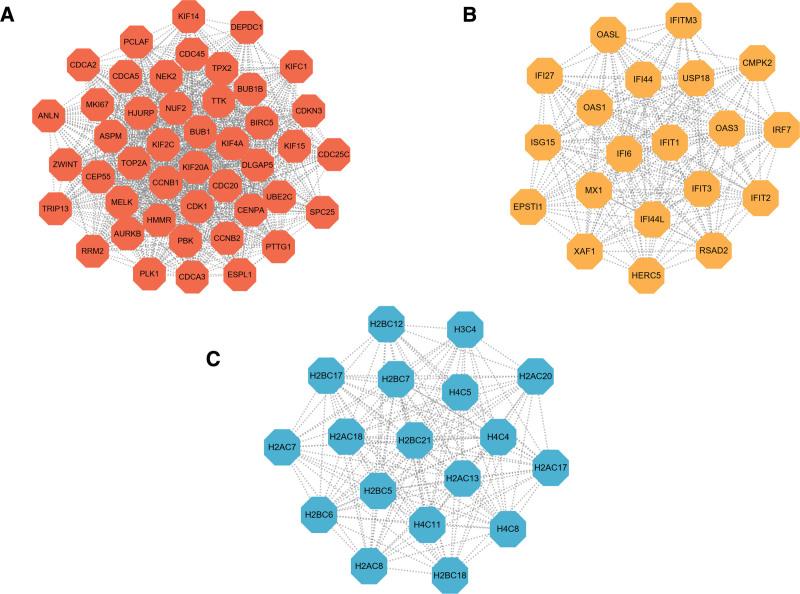
Patients with severe COVID-19 and those with sepsis have similar clinical manifestations. We used bioinformatics methods to identify the common hub genes in these 2 diseases. Two RNA-seq datasets from the Gene Expression Omnibus were used to identify common differentially expressed genes (DEGs) in COVID-19 and sepsis. These common genes were used for analysis of functional enrichment; pathway analysis; identification of associated transcription factors, metabolites, and miRNAs; and mapping of protein-protein interaction networks. The major hub genes of COVID-19 and sepsis were identified, and validation datasets were used to assess the value of these hub genes using receiver operating characteristic (ROC) curves. Analysis of the 800 common DEGs for COVID-19 and sepsis, as well as common transcription factors, miRNAs, and metabolites, demonstrated that the immune response had a key role in both diseases. DLGAP5, BUB1, CDK1, CCNB1, and BUB1B were the most important common hub genes. Analysis of a validation cohort indicated these 5 genes had significantly higher expression in COVID-19 patients and sepsis patients than in corresponding controls, and the area under the ROC curves ranged from 0.832 to 0.981 for COVID-19 and 0.840 to 0.930 for sepsis. We used bioinformatics tools to identify common DEGs, miRNAs, and transcription factors for COVID-19 and sepsis. The 5 identified hub genes had higher expression in validation cohorts of COVID-19 and sepsis. These genes had good or excellent diagnostic performance based on ROC analysis, and therefore have potential use as novel markers or therapeutic targets.
患有严重 COVID-19 和败血症的患者具有相似的临床表现。我们使用生物信息学方法来鉴定这两种疾病的共同枢纽基因。从基因表达综合数据库中使用了两个 RNA-seq 数据集来鉴定 COVID-19 和败血症中的常见差异表达基因(DEG)。这些共同基因用于分析功能富集;途径分析;鉴定相关的转录因子、代谢物和 miRNA;以及蛋白质-蛋白质相互作用网络的映射。确定了 COVID-19 和败血症的主要枢纽基因,并使用接收器操作特性(ROC)曲线使用验证数据集评估这些枢纽基因的价值。对 COVID-19 和败血症的 800 个常见 DEG 以及常见转录因子、miRNA 和代谢物进行分析表明,免疫反应在这两种疾病中都起着关键作用。DLGAP5、BUB1、CDK1、CCNB1 和 BUB1B 是最重要的共同枢纽基因。对验证队列的分析表明,这 5 个基因在 COVID-19 患者和败血症患者中的表达明显高于相应的对照,ROC 曲线下面积在 COVID-19 中为 0.832 至 0.981,在败血症中为 0.840 至 0.930。我们使用生物信息学工具来鉴定 COVID-19 和败血症的共同 DEG、miRNA 和转录因子。在 COVID-19 和败血症的验证队列中鉴定出的 5 个枢纽基因表达水平较高。这些基因基于 ROC 分析具有良好或优异的诊断性能,因此具有作为新型标志物或治疗靶点的潜力。




 Zotero 插件