
祖拉诺酮对健康成年人次日模拟驾驶的影响。
Effects of zuranolone on next-day simulated driving in healthy adults.
作者信息
Dunbar Joi, Morelli Gaetano, Jain Rakesh, Vaudreuil Carrie, Nandy Indrani, Ona Victor, Moseley Margaret K, Levin Seth, Kay Gary
机构信息
Sage Therapeutics, Inc., Cambridge, MA, USA.
Alta Sciences, Montréal, QC, Canada.
出版信息
Psychopharmacology (Berl). 2025 Feb;242(2):389-400. doi: 10.1007/s00213-024-06687-6. Epub 2024 Sep 20.
RATIONALE
Zuranolone is an oral positive allosteric modulator of GABA receptors. Due to its central nervous system (CNS) activity, zuranolone may impact activities requiring complex cognition, including driving.
OBJECTIVE
Evaluate the effect of zuranolone on simulated driving performance.
METHODS
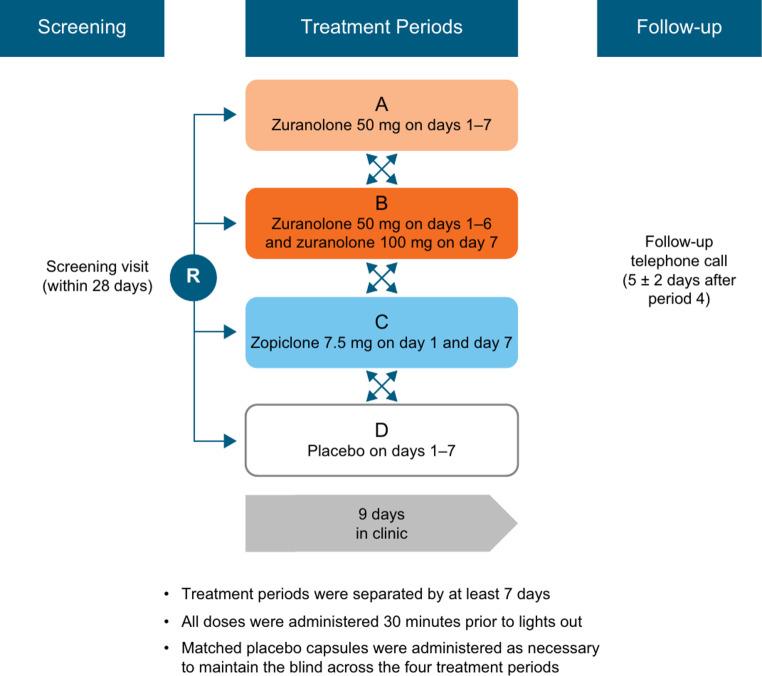
In this randomized, double-blind, active- and placebo-controlled, four-period crossover study, treatments included once-nightly zuranolone 50 mg on days 1-7, zuranolone 50 mg on days 1-6 and zuranolone 100 mg on day 7, zopiclone 7.5 mg on days 1 and 7, and placebo on days 1-7. Driving was assessed using a validated simulator. Primary endpoint was standard deviation of lateral position (SDLP), evaluated 9 h post-dose on days 2 and 8. Secondary endpoints included additional driving assessments, cognitive tests, pharmacokinetics, and safety.
RESULTS
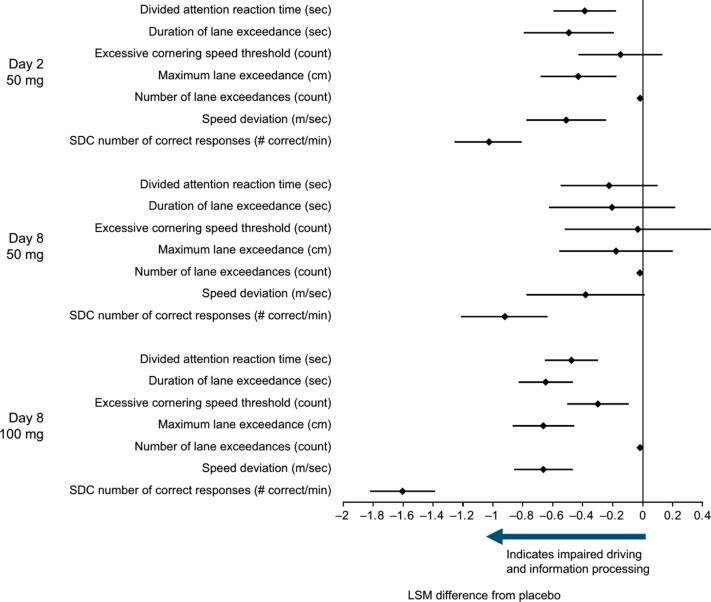
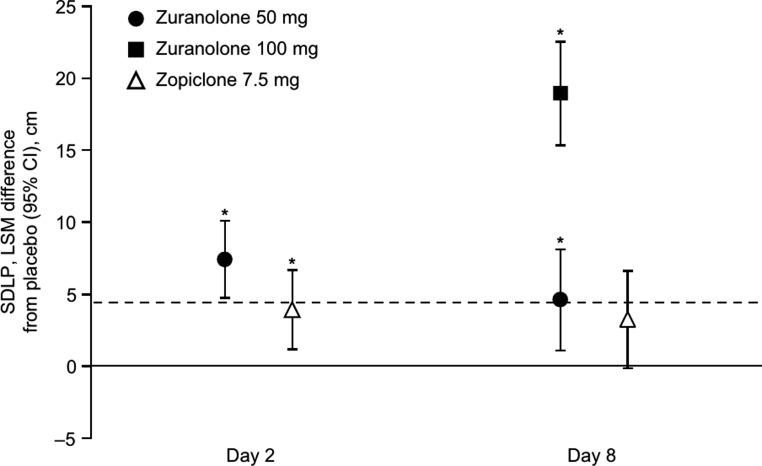
Healthy adults (N = 67) enrolled and received ≥ 1 dose. Zuranolone 50 mg increased SDLP versus placebo on days 2 (least squares mean difference [LSMD]: 7.4 cm; p < 0.0001) and 8 (LSMD: 4.6 cm; p = 0.0106). Zuranolone 100 mg evoked a larger increase in SDLP versus placebo on day 8 (LSMD 18.9 cm; p < 0.0001). Reduced performance in other driving assessments and cognition were observed with zuranolone 50 mg on day 2; many resolved by day 8. Despite the SDLP observations, most participants judged themselves capable of driving. Frequent adverse events (≥ 20%) were CNS-related; most were mild/moderate.
CONCLUSION
Zuranolone impaired simulated driving and reduced cognitive function versus placebo 9 h after administration. Although many impairments resolved after 7 days of dosing, driving remained impaired. These results may inform prescriber decision-making.
理论依据
祖拉诺龙是一种口服的γ-氨基丁酸(GABA)受体正向变构调节剂。由于其对中枢神经系统(CNS)的活性作用,祖拉诺龙可能会影响需要复杂认知的活动,包括驾驶。
目的
评估祖拉诺龙对模拟驾驶性能的影响。
方法
在这项随机、双盲、活性药物和安慰剂对照的四期交叉研究中,治疗方案包括第1 - 7天每晚服用一次50毫克祖拉诺龙、第1 - 6天服用50毫克祖拉诺龙且第7天服用100毫克祖拉诺龙、第1天和第7天服用7.5毫克佐匹克隆以及第1 - 7天服用安慰剂。使用经过验证的模拟器评估驾驶情况。主要终点是横向位置标准差(SDLP),在第2天和第8天给药后9小时进行评估。次要终点包括其他驾驶评估、认知测试、药代动力学和安全性。
结果
67名健康成年人入组并接受了≥1剂治疗。与安慰剂相比,第2天50毫克祖拉诺龙使SDLP增加(最小二乘均值差[LSMD]:7.4厘米;p < 0.0001),第8天也使SDLP增加(LSMD:4.6厘米;p = 0.0106)。第8天,与安慰剂相比,100毫克祖拉诺龙使SDLP增加幅度更大(LSMD 18.9厘米;p < 0.0001)。第2天观察到50毫克祖拉诺龙在其他驾驶评估和认知方面表现下降;到第8天许多情况得到缓解。尽管有SDLP的观察结果,但大多数参与者认为自己能够驾驶。常见不良事件(≥20%)与中枢神经系统相关;大多数为轻度/中度。
结论
与安慰剂相比,祖拉诺龙给药后9小时损害模拟驾驶并降低认知功能。尽管给药7天后许多损害得到缓解,但驾驶能力仍受损。这些结果可能为开处方者的决策提供参考。
 Zotero 插件