
肿瘤相关巨噬细胞(TAMs)的表观遗传调控:肝细胞癌(HCC)免疫治疗的一种潜在方法。
Epigenetic tuning of tumour-associated macrophages (TAMs): a potential approach in hepatocellular carcinoma (HCC) immunotherapy.
机构信息
Clinical Pharmacology and Pharmacogenomics Research Group, Department of Pharmacology and Toxicology, Faculty of Pharmacy and Biotechnology, German University in Cairo - GUC, Cairo, Egypt.
出版信息
Expert Rev Mol Med. 2024 Sep 25;26:e18. doi: 10.1017/erm.2024.9.
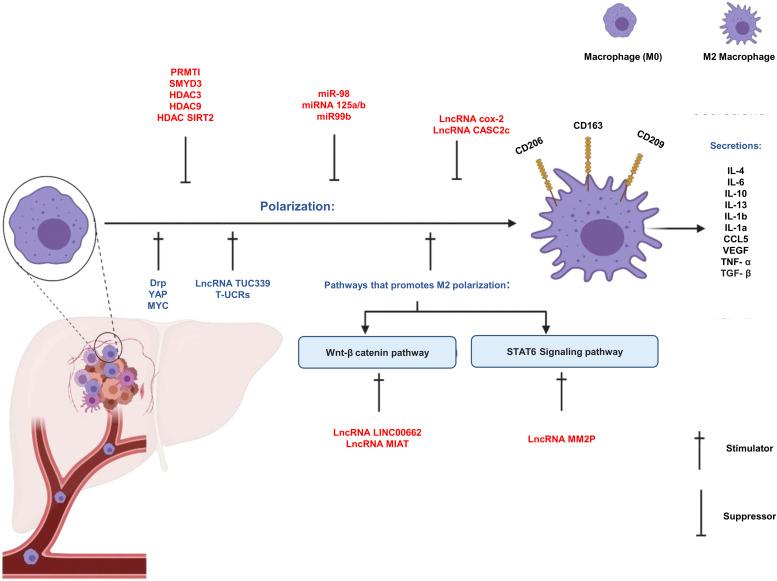
Recent development in immunotherapy for cancer treatment has substantiated to be more effective than most of the other treatments. Immunity is the first line of defence of the body; nevertheless, cancerous cells can manipulate immunity compartments to play several roles in tumour progression. Tumour-associated macrophages (TAMs), one of the most dominant components in the tumour microenvironment, are recognized as anti-tumour suppressors. Unfortunately, the complete behaviour of TAMs is still unclear and understudied. TAM density is directly correlated with the progression and poor prognosis of hepatocellular carcinoma (HCC), therefore studying TAMs from different points of view passing by all the factors that may affect its existence, polarization, functions and repolarization are of great importance. Different epigenetic regulations were reported to have a direct relation with both HCC and TAMs. Here, this review discusses different epigenetic regulations that can affect TAMs in HCC whether positively or negatively.
近年来,癌症治疗的免疫疗法取得了实质性进展,其疗效优于大多数其他疗法。免疫是人体的第一道防线;然而,癌细胞可以操纵免疫细胞区室在肿瘤进展中发挥多种作用。肿瘤相关巨噬细胞(TAMs)是肿瘤微环境中最主要的成分之一,被认为是抗肿瘤抑制因子。不幸的是,TAMs 的完整行为仍不清楚,也没有得到充分研究。TAM 密度与肝细胞癌(HCC)的进展和预后不良直接相关,因此,从不同的角度研究 TAMs,了解可能影响其存在、极化、功能和再极化的所有因素非常重要。已有报道称,不同的表观遗传调控与 HCC 和 TAMs 都有直接关系。在这里,本文讨论了不同的表观遗传调控,这些调控可能会对 HCC 中的 TAMs 产生积极或消极的影响。


 Zotero 插件