
蚜虫介导的甜菜黄化病毒传播在感染早期引发了糖甜菜中前病毒基因的失调。
Aphid-mediated beet yellows virus transmission initiates proviral gene deregulation in sugar beet at early stages of infection.
机构信息
Department of Phytopathology, Institute of Sugar Beet Research, Göttingen, Lower-Saxony, Germany.
Department Genomics and Biotechnologies, SESVanderHave SE, Flemish Brabant, Tienen, Belgium.
出版信息
PLoS One. 2024 Oct 1;19(10):e0311368. doi: 10.1371/journal.pone.0311368. eCollection 2024.
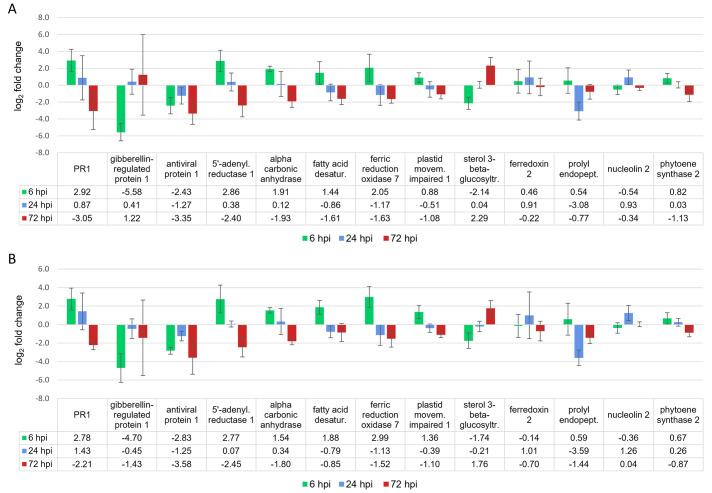
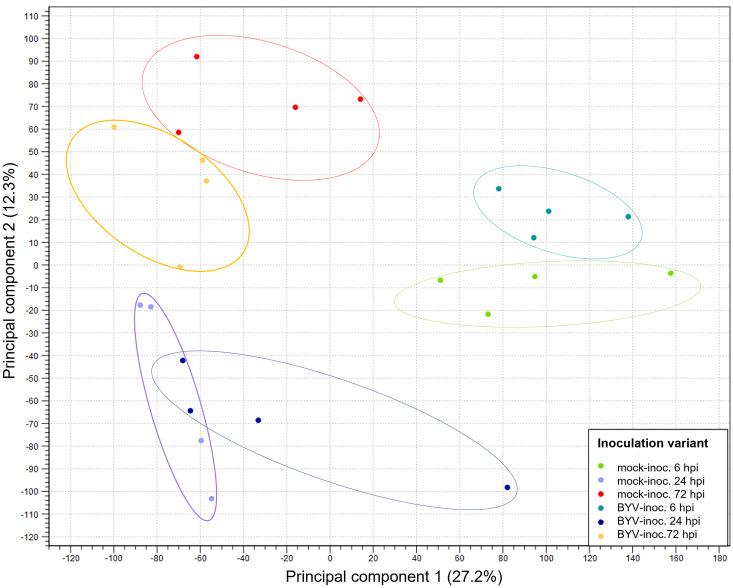
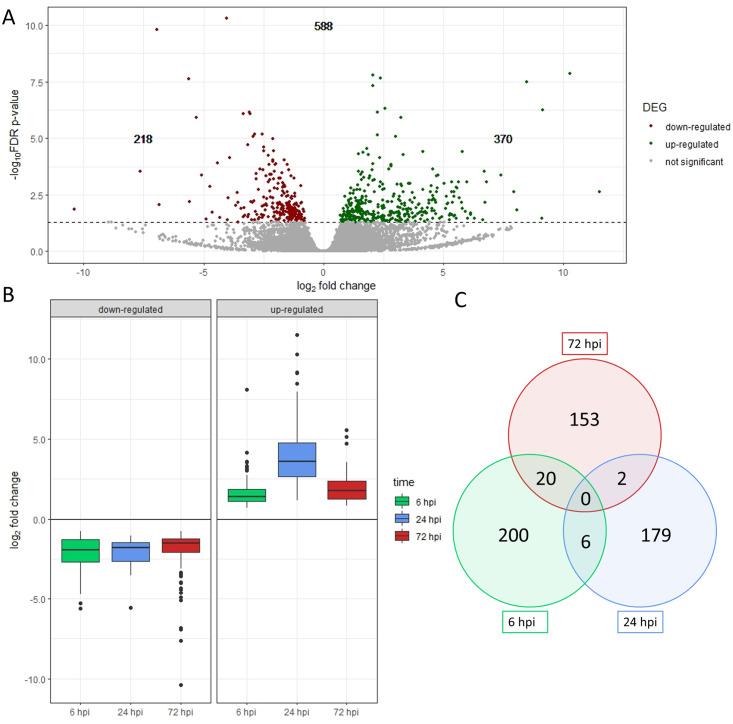
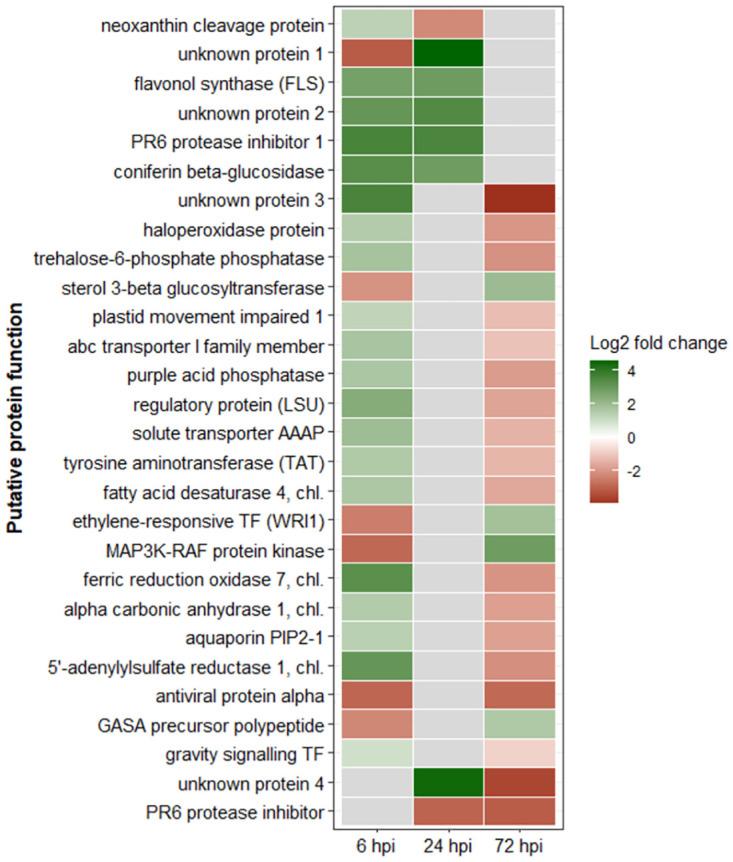
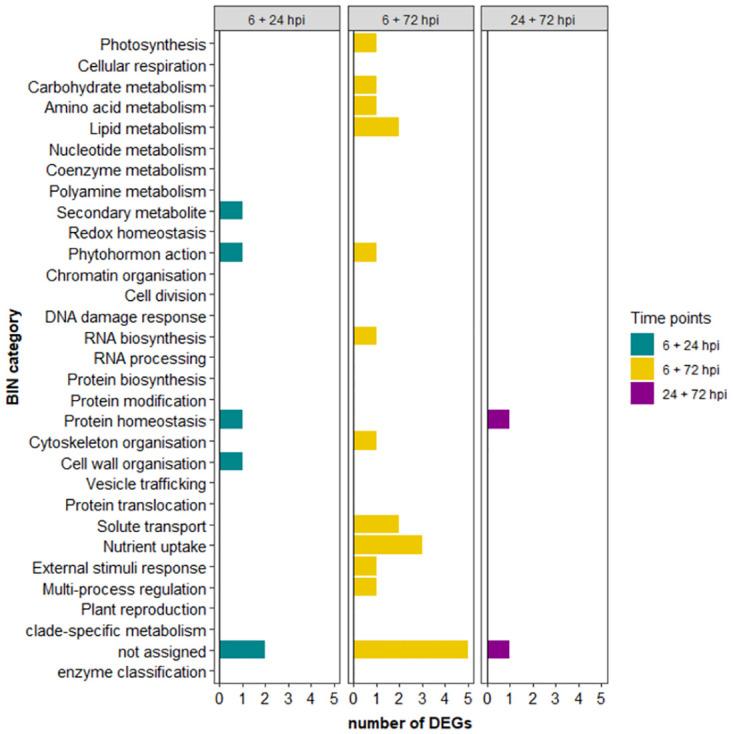
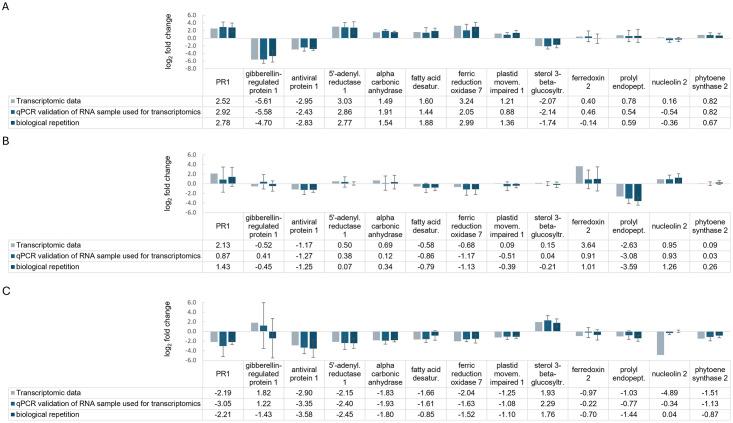
Beet yellows virus (BYV), one of the causal agents of virus yellows (VY) disease in sugar beet (Beta vulgaris subsp. vulgaris), induces economically important damage to the sugar production in Europe. In the absence of effective natural resistance traits, a deeper understanding of molecular reactions in plants to virus infection is required. In this study, the transcriptional modifications in a BYV susceptible sugar beet genotype following aphid-mediated inoculation on mature leaves were studied at three early infection stages [6, 24 and 72 hours post inoculation (hpi)] using RNA sequencing libraries. On average, 93% of the transcripts could be mapped to the B. vulgaris reference genome RefBeet-1.2.2. In total, 588 differentially expressed genes (DEGs) were identified across the three infection stages. Of these, 370 were up- regulated and 218 down-regulated when individually compared to mock-aphid inoculated leaf samples at the same time point, thereby eliminating the effect of aphid feeding itself. Using MapMan ontology for categorisation of sugar beet transcripts, early differential gene expression identified importance of the BIN categories "enzyme classification", "RNA biosynthesis", "cell wall organisation" and "phytohormone action". A particularly high transcriptional change was found for diverse transcription factors, cell wall regulating proteins, signalling peptides and transporter proteins. 28 DEGs being important in "nutrient uptake", "lipid metabolism", "phytohormone action", "protein homeostasis" and "solute transport", were represented at more than one infection stage. The RT-qPCR validation of thirteen selected transcripts confirmed that BYV is down-regulating chloroplast-related genes 72 hpi, putatively already paving the way for the induction of yellowing symptoms characteristic for the disease. Our study provides deeper insight into the early interaction between BYV and the economically important crop plant sugar beet and opens up the possibility of using the knowledge of identified proviral plant factors as well as plant defense-related factors for resistance breeding.
甜菜黄花病毒(BYV)是引起欧洲糖甜菜(Beta vulgaris subsp. vulgaris)病毒黄化病(VY)的病原体之一,对糖的生产造成了重大的经济损失。由于缺乏有效的天然抗性特征,因此需要更深入地了解植物对病毒感染的分子反应。在本研究中,通过蚜虫介导的接种在成熟叶片上,对一种 BYV 敏感的甜菜基因型进行了三个早期感染阶段(接种后 6、24 和 72 小时)的转录修饰研究,使用 RNA 测序文库。平均而言,93%的转录本可以映射到 B. vulgaris 参考基因组 RefBeet-1.2.2。总共鉴定了 588 个差异表达基因(DEG),在三个感染阶段中都有表达。其中,与同一时间点模拟蚜虫接种的叶片样本相比,370 个基因上调,218 个基因下调,从而消除了蚜虫取食本身的影响。使用 MapMan 本体论对甜菜转录本进行分类,早期差异基因表达确定了“酶分类”、“RNA 生物合成”、“细胞壁组织”和“植物激素作用”等 BIN 类别的重要性。不同的转录因子、细胞壁调节蛋白、信号肽和转运蛋白的转录变化尤为显著。28 个在“养分吸收”、“脂质代谢”、“植物激素作用”、“蛋白质稳态”和“溶质转运”中重要的 DEG 代表了多个感染阶段。13 个选定转录本的 RT-qPCR 验证证实,BYV 在 72 hpi 下调了与叶绿体相关的基因,推测这已经为疾病特征性黄化症状的诱导铺平了道路。本研究更深入地了解了 BYV 与经济上重要的作物植物糖甜菜之间的早期相互作用,并为利用鉴定的前病毒植物因子以及与植物防御相关的因子进行抗性育种开辟了可能性。


 Zotero 插件