
通过临床标志性指标引导下的基因组测序预先使用来快速识别原发性特应性疾病(PAD)。
Rapid identification of primary atopic disorders (PAD) by a clinical landmark-guided, upfront use of genomic sequencing.
作者信息
Niehues Tim, von Hardenberg Sandra, Velleuer Eunike
机构信息
Center for Child and Adolescent Health, Helios Hospital Krefeld, Academic Hospital of RWTH Aachen, Krefeld.
Department of Human Genetics, Hannover Medical School, Hannover, and.
出版信息
Allergol Select. 2024 Oct 2;8:304-323. doi: 10.5414/ALX02520E. eCollection 2024.
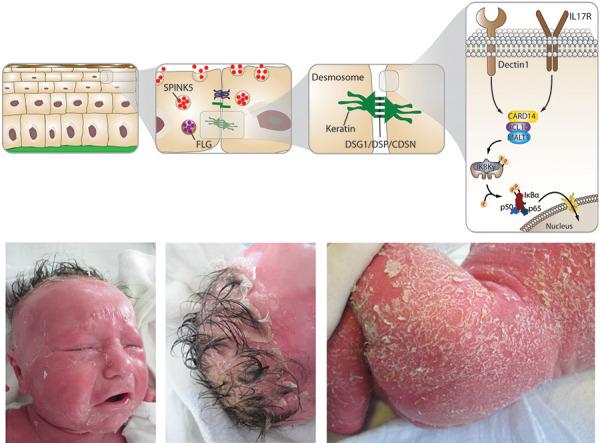
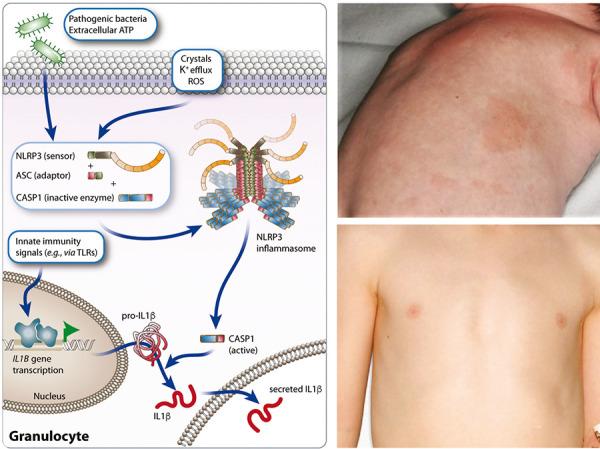
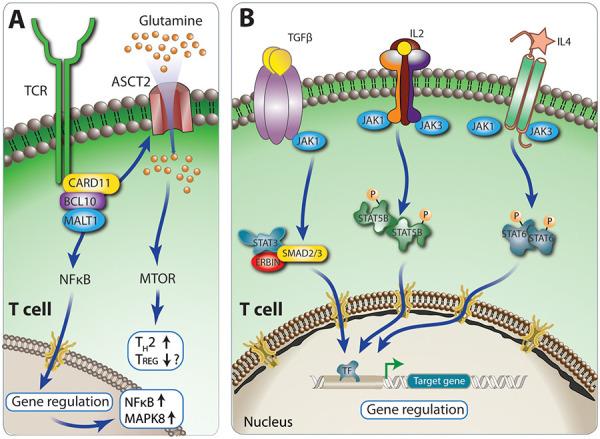
Primary atopic disorders (PAD) are monogenic disorders caused by pathogenic gene variants encoding proteins that are key for the maintenance of a healthy skin barrier and a well-functioning immune system. Physicians face the challenge to find single, extremely rare PAD patients/families among the millions of individuals with common allergic diseases. We describe case scenarios with signature PAD. We review the literature and deduct specific clinical red flags for PAD detection. They include a positive family history and/or signs of pathological susceptibility to infections, immunodysregulation, or syndromic disease. Results of conventional laboratory and most immunological lab studies are not sufficient to make a definitive diagnosis of PAD. In the past, multistep narrowing of differential diagnoses by various immunological and other laboratory tests led to testing of single genes or gene panel analyses, which was a time-consuming and often unsuccessful approach. The implementation of whole-genomic analyses in the routine diagnostics has led to a paradigm shift. Upfront genome-wide analysis by whole genome sequencing (WGS) will shorten the time to diagnosis, save patients from unnecessary investigations, and reduce morbidity and mortality. We propose a rational, clinical landmark-based approach for deciding which cases pass the filter for carrying out early WGS. WGS result interpretation requires a great deal of caution regarding the causal relationship of variants in PAD phenotypes and absence of proof by adequate functional tests. In case of negative WGS results, a re-iteration attitude with re-analyses of the data (using the latest data base annotation)) may eventually lead to PAD diagnosis. PAD, like many other rare genetic diseases, will only be successfully managed, if physicians from different clinical specialties and geneticists interact regularly in multidisciplinary conferences.
原发性特应性疾病(PAD)是由编码对维持健康皮肤屏障和正常运作的免疫系统至关重要的蛋白质的致病基因变异引起的单基因疾病。医生面临的挑战是,在数百万患有常见过敏性疾病的个体中找到单一的、极其罕见的PAD患者/家庭。我们描述了具有典型PAD特征的病例情况。我们回顾了文献并归纳出用于PAD检测的特定临床警示信号。这些信号包括家族史阳性和/或对感染、免疫失调或综合征性疾病存在病理易感性的迹象。传统实验室检查和大多数免疫学实验室检查的结果不足以确诊PAD。过去,通过各种免疫学和其他实验室检查进行多步骤的鉴别诊断缩小范围,导致对单个基因或基因panel分析进行检测,这是一种耗时且往往不成功的方法。全基因组分析在常规诊断中的应用导致了范式转变。通过全基因组测序(WGS)进行前期全基因组分析将缩短诊断时间,使患者避免不必要的检查,并降低发病率和死亡率。我们提出一种基于临床标志性特征的合理方法,用于决定哪些病例通过筛选以进行早期WGS。WGS结果解读在PAD表型变异的因果关系以及缺乏充分功能测试证明方面需要极其谨慎。如果WGS结果为阴性,采用重新分析数据(使用最新数据库注释)的反复态度可能最终导致PAD诊断。与许多其他罕见遗传疾病一样,只有不同临床专科的医生和遗传学家在多学科会议中定期互动,PAD才能得到成功管理。




 Zotero 插件