
研究注意缺陷多动障碍患者死后大脑中的表观遗传衰老情况。
Examining epigenetic aging in the post-mortem brain in attention deficit hyperactivity disorder.
作者信息
Shastri Gauri G, Sudre Gustavo, Ahn Kwangmi, Jung Benjamin, Kolachana Bhaskar, Auluck Pavan K, Elnitski Laura, Shaw Philip
机构信息
Social and Behavioral Research Branch, National Human Genome Research Institute, NIH, Bethesda, MD, United States.
Zucker Hillside Hospital, Northwell Health, New York, United States.
出版信息
Front Genet. 2024 Oct 8;15:1480761. doi: 10.3389/fgene.2024.1480761. eCollection 2024.
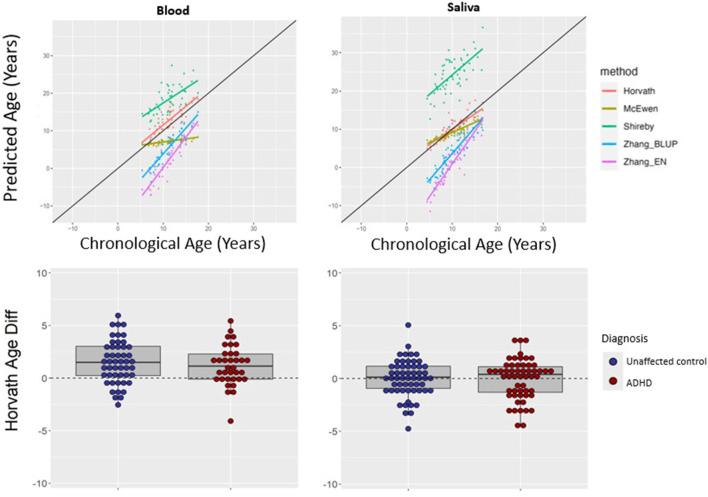
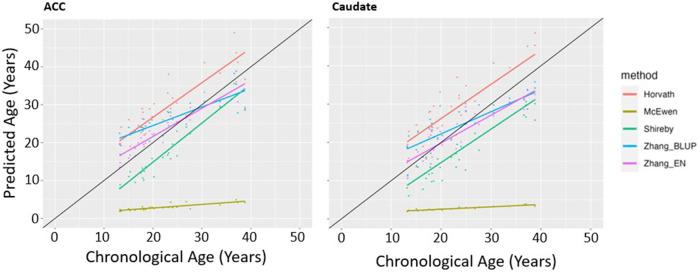
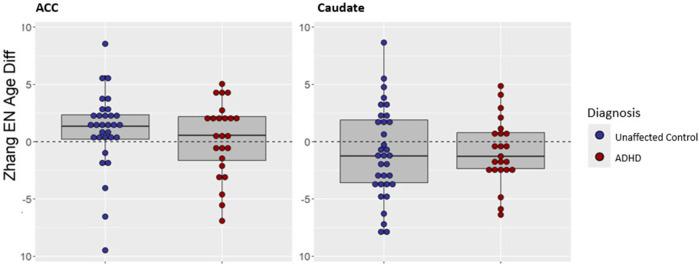
Mathematical algorithms known as "epigenetic clocks" use methylation values at a set of CpG sites to estimate the biological age of an individual in a tissue-specific manner. These clocks have demonstrated both acceleration and delays in epigenetic aging in multiple neuropsychiatric conditions, including schizophrenia and neurodevelopmental disorders such as autism spectrum disorder. However, no study to date has examined epigenetic aging in ADHD despite its status as one of the most prevalent neurodevelopmental conditions, with 1 in 9 children having ever received an ADHD diagnosis in the US. Only a handful of studies have examined epigenetic age in brain tissue from neurodevelopmental conditions, with none focused on ADHD, despite the obvious relevance to pathogenesis. Thus, here we asked if post-mortem brain tissue in those with lifetime histories of ADHD would show accelerated or delayed epigenetic age, as has been found for other neurodevelopmental conditions. We applied four different epigenetic clocks to estimate epigenetic age in individuals with ADHD and unaffected controls from cortical (anterior cingulate cortex, N = 55) and striatal (caudate, N = 56) post-mortem brain tissue, as well as peripheral blood (N = 84) and saliva (N = 112). After determining which epigenetic clock performed best in each tissue, we asked if ADHD was associated with altered biological aging in corticostriatal brain and peripheral tissues. We found that a range of epigenetic clocks accurately predicted chronological age in all tissues. We also found that a diagnosis of ADHD was not significantly associated with differential epigenetic aging, neither for the postmortem ACC or caudate, nor for peripheral tissues. These findings held when accounting for comorbid psychiatric diagnoses, substance use, and stimulant medication. Thus, in this study of epigenetic clocks in ADHD, we find no evidence of altered epigenetic aging in corticostriatal brain regions nor in peripheral tissue. We consider reasons for this unexpected finding, including the limited sampling of brain regions, the age range of individuals studied, and the possibility that processes that accelerate epigenetic age may be counteracted by the developmental delay posited in some models of ADHD.
被称为“表观遗传时钟”的数学算法利用一组CpG位点的甲基化值,以组织特异性方式估计个体的生物学年龄。这些时钟已在多种神经精神疾病中显示出表观遗传衰老的加速和延迟,包括精神分裂症和神经发育障碍,如自闭症谱系障碍。然而,尽管注意力缺陷多动障碍(ADHD)是最普遍的神经发育疾病之一,在美国每9名儿童中就有1人曾被诊断患有ADHD,但迄今为止尚无研究考察过ADHD中的表观遗传衰老情况。仅有少数研究考察了神经发育疾病患者脑组织中的表观遗传年龄,且没有一项研究聚焦于ADHD,尽管其与发病机制明显相关。因此,我们在此探讨,有ADHD终生病史者的死后脑组织是否会像在其他神经发育疾病中那样,表现出加速或延迟的表观遗传年龄。我们应用四种不同的表观遗传时钟,来估计患有ADHD的个体以及来自皮质(前扣带回皮质,N = 55)和纹状体(尾状核,N = 56)死后脑组织、外周血(N = 84)和唾液(N = 112)的未受影响对照个体的表观遗传年龄。在确定每种组织中表现最佳的表观遗传时钟后,我们询问ADHD是否与皮质纹状体脑区和外周组织中生物学衰老的改变有关。我们发现一系列表观遗传时钟能够准确预测所有组织中的实际年龄。我们还发现,ADHD诊断与表观遗传衰老差异无显著关联,无论是对于死后的前扣带回皮质或尾状核,还是对于外周组织。在考虑共病精神诊断、物质使用和兴奋剂药物后,这些发现依然成立。因此,在这项关于ADHD表观遗传时钟的研究中,我们没有发现皮质纹状体脑区或外周组织中表观遗传衰老改变的证据。我们思考了这一意外发现的原因,包括脑区采样有限、所研究个体的年龄范围,以及在ADHD的某些模型中提出的发育延迟可能抵消加速表观遗传年龄进程的可能性。
 Zotero 插件