
芬太尼通过Toll样受体4/髓样分化蛋白2复合物增强免疫细胞反应。
Fentanyl enhances immune cell response through TLR4/MD-2 complex.
作者信息
Chemello Chiara, Facci Laura, Marcolin Emma, Ramaschi Giovanni Eugenio, Barbierato Massimo, Giusti Pietro, Bolego Chiara, Zusso Morena
机构信息
Department of Pharmaceutical and Pharmacological Sciences, University of Padua, Padua, Italy.
出版信息
Front Pharmacol. 2024 Oct 9;15:1468644. doi: 10.3389/fphar.2024.1468644. eCollection 2024.
INTRODUCTION
Opioids have been shown to induce neuroinflammation and immune cell activation, that might contribute to some of the opioid side effects, such as opioid-induced tolerance and paradoxical hyperalgesia. In this context, TLR4/MD-2 complex has been proposed as an off-target site for opioid action. This study was aimed at investigating the effect of fentanyl on lipopolysaccharide (LPS)-induced TLR4/MD-2 activation in rat primary microglia and human monocyte-derived macrophages (MDM).
MATERIALS AND METHODS
The effect of fentanyl was first explored by measuring the expression and release of different proinflammatory mediators in primary rat microglia and human MDM by real-time PCR and ELISA. Then, the involvement of TLR4/MD-2 signaling was investigated studying NF-κB activation in HEK293 cells stably transfected with human TLR4, MD-2, and CD14 genes (HEK-Blue hTLR4 cells) and in human MDM.
RESULTS
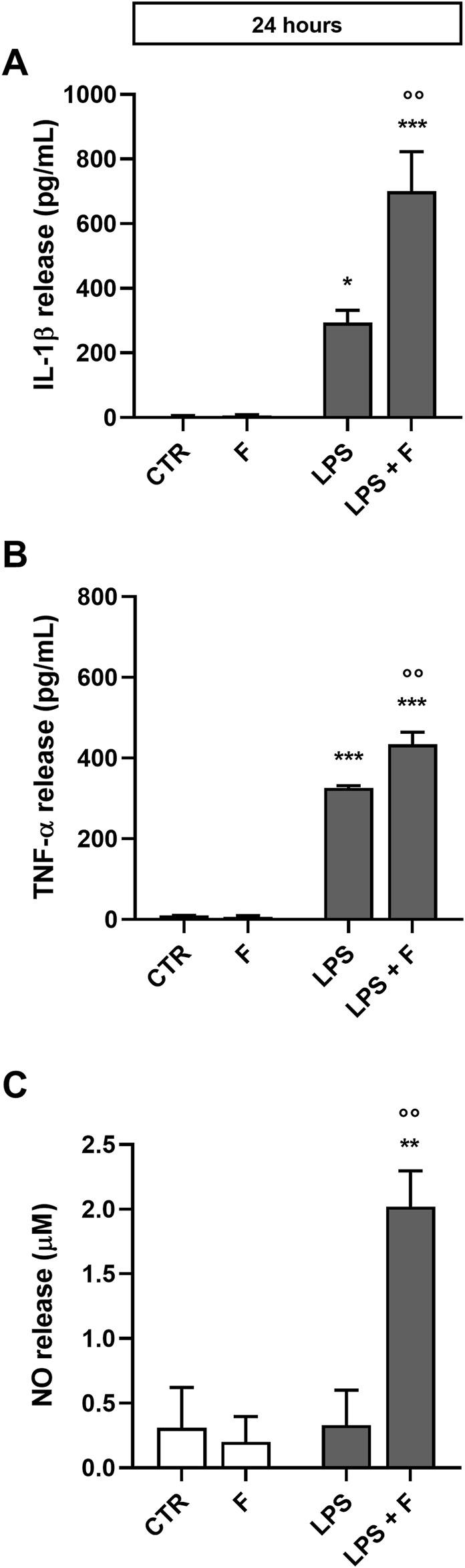
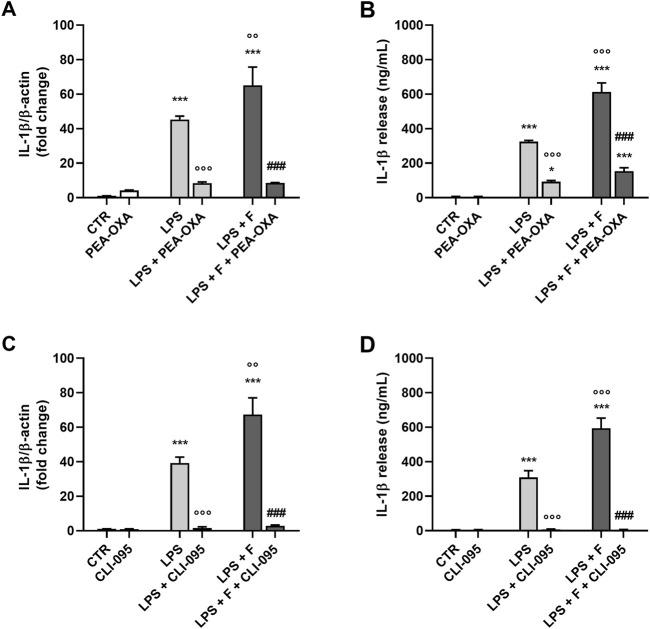
Fentanyl increased mRNA levels, as well as the LPS-induced secretion of proinflammatory mediators in primary microglia and MDM. Two inhibitors of TLR4/MD-2 signaling, namely the oxazoline derivative of -palmitoylethanolamine (PEA-OXA) and CLI-095, blocked the production and release of proinflammatory cytokines by microglia stimulated with LPS and fentanyl, suggesting that TLR4/MD-2 could be the target of the proinflammatory activity of fentanyl. Finally, we showed that fentanyl in combination with LPS activated NF-κB signaling in human MDM and in HEK-Blue hTLR4 cells and this effect was blocked by inhibitors of TLR4/MD-2 complex.
DISCUSSION
These results provide new insight into the mechanism of the proinflammatory activity of fentanyl, which involves the activation of TLR4/MD-2 signaling. Our findings might facilitate the development of novel inhibitors of TLR4/MD-2 signaling to combine with opioid-based analgesics for effective and safe pain management.
引言
阿片类药物已被证明可诱导神经炎症和免疫细胞激活,这可能导致一些阿片类药物的副作用,如阿片类药物诱导的耐受性和反常性痛觉过敏。在此背景下,TLR4/MD-2复合物已被提出作为阿片类药物作用的非靶向位点。本研究旨在探讨芬太尼对脂多糖(LPS)诱导的大鼠原代小胶质细胞和人单核细胞衍生巨噬细胞(MDM)中TLR4/MD-2激活的影响。
材料与方法
首先通过实时PCR和ELISA检测原代大鼠小胶质细胞和人MDM中不同促炎介质的表达和释放,探索芬太尼的作用。然后,通过研究稳定转染人TLR4、MD-2和CD14基因的HEK293细胞(HEK-Blue hTLR4细胞)和人MDM中的NF-κB激活,研究TLR4/MD-2信号通路的参与情况。
结果
芬太尼增加了原代小胶质细胞和MDM中mRNA水平以及LPS诱导的促炎介质分泌。两种TLR4/MD-2信号通路抑制剂,即棕榈酰乙醇胺的恶唑啉衍生物(PEA-OXA)和CLI-095,可阻断LPS和芬太尼刺激的小胶质细胞中促炎细胞因子的产生和释放,表明TLR4/MD-2可能是芬太尼促炎活性的靶点。最后,我们表明芬太尼与LPS联合激活了人MDM和HEK-Blue hTLR4细胞中的NF-κB信号通路,并且这种作用被TLR4/MD-2复合物抑制剂阻断。
讨论
这些结果为芬太尼促炎活性的机制提供了新的见解,该机制涉及TLR4/MD-2信号通路的激活。我们的发现可能有助于开发新型TLR4/MD-2信号通路抑制剂,与基于阿片类药物的镇痛药联合使用,以实现有效和安全的疼痛管理。




 Zotero 插件