
细胞内铁缺乏和代谢异常而非铁死亡,导致同型半胱氨酸诱导的血管内皮细胞死亡。
Intracellular Iron Deficiency and Abnormal Metabolism, Not Ferroptosis, Contributes to Homocysteine-Induced Vascular Endothelial Cell Death.
作者信息
Shi Wenting, Zhang Jing, Zhao Wairong, Yue Meiyan, Ma Jie, Zeng Silu, Tang Jingyi, Wang Yu, Zhou Zhongyan
机构信息
Longhua Hospital, Shanghai University of Traditional Chinese Medicine, Shanghai 200032, China.
State Key Laboratory of Pharmaceutical Biotechnology, The University of Hong Kong, Hong Kong SAR, China.
出版信息
Biomedicines. 2024 Oct 10;12(10):2301. doi: 10.3390/biomedicines12102301.
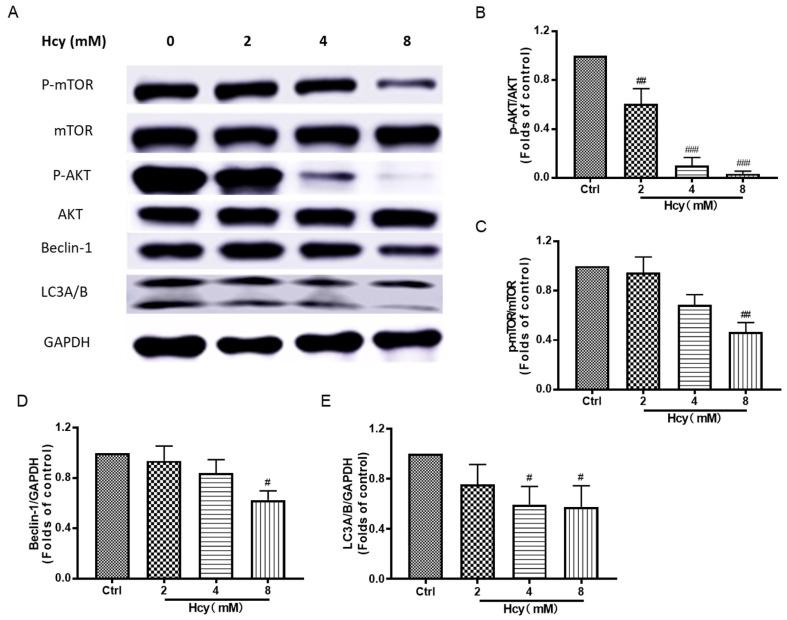
Homocysteine (Hcy) and iron are factors co-related with the progression of cardiovascular diseases. The vascular endothelium is an important barrier for physiological homeostasis, and its impairment initiates cardiovascular injury. However, the mechanism underlying Hcy-caused vascular endothelial cell injury and the participation of iron are not fully elucidated. This study aims to investigate the Hcy-induced vascular endothelial injury and iron metabolism dysfunction as well as the underlying molecular mechanism. Human umbilical vein endothelial cells (HUVECs) were employed as the experimental model to examine the Hcy-induced endothelial injury and its underlying mechanism via various biochemical assays. Hcy suppressed the cell viability and proliferation and caused cell death in a concentration-dependent manner. Hcy induced cell cycle arrest, apoptosis, and autophagy as well as impairment of intracellular energy metabolism. Hcy disrupted the intracellular antioxidant system and mitochondrial function by increasing intracellular ROS, MDA and mitochondrial content, and decreasing the SOD activity and mitochondrial membrane potential. Hcy significantly reduced the GSH-Px activity along with the accumulation of intracellular GSH in a concentration-dependent manner. Ferroptosis inhibitors, Ferrostatin-1 (Fer-1), and Deferoxamine (DFO) significantly decreased the Hcy-caused cytotoxicity accompanied by a reduction in dysregulated mitochondria content, but only DFO ameliorated the elevation of intracellular ROS, and neither Fer-1 nor DFO affected the Hcy-caused reduction in intracellular ATP. In addition, Hcy decreased the intracellular concentration of iron, and supplementing Hcy with various concentrations of Fe increased the cell viability and decreased the LDH release in a concentration-dependent manner. Hcy dramatically decreased the mRNA expression level of transferrin receptor while increasing the mRNA expression levels of transferrin, ferritin light chain, ferritin heavy chain, ferroportin, and SLC7A11. Moreover, Hcy suppressed the protein expression of phospho-Akt, phospho-mTOR, Beclin-1, LC3A/B, Nrf2, HO-1, phospho-MEK1/2, phospho-ERK1/2, and Caspase-3 in concentration- and time-dependent manners. Hcy-induced vascular endothelial injury is likely to be associated with apoptosis and autophagy, but not ferroptosis. The key underlying mechanisms are involved in the disruption of the intracellular antioxidant system and iron metabolism via regulation of PI3K/Akt/mTOR, MAPKs, Nrf2/HO-1, and iron metabolism.
同型半胱氨酸(Hcy)和铁是与心血管疾病进展相关的因素。血管内皮是生理稳态的重要屏障,其损伤会引发心血管损伤。然而,Hcy导致血管内皮细胞损伤的机制以及铁的参与尚未完全阐明。本研究旨在探讨Hcy诱导的血管内皮损伤和铁代谢功能障碍及其潜在的分子机制。采用人脐静脉内皮细胞(HUVECs)作为实验模型,通过各种生化检测来研究Hcy诱导的内皮损伤及其潜在机制。Hcy以浓度依赖性方式抑制细胞活力和增殖并导致细胞死亡。Hcy诱导细胞周期停滞、凋亡和自噬以及细胞内能量代谢受损。Hcy通过增加细胞内活性氧(ROS)、丙二醛(MDA)和线粒体含量,降低超氧化物歧化酶(SOD)活性和线粒体膜电位,破坏细胞内抗氧化系统和线粒体功能。Hcy以浓度依赖性方式显著降低谷胱甘肽过氧化物酶(GSH-Px)活性以及细胞内谷胱甘肽(GSH)的积累。铁死亡抑制剂Ferrostatin-1(Fer-1)和去铁胺(DFO)显著降低Hcy引起的细胞毒性,同时伴随着失调的线粒体含量的减少,但只有DFO改善了细胞内ROS的升高,Fer-1和DFO均未影响Hcy引起的细胞内三磷酸腺苷(ATP)的减少。此外,Hcy降低细胞内铁浓度,用不同浓度的铁补充Hcy以浓度依赖性方式增加细胞活力并降低乳酸脱氢酶(LDH)释放。Hcy显著降低转铁蛋白受体的mRNA表达水平,同时增加转铁蛋白、铁蛋白轻链、铁蛋白重链、铁转运蛋白和溶质载体家族7成员11(SLC7A11)的mRNA表达水平。此外,Hcy以浓度和时间依赖性方式抑制磷酸化蛋白激酶B(phospho-Akt)、磷酸化哺乳动物雷帕霉素靶蛋白(phospho-mTOR)、Beclin-1、微管相关蛋白1轻链3α/β(LC3A/B)、核因子E2相关因子2(Nrf2)、血红素加氧酶-1(HO-1)、磷酸化丝裂原活化蛋白激酶1/2(phospho-MEK1/2)、磷酸化细胞外信号调节激酶1/2(phospho-ERK1/2)和半胱天冬酶-3(Caspase-)3的蛋白表达。Hcy诱导的血管内皮损伤可能与凋亡和自噬有关,但与铁死亡无关。潜在的关键机制涉及通过调节磷脂酰肌醇-3激酶/蛋白激酶B/哺乳动物雷帕霉素靶蛋白(PI3K/Akt/mTOR)信号通路、丝裂原活化蛋白激酶(MAPKs)信号通路、核因子E2相关因子2/血红素加氧酶-1(Nrf2/HO-1)信号通路和铁代谢来破坏细胞内抗氧化系统和铁代谢。



 Zotero 插件