
量化和减轻中枢神经系统中反义寡核苷酸诱导的运动表型。
Quantifying and mitigating motor phenotypes induced by antisense oligonucleotides in the central nervous system.
作者信息
Moazami Michael P, Rembetsy-Brown Julia M, Sarli Samantha L, McEachern Holly R, Wang Feng, Ohara Masahiro, Wagh Atish, Kelly Karen, Krishnamurthy Pranathi Meda, Weiss Alexandra, Marosfoi Miklos, King Robert M, Motwani Mona, Gray-Edwards Heather, Fitzgerald Katherine A, Brown Robert H, Watts Jonathan K
机构信息
RNA Therapeutics Institute, UMass Chan Medical School, Worcester, MA 01605 USA.
Department of Neurology, UMass Chan Medical School, Worcester, MA 01605 USA.
出版信息
Mol Ther. 2024 Dec 4;32(12):4401-4417. doi: 10.1016/j.ymthe.2024.10.024. Epub 2024 Oct 28.
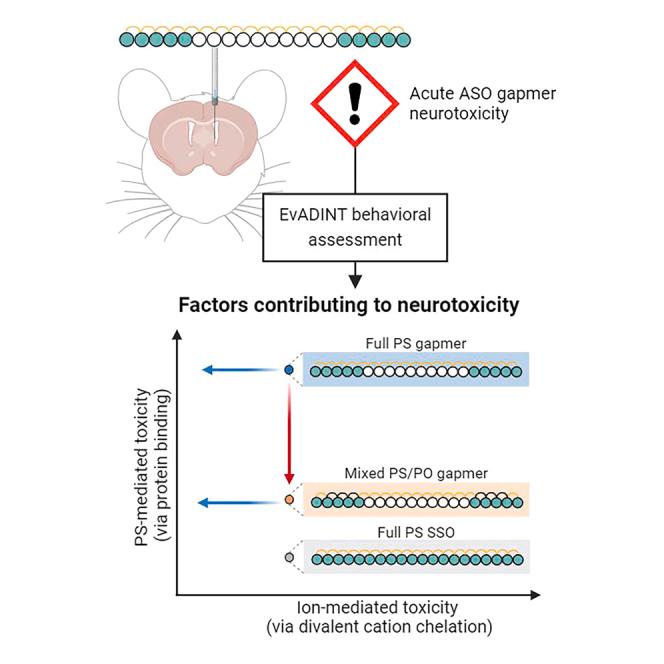
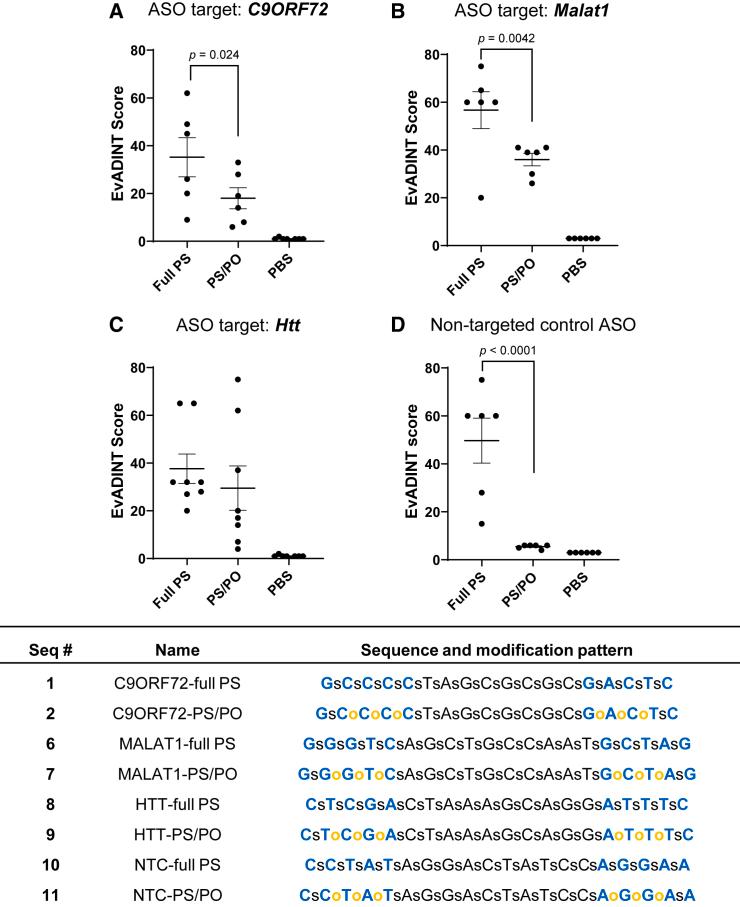
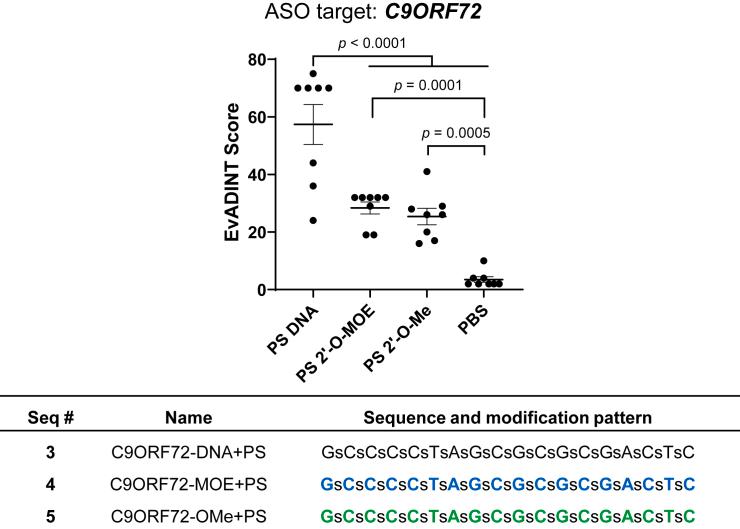
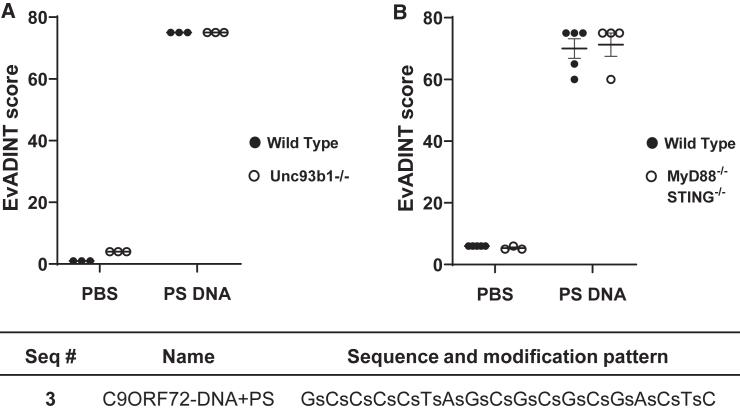
Antisense oligonucleotides (ASOs) are emerging as a promising class of therapeutics for neurological diseases. When injected directly into cerebrospinal fluid, ASOs distribute broadly across brain regions and exert long-lasting therapeutic effects. However, many phosphorothioate (PS)-modified gapmer ASOs show transient motor phenotypes when injected into the cerebrospinal fluid, ranging from reduced motor activity to ataxia or acute seizure-like phenotypes. Using a behavioral scoring assay customized to reflect the timing and nature of these effects, we show that both sugar and phosphate modifications influence acute motor phenotypes. Among sugar analogs, DNA induces the strongest motor phenotypes while 2'-substituted RNA modifications improve the tolerability of PS ASOs. Reducing the PS content of gapmer ASOs, which contain a stretch of PS-DNA, improves their toxicity profile, but in some cases also reduces efficacy or duration of effect. We show that this acute toxicity is not mediated by major nucleic acid sensing immune pathways. Formulating ASOs with divalent ions before injection and avoiding phosphate-based buffers modestly improved tolerability through mechanisms at least partially distinct from reduced PS content. Overall, our work identifies and quantifies an understudied aspect of oligonucleotide toxicology in the CNS, explores its mechanism, and presents platform-level medicinal chemistry and formulation approaches that improve tolerability of this class of compounds.
反义寡核苷酸(ASOs)正成为一类治疗神经疾病的有前景的疗法。当直接注射到脑脊液中时,ASOs可广泛分布于脑区并发挥持久的治疗作用。然而,许多硫代磷酸酯(PS)修饰的缺口mer ASOs注射到脑脊液中时会表现出短暂的运动表型,从运动活性降低到共济失调或急性癫痫样表型不等。使用定制的行为评分分析来反映这些效应的时间和性质,我们发现糖和磷酸修饰都会影响急性运动表型。在糖类似物中,DNA诱导最强的运动表型,而2'-取代的RNA修饰提高了PS ASOs的耐受性。减少含有一段PS-DNA的缺口mer ASOs的PS含量可改善其毒性特征,但在某些情况下也会降低疗效或作用持续时间。我们表明这种急性毒性不是由主要的核酸传感免疫途径介导的。注射前用二价离子配制ASOs并避免使用基于磷酸盐的缓冲液,通过至少部分不同于降低PS含量的机制适度提高了耐受性。总体而言,我们的工作识别并量化了中枢神经系统中寡核苷酸毒理学一个研究不足的方面,探索了其机制,并提出了提高这类化合物耐受性的平台级药物化学和制剂方法。



 Zotero 插件