
解析感病和抗病甘蓝型油菜品系响应野油菜黄单胞菌侵染的可变剪接模式。
Unravelling alternative splicing patterns in susceptible and resistant Brassica napus lines in response to Xanthomonas campestris infection.
机构信息
Key Laboratory of Biology and Genetic Improvement of Oil Crops, Ministry of Agriculture, Oil Crops Research Institute, Chinese Academy of Agricultural Sciences, Wuhan, Hubei, 430062, China.
Biosystematics Group, Wageningen University & Research, Droevendaalsesteeg 1, Wageningen, 6708 PB, The Netherlands.
出版信息
BMC Plant Biol. 2024 Oct 30;24(1):1027. doi: 10.1186/s12870-024-05728-8.
BACKGROUND
Rapeseed (Brassica napus L.) is an important oil and industrial crop worldwide. Black rot caused by the bacterial pathogen Xanthomonas campestris pv. campestris (Xcc) is an infectious vascular disease that leads to considerable yield losses in rapeseed. Resistance improvement through genetic breeding is an effective and sustainable approach to control black rot disease in B. napus. However, the molecular mechanisms underlying Brassica-Xcc interactions are not yet fully understood, especially regarding the impact of post-transcriptional gene regulation via alternative splicing (AS).
RESULTS
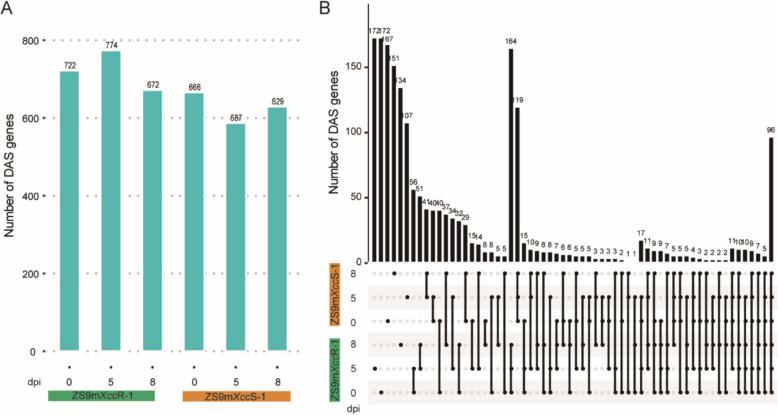
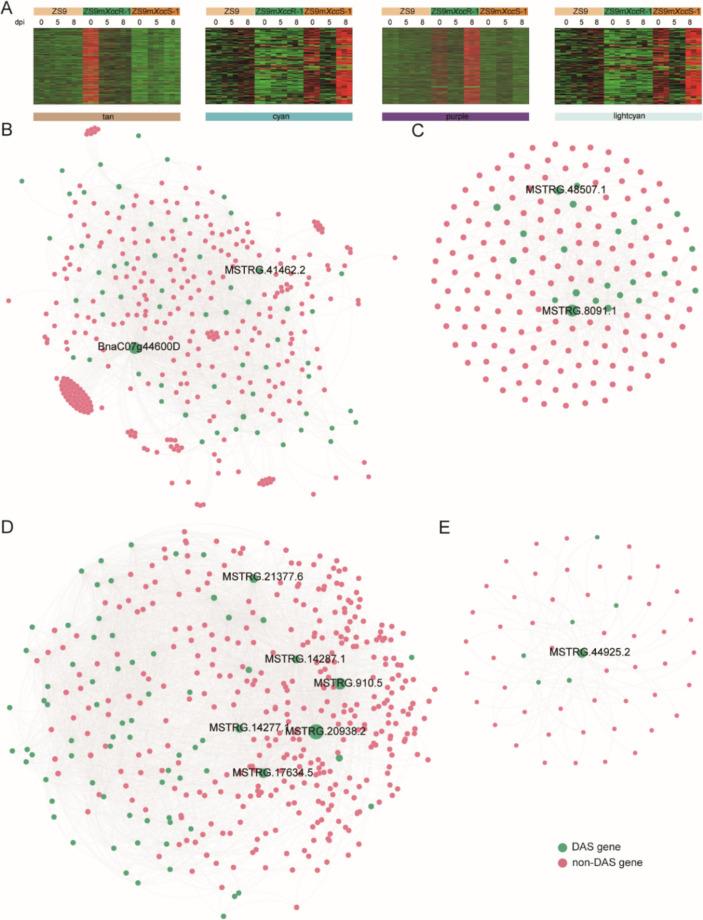
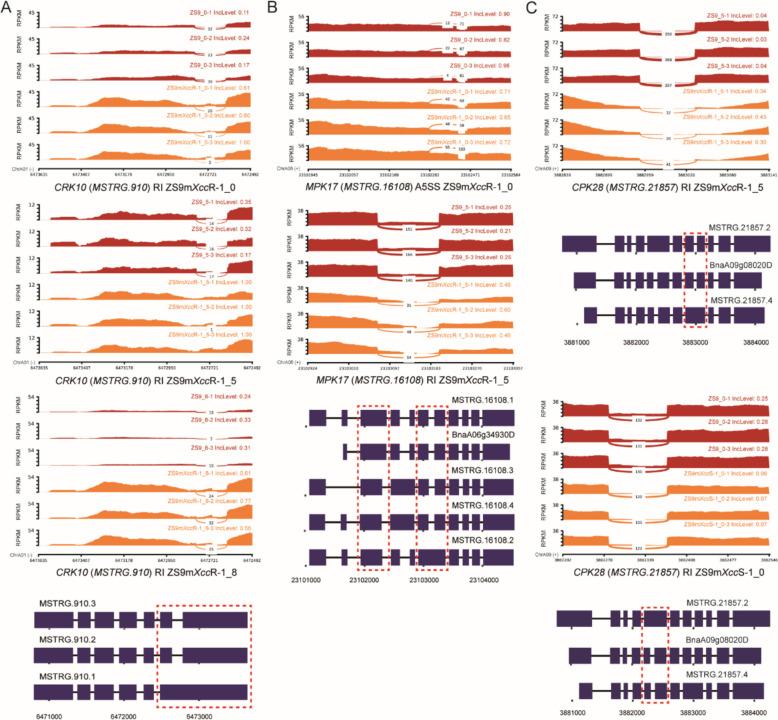
In this study, we compared the AS landscapes of a susceptible parental line and two mutagenized B. napus lines with contrasting levels of black rot resistance. Different types of AS events were identified in these B. napus lines at three time points upon Xcc infection, among which intron retention was the most common AS type. A total of 1,932 genes was found to show differential AS patterns between different B. napus lines. Multiple defense-related differential alternative splicing (DAS) hub candidates were pinpointed through an isoform-based co-expression network analysis, including genes involved in pathogen recognition, defense signalling, transcriptional regulation, and oxidation reduction.
CONCLUSION
This study provides new insights into the potential effects of post-transcriptional regulation on immune responses in B. napus towards Xcc attack. These findings could be beneficial for the genetic improvement of B. napus to achieve durable black rot resistance in the future.
背景
油菜(甘蓝型油菜)是世界范围内重要的油料作物和工业作物。由细菌病原体野油菜黄单胞菌油菜致病变种(Xcc)引起的黑腐病是一种传染性血管疾病,会导致油菜产量的大量损失。通过遗传育种进行抗性改良是控制油菜黑腐病的有效和可持续方法。然而,甘蓝型油菜与 Xcc 互作的分子机制尚不完全清楚,特别是在后转录基因调控方面,如通过可变剪接(AS)。
结果
在这项研究中,我们比较了易感亲本系和两个具有不同黑腐病抗性水平的诱变油菜品系在 Xcc 感染后三个时间点的 AS 景观。在这些油菜品系中,鉴定出了不同类型的 AS 事件,其中内含子保留是最常见的 AS 类型。总共发现了 1932 个基因在不同油菜品系之间表现出不同的 AS 模式。通过基于异构体的共表达网络分析,鉴定出了多个防御相关的差异可变剪接(DAS)枢纽候选基因,包括参与病原体识别、防御信号转导、转录调控和氧化还原的基因。
结论
本研究为后转录调控对油菜免疫反应的潜在影响提供了新的见解,这可能有助于未来对油菜进行遗传改良,以实现持久的黑腐病抗性。



 Zotero 插件