
氧化应激在线粒体功能障碍中的作用及其在椎间盘退变中的意义:机制与治疗策略
Role of oxidative stress in mitochondrial dysfunction and their implications in intervertebral disc degeneration: Mechanisms and therapeutic strategies.
作者信息
Zhou Hao, Wu Chenyu, Jin Yuxin, Wu Ouqiang, Chen Linjie, Guo Zhenyu, Wang Xinzhou, Chen Qizhu, Kwan Kenny Yat Hong, Li Yan Michael, Xia Dongdong, Chen Tao, Wu Aimin
机构信息
Department of Orthopaedics, Key Laboratory of Structural Malformations in Children of Zhejiang Province, Key Laboratory of Orthopaedics of Zhejiang Province, The Second Affiliated Hospital and Yuying Children's Hospital of Wenzhou Medical University, Wenzhou, Zhejiang Province, 325000, China.
The First Affiliated Hospital of Ningbo University, Ningbo, Zhejiang Province, 315010, China.
出版信息
J Orthop Translat. 2024 Oct 16;49:181-206. doi: 10.1016/j.jot.2024.08.016. eCollection 2024 Nov.
BACKGROUND
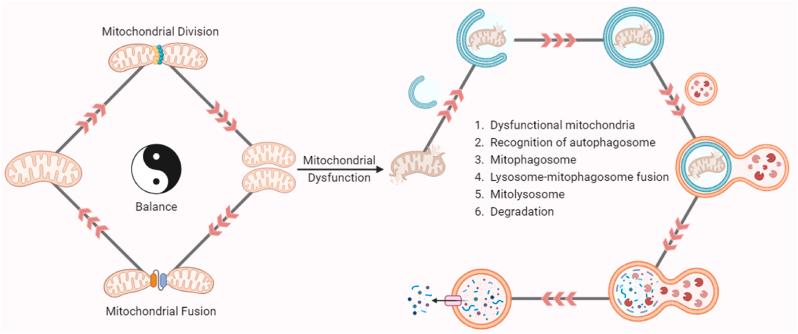
Intervertebral disc degeneration (IVDD) is widely recognized as one of the leading causes of low back pain. Intervertebral disc cells are the main components of the intervertebral disc (IVD), and their functions include synthesizing and secreting collagen and proteoglycans to maintain the structural and functional stability of the IVD. In addition, IVD cells are involved in several physiological processes. They help maintain nutrient metabolism balance in the IVD. They also have antioxidant and anti-inflammatory effects. Because of these roles, IVD cells are crucial in IVDD. When IVD cells are subjected to oxidative stress, mitochondria may become damaged, affecting normal cell function and accelerating degenerative changes. Mitochondria are the energy source of the cell and regulate important intracellular processes. As a key site for redox reactions, excessive oxidative stress and reactive oxygen species can damage mitochondria, leading to inflammation, DNA damage, and apoptosis, thus accelerating disc degeneration.
AIM OF REVIEW
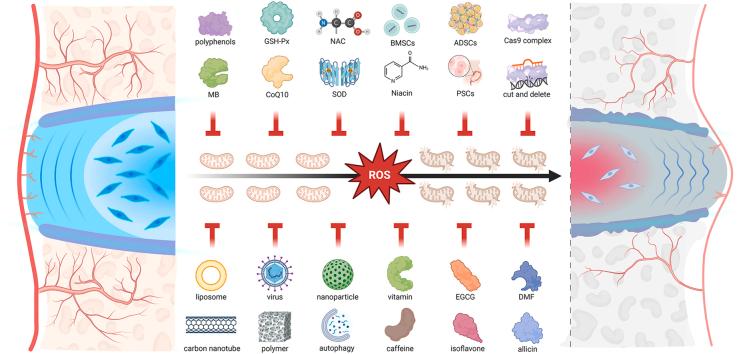
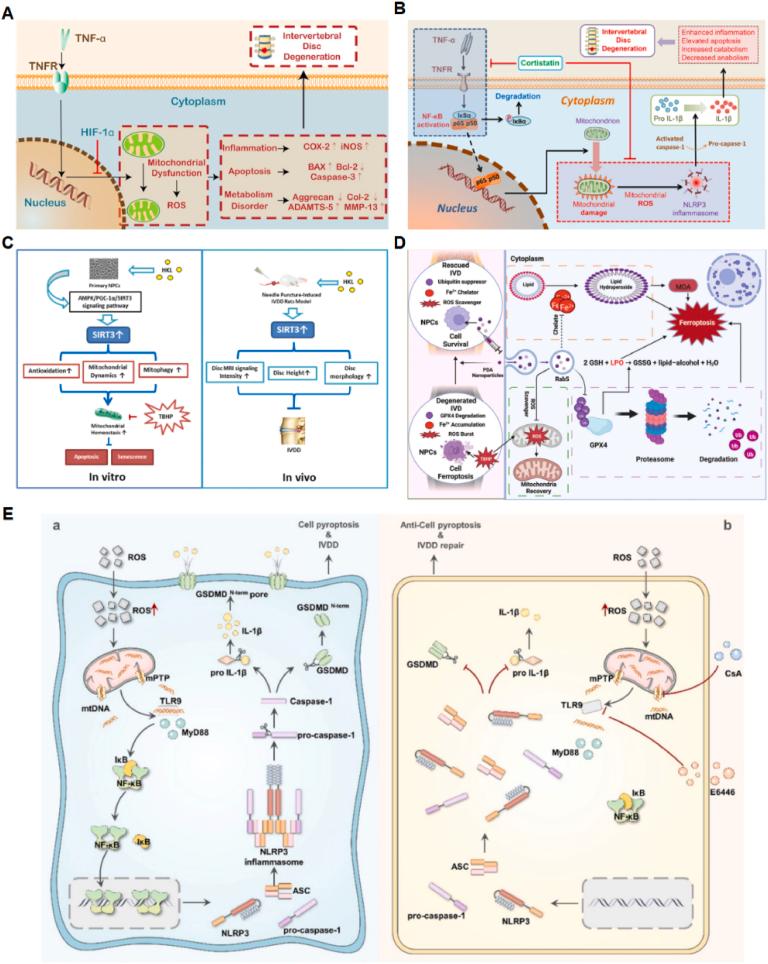
Describes the core knowledge of IVDD and oxidative stress. Comprehensively examines the complex relationship and potential mechanistic pathways between oxidative stress, mitochondrial dysfunction and IVDD. Highlights potential therapeutic targets and frontier therapeutic concepts. Draws researchers' attention and discussion on the future research of all three.
KEY SCIENTIFIC CONCEPTS OF REVIEW
Origin, development and consequences of IVDD, molecular mechanisms of oxidative stress acting on mitochondria, mechanisms of oxidative stress damage to IVD cells, therapeutic potential of targeting mitochondria to alleviate oxidative stress in IVDD.
THE TRANSLATIONAL POTENTIAL OF THIS ARTICLE
Targeted therapeutic strategies for oxidative stress and mitochondrial dysfunction are particularly critical in the treatment of IVDD. Using antioxidants and specific mitochondrial therapeutic agents can help reduce symptoms and pain. This approach is expected to significantly improve the quality of life for patients. Individualized therapeutic approaches, on the other hand, are based on an in-depth assessment of the patient's degree of oxidative stress and mitochondrial functional status to develop a targeted treatment plan for more precise and effective IVDD management. Additionally, we suggest preventive measures like customized lifestyle changes and medications. These are based on understanding how IVDD develops. The aim is to slow down the disease and reduce the chances of it coming back. Actively promoting clinical trials and evaluating the safety and efficacy of new therapies helps translate cutting-edge treatment concepts into clinical practice. These measures not only improve patient outcomes and quality of life but also reduce the consumption of healthcare resources and the socio-economic burden, thus having a positive impact on the advancement of the IVDD treatment field.
背景
椎间盘退变(IVDD)被广泛认为是腰痛的主要原因之一。椎间盘细胞是椎间盘(IVD)的主要组成部分,其功能包括合成和分泌胶原蛋白及蛋白聚糖,以维持IVD的结构和功能稳定性。此外,IVD细胞参与多种生理过程。它们有助于维持IVD中的营养代谢平衡。它们还具有抗氧化和抗炎作用。由于这些作用,IVD细胞在IVDD中至关重要。当IVD细胞受到氧化应激时,线粒体可能会受损,影响正常细胞功能并加速退变变化。线粒体是细胞的能量来源,并调节重要的细胞内过程。作为氧化还原反应的关键部位,过度的氧化应激和活性氧会损伤线粒体,导致炎症、DNA损伤和细胞凋亡,从而加速椎间盘退变。
综述目的
描述IVDD和氧化应激的核心知识。全面研究氧化应激、线粒体功能障碍与IVDD之间的复杂关系和潜在机制途径。突出潜在治疗靶点和前沿治疗概念。引起研究人员对这三者未来研究的关注和讨论。
综述的关键科学概念
IVDD的起源、发展和后果,氧化应激作用于线粒体的分子机制,氧化应激对IVD细胞的损伤机制,靶向线粒体缓解IVDD中氧化应激的治疗潜力。
本文的转化潜力
针对氧化应激和线粒体功能障碍的靶向治疗策略在IVDD治疗中尤为关键。使用抗氧化剂和特定的线粒体治疗药物有助于减轻症状和疼痛。这种方法有望显著提高患者的生活质量。另一方面,个体化治疗方法基于对患者氧化应激程度和线粒体功能状态的深入评估,以制定更精确有效的IVDD管理的靶向治疗方案。此外,我们建议采取定制的生活方式改变和药物等预防措施。这些措施基于对IVDD发病机制方式的理解。目的是减缓疾病发展并降低复发几率。积极推动临床试验并评估新疗法的安全性和有效性有助于将前沿治疗概念转化为临床实践。这些措施不仅改善患者预后和生活质量,还减少医疗资源消耗和社会经济负担,从而对IVDD治疗领域的进步产生积极影响。






 Zotero 插件