
从基因组学角度看待食源性疾病
Genomic perspectives on foodborne illness.
机构信息
Food and Drug Administration, Center for Food Safety and Applied Nutrition, Office of Regulatory Science, College Park, MD 20740.
National Center for Biotechnology Information, National Library of Medicine, NIH, Bethesda, MD 20892.
出版信息
Proc Natl Acad Sci U S A. 2024 Nov 12;121(46):e2411894121. doi: 10.1073/pnas.2411894121. Epub 2024 Nov 5.
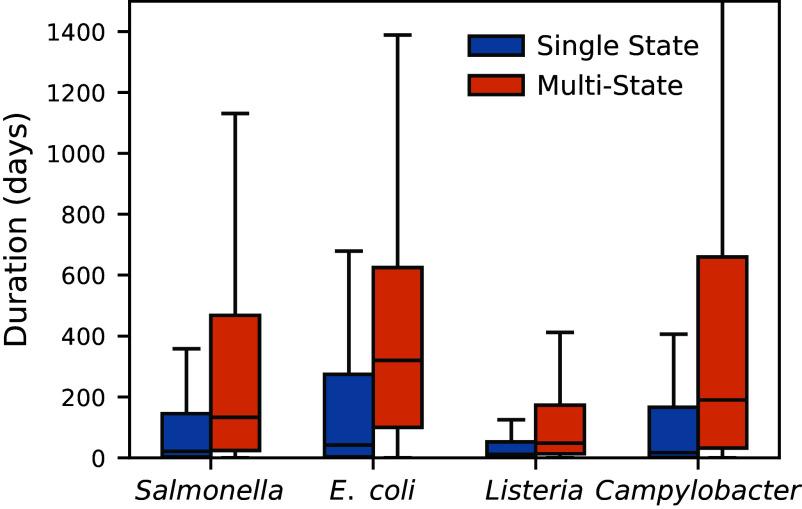
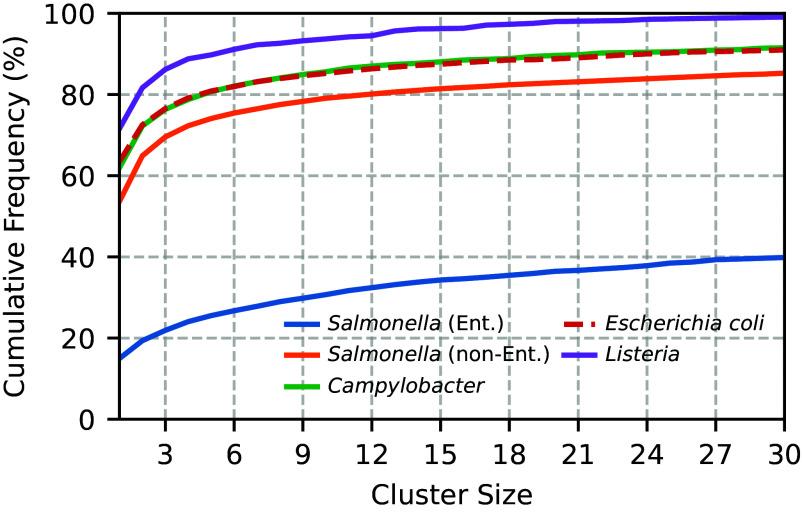
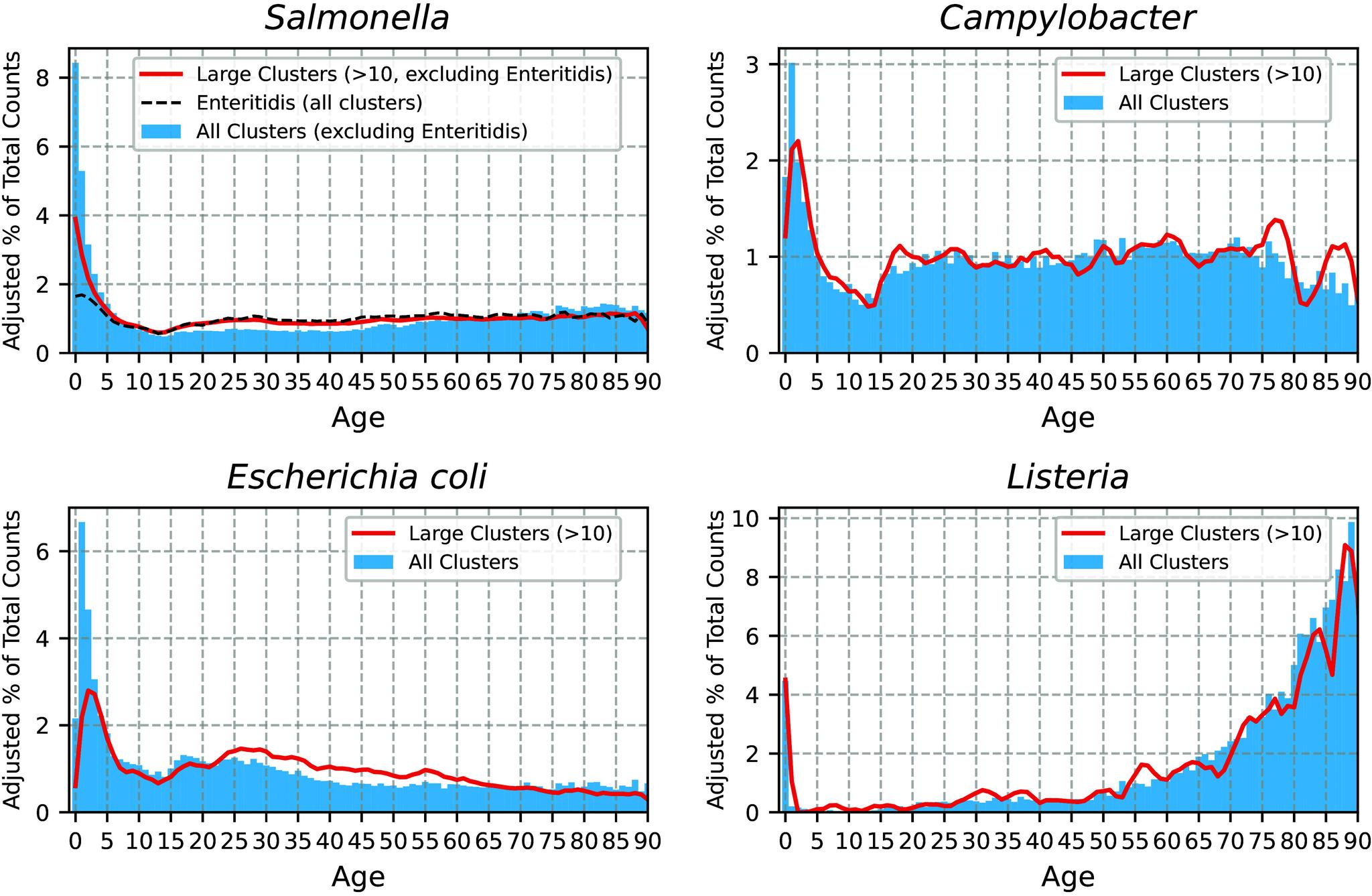
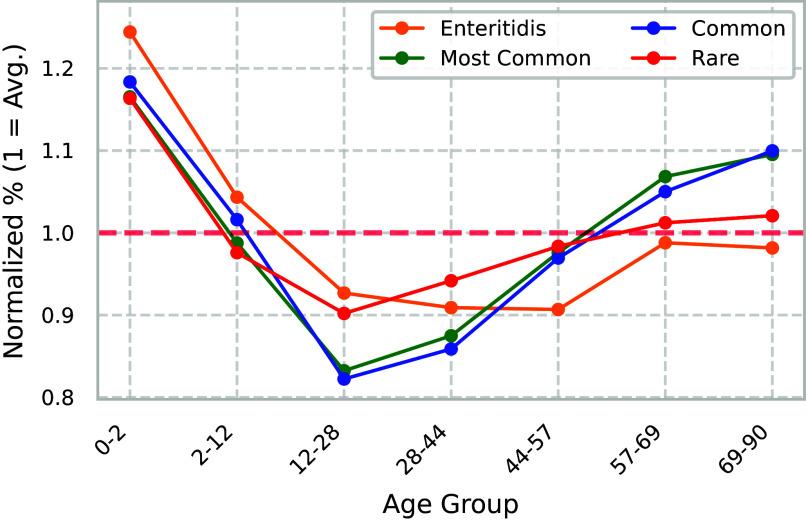
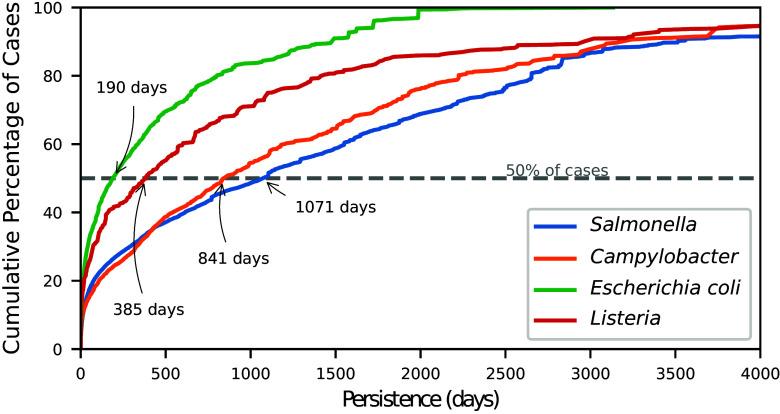
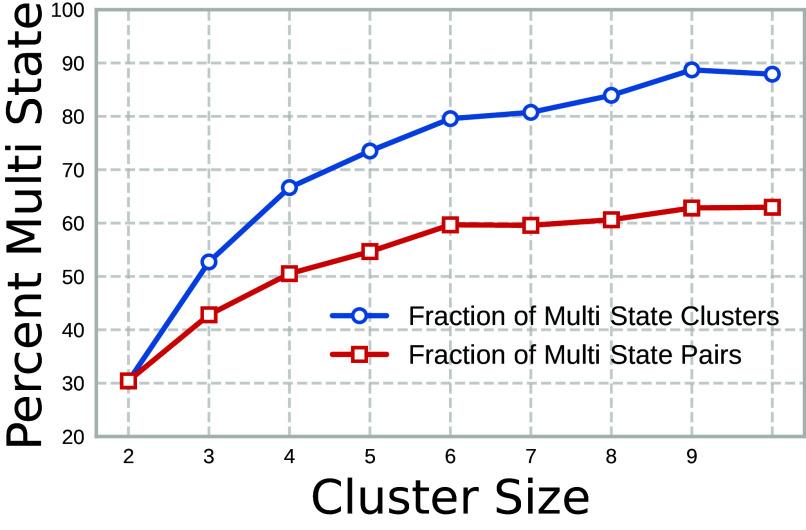
Whole-genome sequencing of bacterial pathogens is used by public health agencies to link cases of food poisoning caused by the same source of contamination. The vast majority of these appear to be sporadic cases associated with small contamination episodes and do not trigger investigations. A "contamination episode" refers to one or more contamination events from a single source over a period of time. We examine clusters of sequenced clinical isolates of , , , and that differ by only a small number of mutations (SNPs) to identify features of the underlying contamination episodes. These analyses provide additional evidence that the youngest age groups have greater susceptibility to infection by , , and than older age groups. This age bias is weaker for the common serovar Enteritidis than in general. A large fraction of the contamination episodes causing sickness appear to have a long duration. For example, 50% of the cases are in clusters that persist for almost 3 y. For all four pathogen species, the majority of the cases were part of genetic clusters with illnesses in multiple states and likely to be caused by contaminated commercially distributed foods. infections in infants under 3 mo are predominantly acquired from the same contaminated food, pet food, or environmental sources as older individuals, rather than infant formula contaminated during production.
公共卫生机构使用全基因组测序来关联由同一污染源引起的食源性疾病病例。这些案例绝大多数似乎是零星的,与小范围污染事件有关,不会引发调查。“污染事件”是指在一段时间内来自单一来源的一次或多次污染事件。我们检查了不同数量突变(SNP)的 、 、 和 临床分离株的序列聚类,以确定潜在污染事件的特征。这些分析为以下结论提供了额外的证据:年龄最小的群体比年龄较大的群体更容易感染 、 和 。与一般情况相比,这种年龄偏差在常见的肠炎沙门氏菌血清型 中较弱。导致疾病的污染事件中有很大一部分持续时间很长。例如,50%的 病例属于持续近 3 年的聚类。对于所有四种病原体,大多数病例都是具有多个州疾病的遗传聚类的一部分,很可能是由受污染的商业分销食品引起的。3 个月以下婴儿的 感染主要是由与年龄较大的个体相同的受污染食物、宠物食品或环境来源获得的,而不是在生产过程中受污染的婴儿配方奶粉。


 Zotero 插件