
利用高效能和高选择性的小分子抑制剂评估 STK17B 作为癌症免疫疗法的靶点。
Evaluation of STK17B as a cancer immunotherapy target utilizing highly potent and selective small molecule inhibitors.
机构信息
Blueprint Medicines Corporation, Cambridge, MA, United States.
Roche Innovation Center Basel, Basel, Switzerland.
出版信息
Front Immunol. 2024 Oct 21;15:1411395. doi: 10.3389/fimmu.2024.1411395. eCollection 2024.
INTRODUCTION
The serine/threonine kinase 17B (STK17B) is involved in setting the threshold for T cell activation and its absence sensitizes T cells to suboptimal stimuli. Consequently, STK17B represents an attractive potential target for cancer immunotherapy.
METHODS
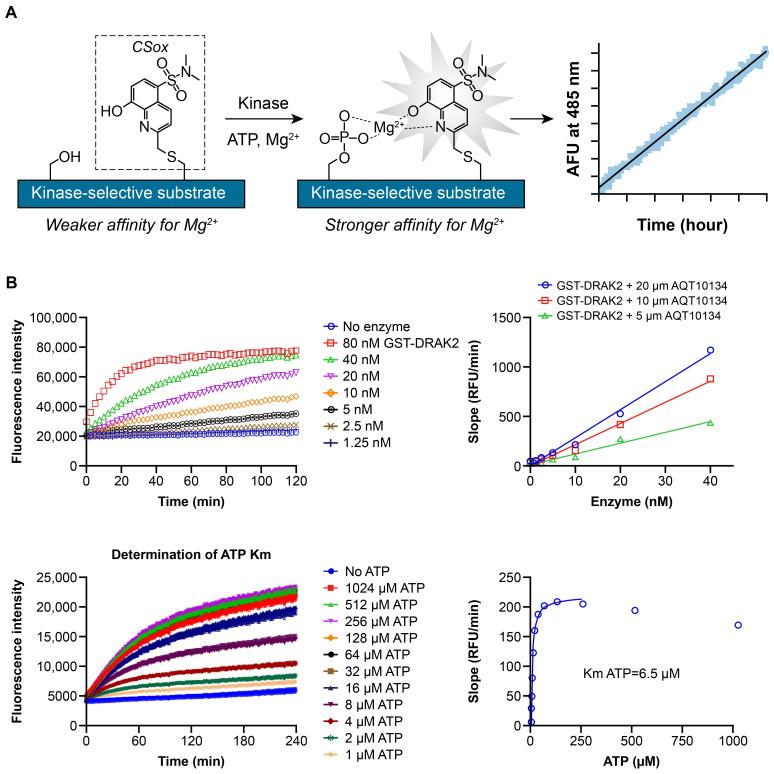
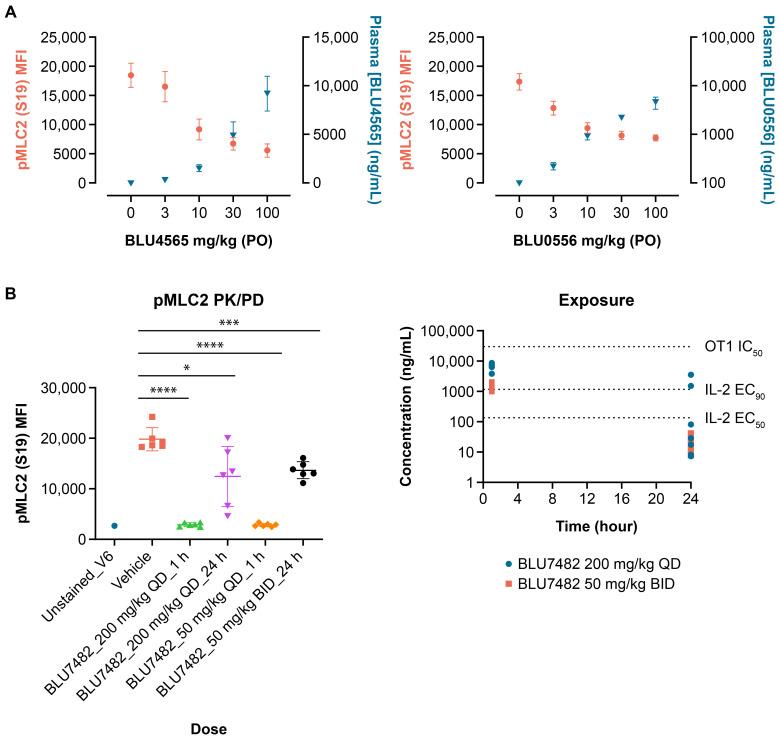
To assess the potential of STK17B as an immuno-oncology target, we developed potent and selective tool compounds from starting points in Blueprint Medicines Corporation's proprietary kinase inhibitor library. To characterize these molecules, enzyme and cellular assays for STK17A and STK17B were established to drive chemistry optimization. Mass spectrometry-based phosphoproteomics profiling with tool inhibitors led to the identification of Ser19 on myosin light chain 2 as STK17B substrate, which is then developed into a flow cytometry-based pharmacodynamic readout of STK17B inhibition both and .
RESULTS
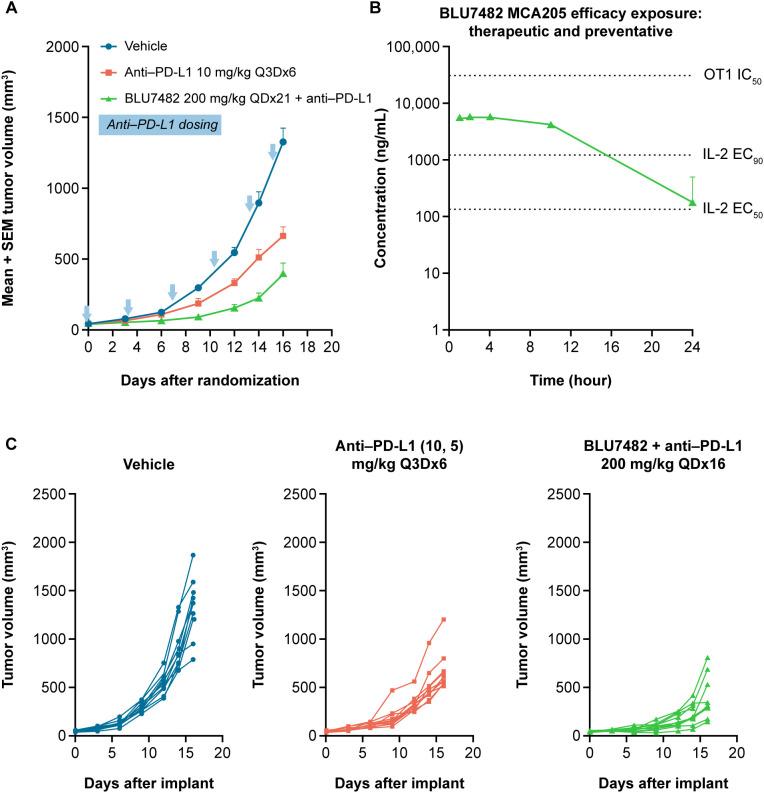
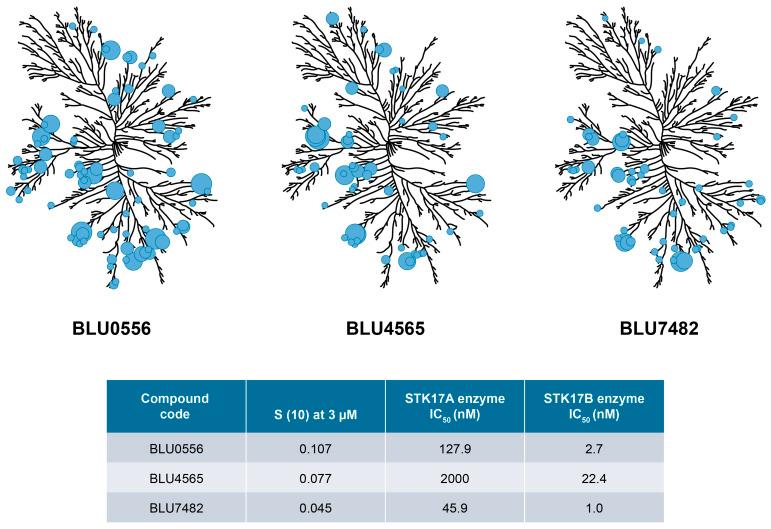
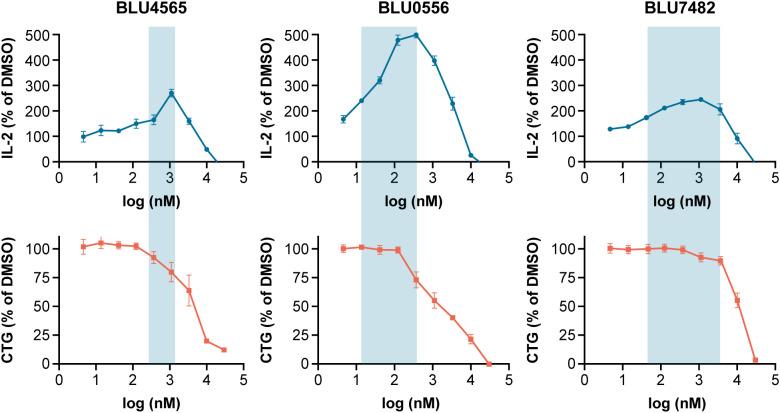
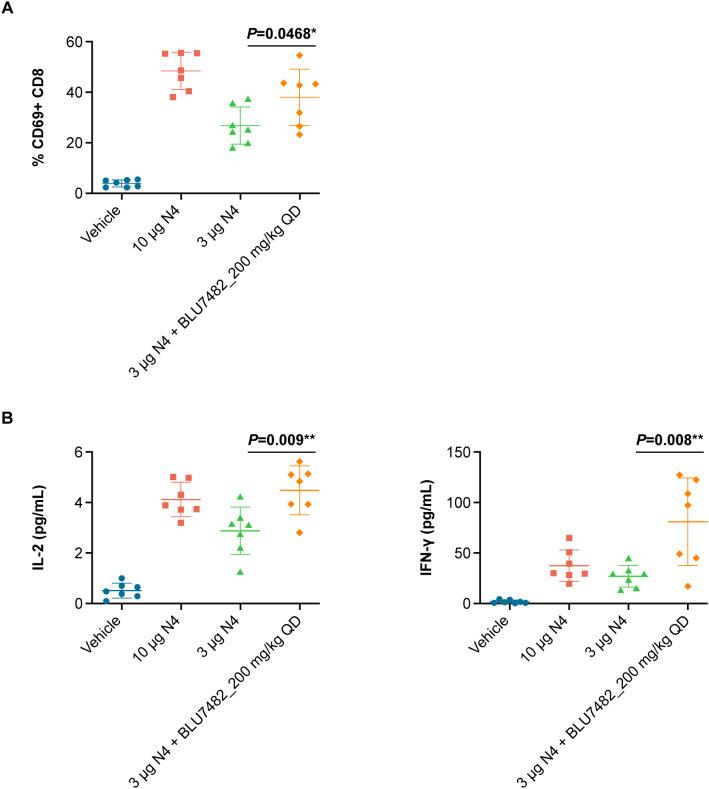
In a mouse T cell activation assay, STK17B inhibitors demonstrated the ability to enhance interleukin-2 (IL-2) production. Similarly, treatment with STK17B inhibitors resulted in stronger cytokine secretion in human T cells activated using a T cell bispecific antibody. Subsequent chemistry optimization led to the identification of a highly selective and orally bioavailable tool compound, BLU7482. , STK17B inhibition led to dose-dependent modulation of myosin light chain 2 phosphorylation and enhanced priming of naïve T cells, as determined by upregulation of CD69, IL-2 and interferon-γ secretion. In line with increased T cell activation, treatment with STK17B inhibitor enhanced antitumor activity of anti-PD-L1 antibody in the MCA205 model.
CONCLUSIONS
In summary, we successfully identified and optimized STK17B kinase inhibitors which led to increased T cell responses and . This allowed us to evaluate the potential of STK17B inhibition as an approach for cancer immunotherapy.
简介
丝氨酸/苏氨酸激酶 17B(STK17B)参与设定 T 细胞激活的阈值,其缺失使 T 细胞对低效刺激敏感。因此,STK17B 代表了癌症免疫治疗的一个有吸引力的潜在靶点。
方法
为了评估 STK17B 作为免疫肿瘤学靶点的潜力,我们从 Blueprint 医药公司专有激酶抑制剂库中的起点开发了强效和选择性的工具化合物。为了表征这些分子,建立了用于 STK17A 和 STK17B 的酶和细胞测定法,以推动化学优化。基于质谱的磷酸化蛋白质组学分析与工具抑制剂一起导致肌球蛋白轻链 2 上的 Ser19 被鉴定为 STK17B 底物,然后将其开发成基于流式细胞术的 STK17B 抑制的药效学读出,无论是在体内还是在体外。
结果
在小鼠 T 细胞激活测定中,STK17B 抑制剂显示出增强白细胞介素-2(IL-2)产生的能力。同样,使用 T 细胞双特异性抗体激活人 T 细胞时,用 STK17B 抑制剂处理会导致更强的细胞因子分泌。随后的化学优化导致了一种高度选择性和可口服生物利用的工具化合物 BLU7482 的鉴定。在体内和体外,STK17B 抑制导致肌球蛋白轻链 2 磷酸化的剂量依赖性调节,并通过上调 CD69、IL-2 和干扰素-γ的分泌增强了幼稚 T 细胞的启动。与增加的 T 细胞激活一致,用 STK17B 抑制剂处理增强了 MCA205 模型中抗 PD-L1 抗体的抗肿瘤活性。
结论
总之,我们成功地鉴定和优化了 STK17B 激酶抑制剂,这导致了 T 细胞反应的增加。这使我们能够评估 STK17B 抑制作为癌症免疫治疗的一种方法的潜力。
 Zotero 插件