
用于抑郁症检测和严重程度评估的可解释多层动态集成框架优化
Explainable Multi-Layer Dynamic Ensemble Framework Optimized for Depression Detection and Severity Assessment.
作者信息
Imans Dillan, Abuhmed Tamer, Alharbi Meshal, El-Sappagh Shaker
机构信息
College of Computing and Informatics, Sungkyunkwan University, Suwon 16419, Republic of Korea.
Department of Computer Science, College of Computer Engineering and Sciences, Prince Sattam Bin Abdulaziz University, Alkharj 11942, Saudi Arabia.
出版信息
Diagnostics (Basel). 2024 Oct 25;14(21):2385. doi: 10.3390/diagnostics14212385.
BACKGROUND
Depression is a pervasive mental health condition, particularly affecting older adults, where early detection and intervention are essential to mitigate its impact. This study presents an explainable multi-layer dynamic ensemble framework designed to detect depression and assess its severity, aiming to improve diagnostic precision and provide insights into contributing health factors.
METHODS
Using data from the National Social Life, Health, and Aging Project (NSHAP), this framework combines classical machine learning models, static ensemble methods, and dynamic ensemble selection (DES) approaches across two stages: detection and severity prediction. The depression detection stage classifies individuals as normal or depressed, while the severity prediction stage further classifies depressed cases as mild or moderate-severe. Finally, a confirmation depression scale prediction model estimates depression severity scores to support the two stages. Explainable AI (XAI) techniques are applied to improve model interpretability, making the framework more suitable for clinical applications.
RESULTS
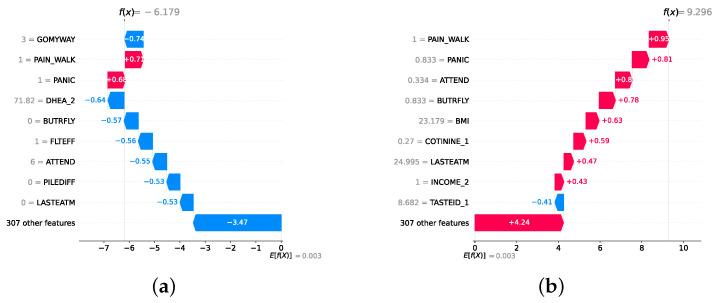
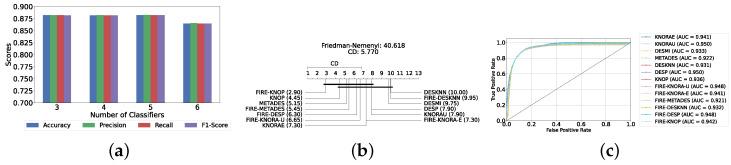
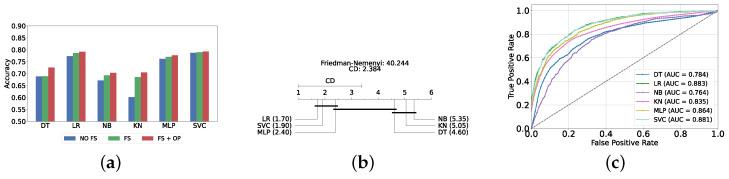
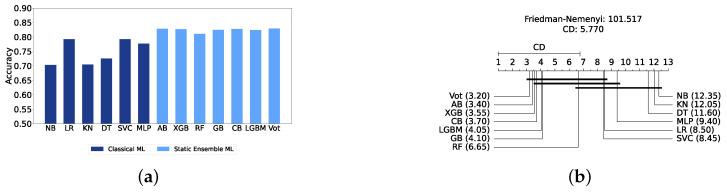
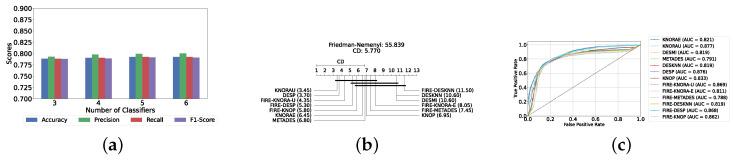
The framework's FIRE-KNOP DES algorithm demonstrated high efficacy, achieving 88.33% accuracy in depression detection and 83.68% in severity prediction. XAI analysis identified mental and non-mental health indicators as significant factors in the framework's performance, emphasizing the value of these features for accurate depression assessment.
CONCLUSIONS
This study emphasizes the potential of dynamic ensemble learning in mental health assessments, particularly in detecting and evaluating depression severity. The findings provide a strong foundation for future use of dynamic ensemble frameworks in mental health assessments, demonstrating their potential for practical clinical applications.
背景
抑郁症是一种普遍存在的心理健康状况,尤其影响老年人,早期检测和干预对于减轻其影响至关重要。本研究提出了一个可解释的多层动态集成框架,旨在检测抑郁症并评估其严重程度,旨在提高诊断精度并深入了解促成健康因素。
方法
利用来自国家社会生活、健康与老龄化项目(NSHAP)的数据,该框架在两个阶段结合了经典机器学习模型、静态集成方法和动态集成选择(DES)方法:检测和严重程度预测。抑郁症检测阶段将个体分类为正常或抑郁,而严重程度预测阶段将抑郁病例进一步分类为轻度或中度-重度。最后,一个确认抑郁症量表预测模型估计抑郁症严重程度得分以支持这两个阶段。应用可解释人工智能(XAI)技术来提高模型的可解释性,使该框架更适合临床应用。
结果
该框架的FIRE-KNOP DES算法显示出高效性,在抑郁症检测中准确率达到88.33%,在严重程度预测中达到83.68%。XAI分析确定心理和非心理健康指标是该框架性能的重要因素,强调了这些特征对于准确评估抑郁症的价值。
结论
本研究强调了动态集成学习在心理健康评估中的潜力,特别是在检测和评估抑郁症严重程度方面。这些发现为未来在心理健康评估中使用动态集成框架提供了坚实的基础,证明了它们在实际临床应用中的潜力。








 Zotero 插件