
循环肿瘤DNA甲基化检测作为生物标志物及其在肿瘤液体活检中的应用:进展与挑战
Circulating tumor DNA methylation detection as biomarker and its application in tumor liquid biopsy: advances and challenges.
作者信息
Li Lingyu, Sun Yingli
机构信息
Central Laboratory & Shenzhen Key Laboratory of Epigenetics and Precision Medicine for Cancers National Cancer Center/National Clinical Research Center for Cancer/Cancer Hospital & Shenzhen Hospital Chinese Academy of Medical Sciences and Peking Union Medical College Shenzhen China.
出版信息
MedComm (2020). 2024 Nov 9;5(11):e766. doi: 10.1002/mco2.766. eCollection 2024 Nov.
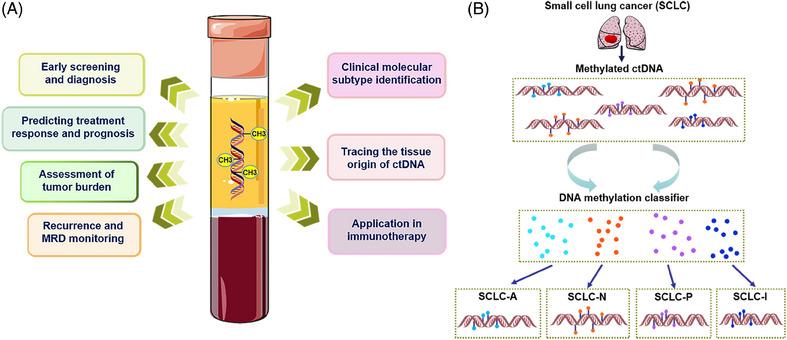
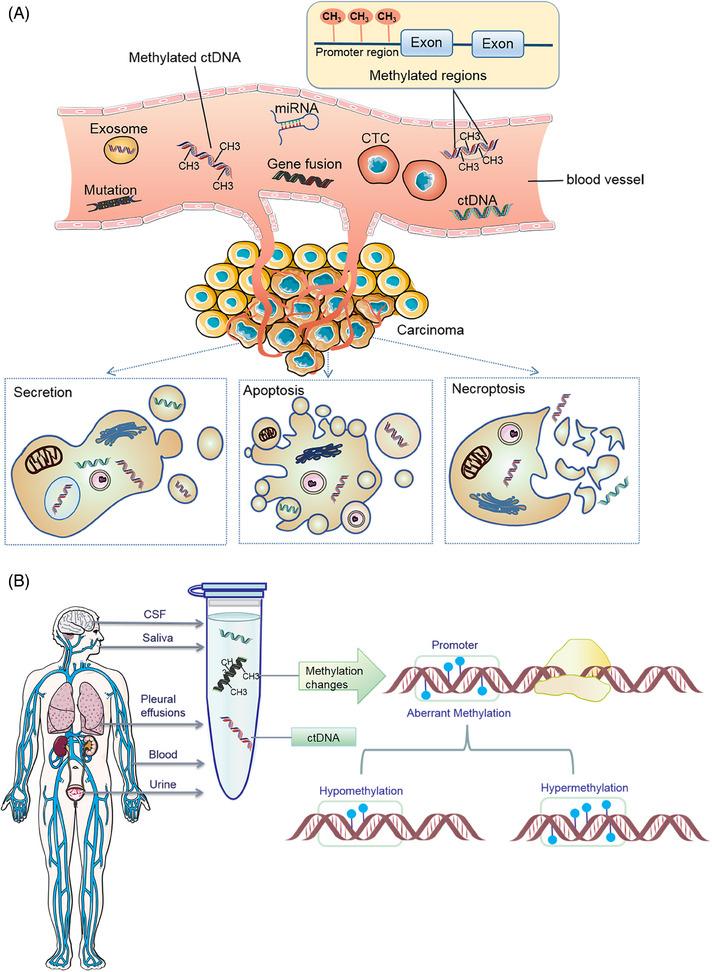
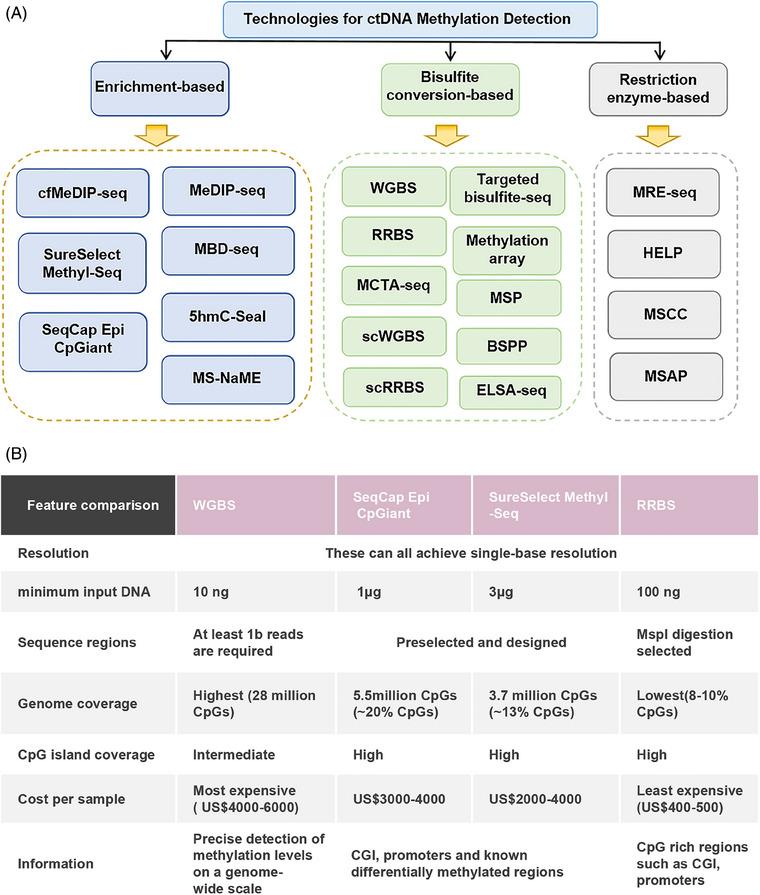
Circulating tumor DNA (ctDNA) methylation, an innovative liquid biopsy biomarker, has emerged as a promising tool in early cancer diagnosis, monitoring, and prognosis prediction. As a noninvasive approach, liquid biopsy overcomes the limitations of traditional tissue biopsy. Among various biomarkers, ctDNA methylation has garnered significant attention due to its high specificity and early detection capability across diverse cancer types. Despite its immense potential, the clinical application of ctDNA methylation faces substantial challenges pertaining to sensitivity, specificity, and standardization. In this review, we begin by introducing the basic biology and common detection techniques of ctDNA methylation. We then explore recent advancements and the challenges faced in the clinical application of ctDNA methylation in liquid biopsies. This includes progress in early screening and diagnosis, identification of clinical molecular subtypes, monitoring of recurrence and minimal residual disease (MRD), prediction of treatment response and prognosis, assessment of tumor burden, and determination of tissue origin. Finally, we discuss the future perspectives and challenges of ctDNA methylation detection in clinical applications. This comprehensive overview underscores the vital role of ctDNA methylation in enhancing cancer diagnostic accuracy, personalizing treatments, and effectively monitoring disease progression, providing valuable insights for future research and clinical practice.
循环肿瘤DNA(ctDNA)甲基化作为一种创新的液体活检生物标志物,已成为早期癌症诊断、监测和预后预测的一种有前景的工具。作为一种非侵入性方法,液体活检克服了传统组织活检的局限性。在各种生物标志物中,ctDNA甲基化因其在多种癌症类型中的高特异性和早期检测能力而备受关注。尽管具有巨大潜力,但ctDNA甲基化的临床应用在灵敏度、特异性和标准化方面面临重大挑战。在本综述中,我们首先介绍ctDNA甲基化的基本生物学和常见检测技术。然后,我们探讨ctDNA甲基化在液体活检临床应用中的最新进展和面临的挑战。这包括早期筛查和诊断的进展、临床分子亚型的鉴定、复发和微小残留病(MRD)的监测、治疗反应和预后的预测、肿瘤负荷的评估以及组织来源的确定。最后,我们讨论ctDNA甲基化检测在临床应用中的未来前景和挑战。这一全面概述强调了ctDNA甲基化在提高癌症诊断准确性、个性化治疗以及有效监测疾病进展方面的重要作用,为未来研究和临床实践提供了有价值的见解。

 Zotero 插件