
肥胖不影响新型冠状病毒2型的体液疫苗免疫原性。
Obesity does not influence SARS-CoV-2 humoral vaccine immunogenicity.
作者信息
D'Souza Mathieu, Keeshan Alexa, Gravel Christopher A, Langlois Marc-André, Cooper Curtis L
机构信息
Ottawa Hospital Research Institute, Ottawa, ON, Canada.
School of Epidemiology and Public Health, Faculty of Medicine, University of Ottawa, Ottawa, ON, Canada.
出版信息
NPJ Vaccines. 2024 Nov 18;9(1):226. doi: 10.1038/s41541-024-01022-8.
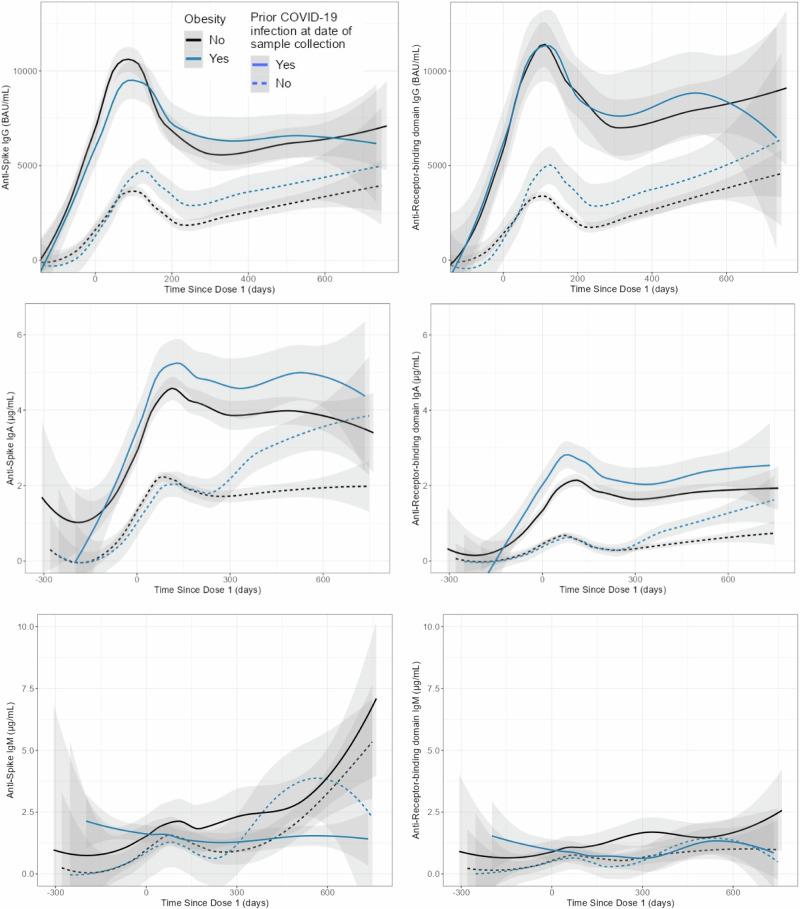
Obesity is a recognized factor influencing immune function and infectious disease outcomes. Characterization of the influence of obesity on SARS-CoV-2 humoral vaccine immunogenicity is required to properly tailor vaccine type (mRNA, viral-vector, protein subunit vaccines) and dosing schedule. Data from a prospective cohort study collected over 34 months was used to evaluate the slope of antibody production and decay and neutralizing capacity following SARS-CoV-2 vaccination in individuals with and without obesity at baseline. Most participants were female (65.4%), white (92.4%), and received mRNA vaccines. 210 were obese and 697 non-obese. Sex and infection-acquired immunity were identified as effect modifiers for the relationship between obesity and COVID-19 vaccine humoral immunogenicity. No consistent influence of obesity on peak titres, titre retention, antibody isotype (IgG, IgM, IgA), or neutralization was identified when controlling for other key variables. It may not be necessary to consider this variable when developing SARS-CoV-2 vaccine dosing strategies.
肥胖是影响免疫功能和传染病结局的一个公认因素。为了合理选择疫苗类型(mRNA疫苗、病毒载体疫苗、蛋白亚单位疫苗)和接种程序,需要对肥胖对SARS-CoV-2体液疫苗免疫原性的影响进行表征。一项为期34个月的前瞻性队列研究数据被用于评估基线时患有和未患有肥胖症的个体在接种SARS-CoV-2疫苗后抗体产生和衰减的斜率以及中和能力。大多数参与者为女性(65.4%),白人(92.4%),且接种的是mRNA疫苗。210人肥胖,697人非肥胖。性别和感染获得性免疫被确定为肥胖与COVID-19疫苗体液免疫原性之间关系的效应修饰因素。在控制其他关键变量时,未发现肥胖对峰值滴度、滴度维持、抗体亚型(IgG、IgM、IgA)或中和作用有一致影响。在制定SARS-CoV-2疫苗接种策略时,可能没有必要考虑这一变量。

 Zotero 插件