
探讨细胞外囊泡中蛋白质糖基化在尿路疾病中的作用:癌症及其他相关疾病的贡献。
Towards Understanding the Role of the Glycosylation of Proteins Present in Extracellular Vesicles in Urinary Tract Diseases: Contributions to Cancer and Beyond.
机构信息
Department of Glycoconjugate Biochemistry, Institute of Zoology and Biomedical Research, Faculty of Biology, Jagiellonian University, Gronostajowa 9 Street, 30-387 Krakow, Poland.
Doctoral School of Exact and Natural Sciences, Jagiellonian University, Prof. S. Lojasiewicza 11 Street, 30-348 Krakow, Poland.
出版信息
Molecules. 2024 Nov 6;29(22):5241. doi: 10.3390/molecules29225241.
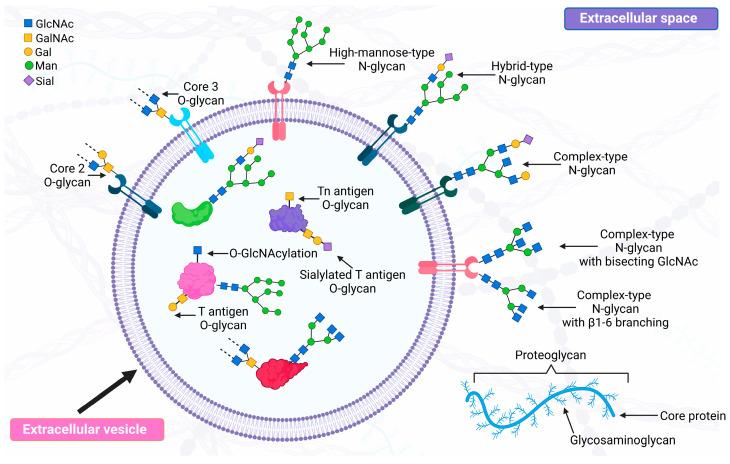
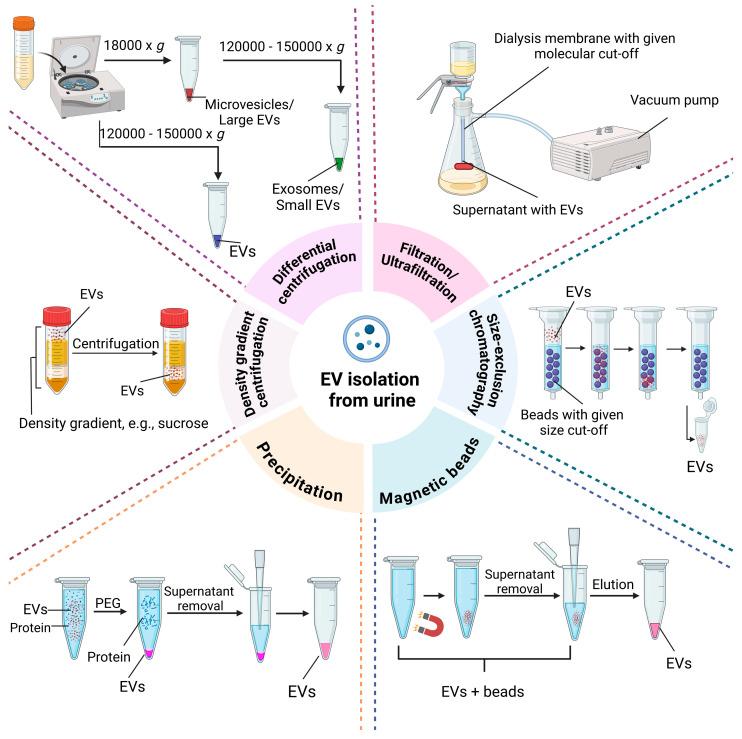
Extracellular vesicles (EVs) are a population of nanoscale particles surrounded by a phospholipid bilayer, enabling intercellular transfer of bioactive molecules. Once released from the parental cell, EVs can be found in most biological fluids in the human body and can be isolated from them. For this reason, EVs have significant diagnostic potential and can serve as an excellent source of circulating disease biomarkers. Protein glycosylation plays a key role in many biological processes, and aberrant glycosylation is a hallmark of various diseases. EVs have been shown to carry multiple glycoproteins, but little is known about the specific biological roles of these glycoproteins in the context of EVs. Moreover, specific changes in EV glycosylation have been described for several diseases, including cancers and metabolic, cardiovascular, neurological or kidney diseases. Urine is the richest source of EVs, providing almost unlimited (in terms of volume) opportunities for non-invasive EV isolation. Recent studies have also revealed a pathological link between urinary EV glycosylation and urological cancers, as well as other pathologies of the urinary tract. In this review, we discuss recent research advances in this field and the diagnostic/prognostic potential of urinary EV glycosylation. In addition, we summarize common methods for isolating EVs from urine and techniques used to study their glycosylation.
细胞外囊泡 (EVs) 是一类被磷脂双层包围的纳米级颗粒,能够实现生物活性分子的细胞间转移。EVs 从亲代细胞释放后,可以在人体的大多数生物体液中被发现,并可以从这些体液中分离出来。由于这个原因,EVs 具有显著的诊断潜力,可以作为循环疾病生物标志物的绝佳来源。蛋白糖基化在许多生物过程中起着关键作用,异常糖基化是多种疾病的标志。已经证实 EVs 携带多种糖蛋白,但对于这些糖蛋白在 EV 背景下的具体生物学作用知之甚少。此外,已经描述了几种疾病中 EV 糖基化的特定变化,包括癌症以及代谢、心血管、神经或肾脏疾病。尿液是 EVs 的最丰富来源,为非侵入性 EV 分离提供了几乎无限的(就体积而言)机会。最近的研究还揭示了尿 EV 糖基化与泌尿系统癌症以及泌尿道其他病理之间的病理联系。在这篇综述中,我们讨论了该领域的最新研究进展以及尿 EV 糖基化的诊断/预后潜力。此外,我们总结了从尿液中分离 EV 的常见方法和用于研究其糖基化的技术。



 Zotero 插件