
霍乱弧菌RbmB是一种α-1,4-多糖裂解酶,对霍乱弧菌多糖(VPS)具有生物膜破坏活性。
Vibrio cholerae RbmB is an α-1,4-polysaccharide lyase with biofilm-disrupting activity against Vibrio polysaccharide (VPS).
作者信息
Weerasekera Ranjuna, Moreau Alexis, Huang Xin, Nam Kee-Myoung, Hinbest Alexander J, Huynh Yun, Liu Xinyu, Ashwood Christopher, Pepi Lauren E, Paulson Eric, Cegelski Lynette, Yan Jing, Olson Rich
机构信息
Department of Molecular Biology and Biochemistry, Molecular Biophysics Program, Wesleyan University, Middletown, Connecticut, United States of America.
Department of Molecular, Cellular, and Developmental Biology, Yale University, New Haven, Connecticut, United States of America.
出版信息
PLoS Pathog. 2024 Dec 2;20(12):e1012750. doi: 10.1371/journal.ppat.1012750. eCollection 2024 Dec.
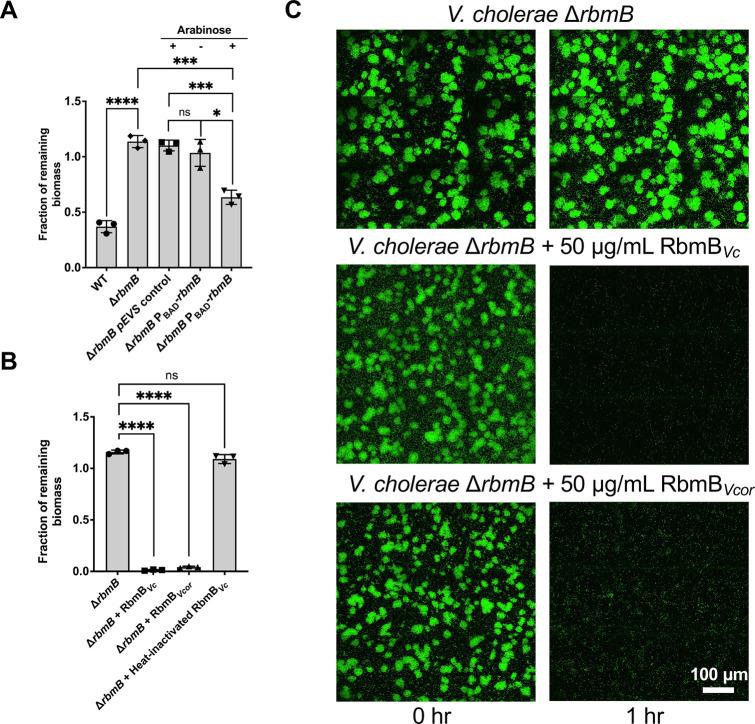
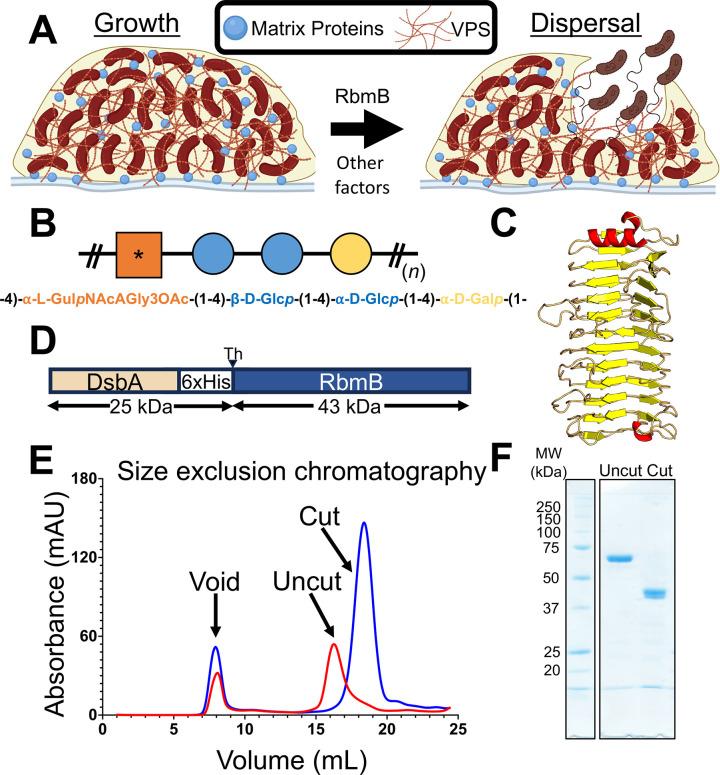
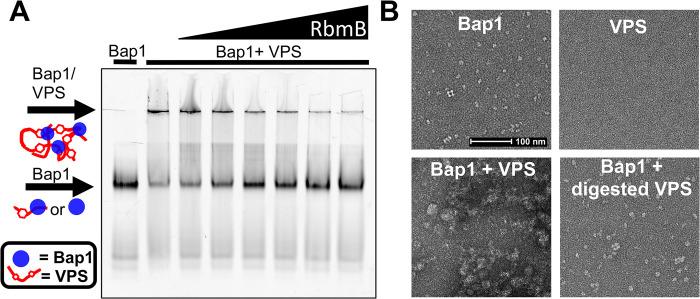
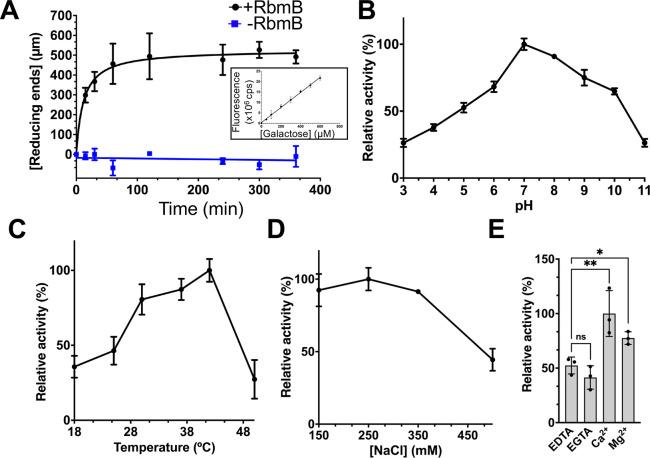
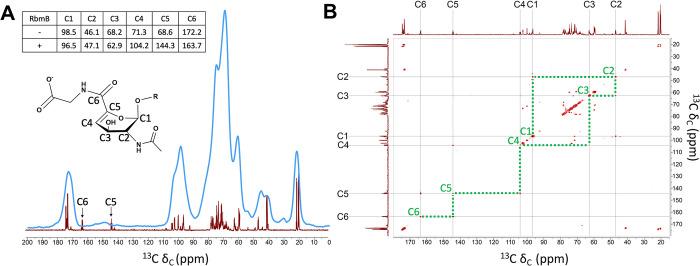
Many pathogenic bacteria form biofilms as a protective measure against environmental and host hazards. The underlying structure of the biofilm matrix consists of secreted macromolecules, often including exopolysaccharides. To escape the biofilm, bacteria may produce a number of matrix-degrading enzymes, including glycosidic enzymes that digest exopolysaccharide scaffolds. The human pathogen Vibrio cholerae assembles and secretes an exopolysaccharide called VPS (Vibrio polysaccharide) which is essential in most cases for the formation of biofilms and consists of a repeating tetrasaccharide unit. Previous studies have indicated that a secreted glycosidase called RbmB is involved in V. cholerae biofilm dispersal, although the mechanism by which this occurs is not understood. To approach the question of RbmB function, we recombinantly expressed and purified RbmB and tested its activity against purified VPS. Using a fluorescence-based biochemical assay, we show that RbmB specifically cleaves VPS in vitro under physiological conditions. Analysis of the cleavage process using mass spectrometry, solid-state NMR, and solution NMR indicates that RbmB cleaves VPS at a specific site (at the α-1,4 linkage between D-galactose and a modified L-gulose) into a mixture of tetramers and octamers. We demonstrate that the product of the cleavage contains a double bond in the modified guluronic acid ring, strongly suggesting that RbmB is cleaving using a glycoside lyase mechanism. Finally, we show that recombinant RbmB from V. cholerae and the related aquatic species Vibrio coralliilyticus are both able to disrupt living V. cholerae biofilms. Our results support the role of RbmB as a polysaccharide lyase involved in biofilm dispersal, as well as an additional glycolytic enzyme to add to the toolbox of potential therapeutic antibacterial enzymes.
许多致病细菌形成生物膜作为抵御环境和宿主危害的一种保护措施。生物膜基质的基础结构由分泌的大分子组成,通常包括胞外多糖。为了逃离生物膜,细菌可能会产生多种基质降解酶,包括消化胞外多糖支架的糖苷酶。人类病原体霍乱弧菌组装并分泌一种名为VPS(霍乱弧菌多糖)的胞外多糖,在大多数情况下,它对生物膜的形成至关重要,由一个重复的四糖单元组成。先前的研究表明,一种名为RbmB的分泌型糖苷酶参与霍乱弧菌生物膜的分散,尽管其发生机制尚不清楚。为了解决RbmB的功能问题,我们重组表达并纯化了RbmB,并测试了它对纯化的VPS的活性。使用基于荧光的生化分析方法,我们表明RbmB在生理条件下在体外特异性切割VPS。使用质谱、固态核磁共振和溶液核磁共振对切割过程进行分析表明,RbmB在一个特定位点(在D-半乳糖和一种修饰的L-古洛糖之间的α-1,4连接)将VPS切割成四聚体和八聚体的混合物。我们证明切割产物在修饰的古洛糖醛酸环中含有一个双键,强烈表明RbmB使用糖苷裂合酶机制进行切割。最后,我们表明来自霍乱弧菌和相关水生物种溶珊瑚弧菌的重组RbmB都能够破坏活的霍乱弧菌生物膜。我们的结果支持RbmB作为一种参与生物膜分散的多糖裂解酶的作用,以及作为一种潜在治疗性抗菌酶工具库中新增的糖酵解酶的作用。

 Zotero 插件