
绿地数量和暴露与免疫介导疾病风险的关系:一项范围综述
Green space quantity and exposure in relation to the risk of immune-mediated diseases: a scoping review.
作者信息
Galitskaya Polina, Luukkonen Anna, Roslund Marja I, Mänttäri Miia, Yli-Viikari Anja, Tyrväinen Liisa, Sinkkonen Aki, Laitinen Olli
机构信息
Research Institute for Environmental Sciences (RIES), Parede, Portugal.
Natural Resources Institute Finland, Helsinki and Turku, Turku, Finland.
出版信息
BMC Public Health. 2024 Dec 2;24(1):3358. doi: 10.1186/s12889-024-20655-x.
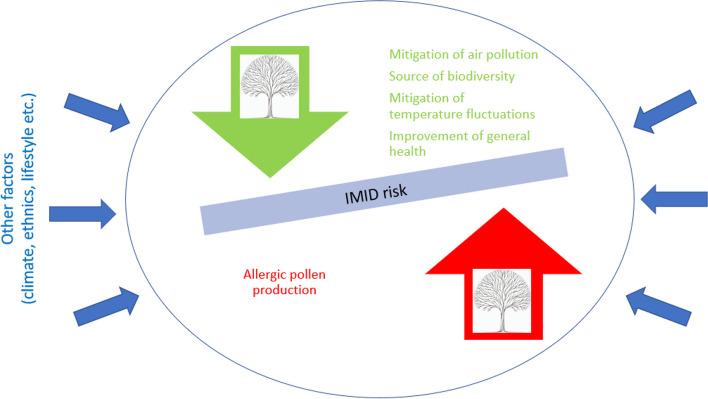
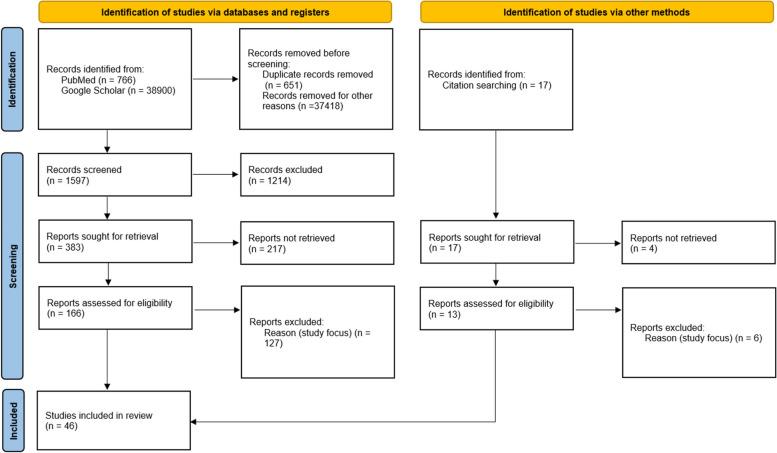
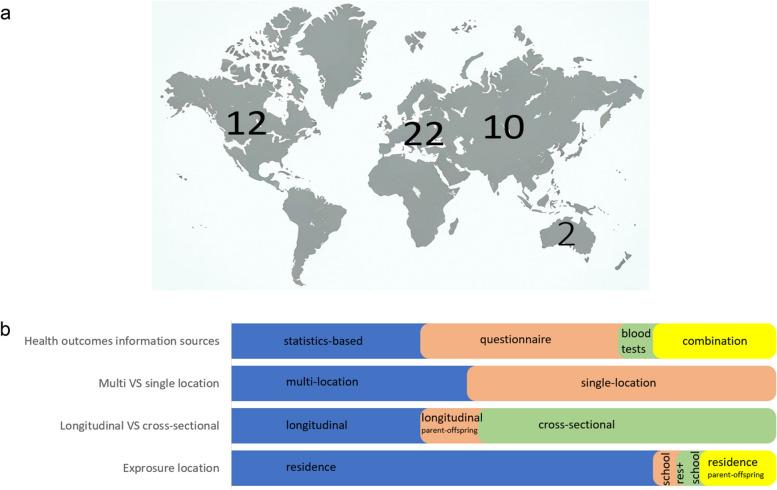
The growing global incidence of immune-mediated and inflammatory diseases (IMIDs) is worrisome, with evidence suggesting that environmental factors, notably urbanization and the reduction of green spaces, may act as potential instigators. However, conflicting findings in studies necessitate a closer examination of recent research (January 2020 - February 2024) to elucidate the factors contributing to these inconsistencies. This review explores study protocols to avoid erroneously endorsing the null hypothesis of no association between green space coverage and IMID risks. A literature search adhering to PRISMA-ScR guidelines yielded 46 relevant papers from Google Scolar and Pub Meb. The studies varied in design, with 17 being longitudinal, 24 cross-sectional, and five focusing on longitudinal parent-offspring connections. Geographic scope differed, with 21 multi-location and 25 single-location studies. Participant numbers ranged from 144 to 982,131 across diverse demographics. Additionally, some studies examined disease frequencies in large groups (several million people) residing in specific regions. Green space metrics encompassed NDVI, land cover data, plant biodiversity, and novel indexes, measured within 7.5-5000 m diameter buffers around residences or schools. The review advises against making definitive statements regarding the relationship between urban green spaces and the prevalence of IMIDs. It suggests that inconsistencies in study results may stem from variations in study designs and methodologies, as well as the complex, interacting mechanisms through which green spaces affect immune health. Future research recommendations include larger cohorts, early-life exposure data, and testing specific hypotheses related to vegetation types and participants' genetic predispositions.
免疫介导性和炎症性疾病(IMIDs)在全球范围内的发病率不断上升,令人担忧,有证据表明环境因素,尤其是城市化和绿地减少,可能是潜在的诱发因素。然而,研究中的相互矛盾的结果需要对近期研究(2020年1月至2024年2月)进行更仔细的审视,以阐明导致这些不一致的因素。本综述探讨了研究方案,以避免错误地支持绿地覆盖率与IMID风险之间无关联的零假设。按照PRISMA-ScR指南进行的文献检索,从谷歌学术和PubMed中获得了46篇相关论文。这些研究设计各不相同,其中17项为纵向研究,24项为横断面研究,5项关注纵向亲子关系。地理范围也有所不同,有21项多地点研究和25项单地点研究。参与者人数在不同人口统计数据中从144到982,131不等。此外,一些研究调查了居住在特定地区的大群体(数百万人)中的疾病发病率。绿地指标包括归一化植被指数(NDVI)、土地覆盖数据、植物生物多样性和新的指数,在住宅或学校周围直径7.5 - 5000米的缓冲区范围内进行测量。该综述建议不要就城市绿地与IMIDs患病率之间的关系做出确定性陈述。它表明研究结果的不一致可能源于研究设计和方法的差异,以及绿地影响免疫健康的复杂相互作用机制。未来的研究建议包括更大的队列、早期暴露数据,以及测试与植被类型和参与者遗传易感性相关的特定假设。

 Zotero 插件