
食品中的赭曲霉毒素A:关于其存在、毒性及管理策略的综述
Ochratoxin A in food commodities: A review of occurrence, toxicity, and management strategies.
作者信息
Banahene Joel Cox Menka, Ofosu Isaac Williams, Odai Bernard Tawiah, Lutterodt Herman Erick, Agyemang Paul Ayiku, Ellis Williams Otoo
机构信息
Department of Food Science and Technology, Kwame Nkrumah University of Science and Technology, Kumasi, Ashanti, Ghana.
Research Department, Quality Control Company Limited-Ghana Cocoa Board, Tema, Greater Accra, Ghana.
出版信息
Heliyon. 2024 Oct 12;10(20):e39313. doi: 10.1016/j.heliyon.2024.e39313. eCollection 2024 Oct 30.
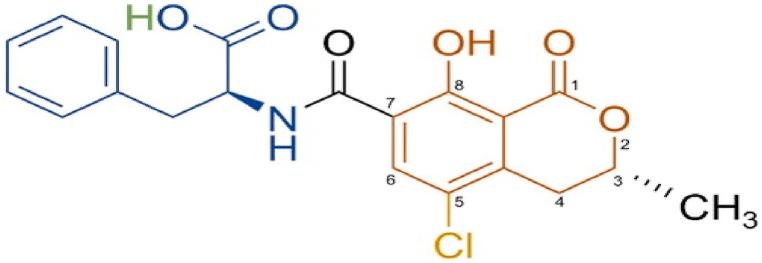
Ochratoxin A (OTA) is a potent mycotoxin produced by species of Aspergillus and Penicillium that contaminate agricultural products and pose significant health risks to both humans and animals. This review examines the mechanisms of OTA toxicity, its occurrence in various food commodities, and the implications for public health and trade. Literature pertaining to OTA was sourced from Google Scholar, covering the period from 2004 to 2024. OTA exposure is linked to multiple adverse health effects, including teratogenicity, immunotoxicity, and hepatotoxicity, with a primary impact on kidney function, and it is classified as a possible human carcinogen (Group 2B). Its toxic effects are attributed to several mechanisms, including lipid peroxidation, inhibition of protein synthesis, DNA damage, oxidative stress, and mitochondrial dysfunction. Notable findings included the presence of OTA in 46.7 % of cocoa products in Turkey, 32 % of cocoa samples in Côte d'Ivoire exceeding the OTA threshold of 2 μg/kg, and 91.5 % of ready-to-sell cocoa beans in Nigeria testing positive for OTA. Coffee beans are particularly susceptible to OTA contamination, which underscores the need for vigilant monitoring. Additionally, OTA contamination impacts agricultural productivity and food safety, leading to significant economic consequences, particularly in regions reliant on exports, such as cocoa and coffee. Several countries regulate the OTA levels in food products to safeguard public health. However, these regulations can impede trade, particularly in countries with high levels of contamination. Balancing regulatory compliance with economic viability is crucial for affected nations. Current strategies for managing OTA include improved agronomic practices, such as the use of biocontrol agents for pest management, enhanced storage conditions to prevent mould growth, and the implementation of detoxification techniques to reduce OTA levels in food products. Despite these strategies, OTA remains a significant threat to public health and the agricultural economy worldwide. The complexity of contamination in food products requires robust prevention, control, and management strategies to mitigate its impact. Continuous research and regulatory initiatives are essential for safeguarding consumers and ensuring food safety.
赭曲霉毒素A(OTA)是一种由曲霉属和青霉属产生的强效霉菌毒素,这些霉菌会污染农产品,对人类和动物都构成重大健康风险。本综述探讨了OTA的毒性机制、其在各种食品中的存在情况以及对公共卫生和贸易的影响。与OTA相关的文献来自谷歌学术,涵盖2004年至2024年期间。接触OTA与多种不良健康影响有关,包括致畸性、免疫毒性和肝毒性,主要影响肾功能,它被归类为可能的人类致癌物(2B组)。其毒性作用归因于多种机制,包括脂质过氧化、蛋白质合成抑制、DNA损伤、氧化应激和线粒体功能障碍。显著发现包括土耳其46.7%的可可产品中存在OTA,科特迪瓦32%的可可样品超过了2μg/kg的OTA阈值,尼日利亚91.5%的待售可可豆OTA检测呈阳性。咖啡豆特别容易受到OTA污染,这突出了进行严格监测的必要性。此外,OTA污染会影响农业生产力和食品安全,导致重大经济后果,特别是在依赖可可和咖啡等出口产品的地区。一些国家对食品中的OTA水平进行监管以保障公众健康。然而,这些规定可能会阻碍贸易,特别是在污染水平较高的国家。在受影响国家,平衡监管合规与经济可行性至关重要。目前管理OTA的策略包括改进农艺措施,如使用生物防治剂进行害虫管理、改善储存条件以防止霉菌生长以及实施解毒技术以降低食品中的OTA水平。尽管有这些策略,OTA仍然是全球公共卫生和农业经济的重大威胁。食品污染的复杂性需要强有力的预防、控制和管理策略来减轻其影响。持续的研究和监管举措对于保护消费者和确保食品安全至关重要。


 Zotero 插件