
荧光吡唑衍生物的化学性质与特性:生物成像应用方法
Chemistry and properties of fluorescent pyrazole derivatives: an approach to bioimaging applications.
作者信息
Melo-Hernández Santiago, Ríos María-Camila, Portilla Jaime
机构信息
Bioorganic Compounds Research Group, Department of Chemistry, Universidad de Los Andes Carrera 1 No. 18A-10 Bogotá 111711 Colombia
出版信息
RSC Adv. 2024 Dec 11;14(53):39230-39241. doi: 10.1039/d4ra07485h. eCollection 2024 Dec 10.
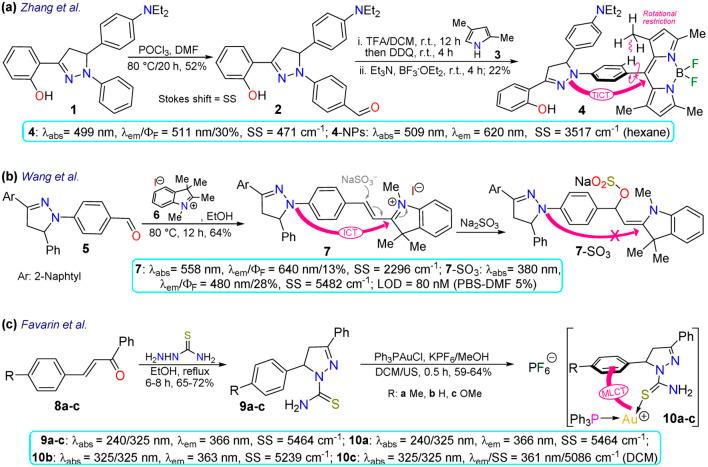
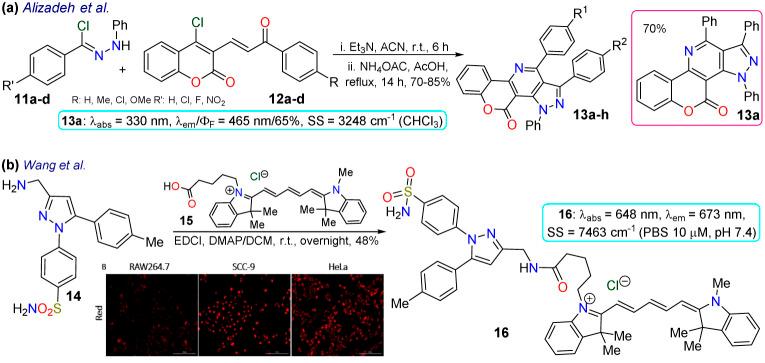
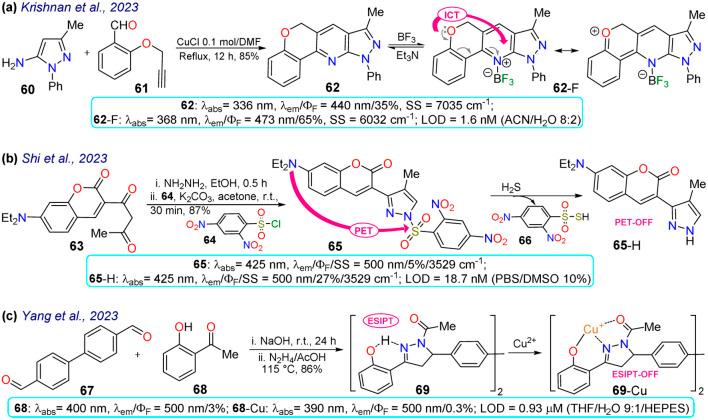
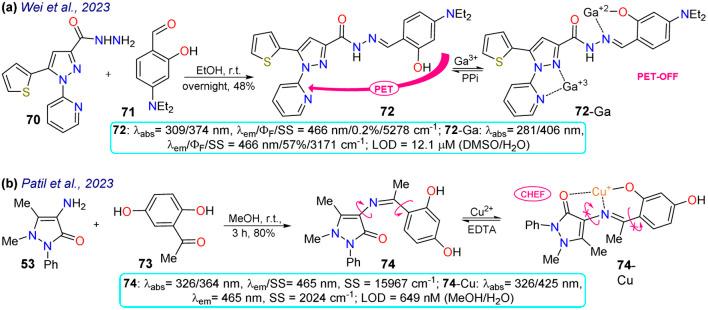
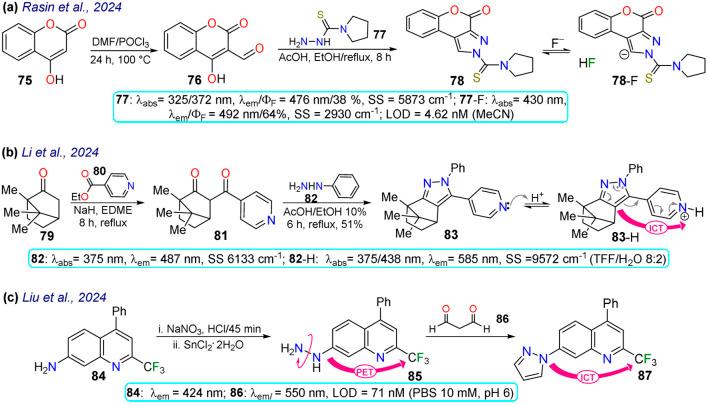
Fluorescent bioimaging is a crucial technique for studies in real cell samples, providing vital information about the metabolism of ions or molecules of biological and pharmaceutical significance. This technique typically uses probes based on organic small-molecule fluorophores, with N-heteroaromatic scaffolds playing an essential role due to their exceptional electronic properties and biocompatibility. Among these, pyrazole derivatives stand out as particularly promising due to their high synthetic versatility and structural diversity. This review highlights prominent examples from the period 2020-2024, focusing on the chemistry, properties, and bioimaging applications of fluorescent pyrazole derivatives. By highlighting the latest advancements in this field, this manuscript aims to inspire and motivate researchers, emphasizing the potential impact of this work on the future of bioimaging.
荧光生物成像对于真实细胞样本的研究而言是一项关键技术,它能提供有关具有生物学和药学意义的离子或分子代谢的重要信息。该技术通常使用基于有机小分子荧光团的探针,由于其独特的电子性质和生物相容性,含氮杂芳环支架发挥着至关重要的作用。其中,吡唑衍生物因其高度的合成通用性和结构多样性而显得尤为突出。本综述重点介绍了2020年至2024年期间的突出实例,着重阐述了荧光吡唑衍生物的化学性质、特性及生物成像应用。通过突出该领域的最新进展,本文旨在启发和激励研究人员,强调这项工作对生物成像未来发展的潜在影响。






 Zotero 插件