
铜转运系统成员在乳腺癌中的作用。
Roles of Copper Transport Systems Members in Breast Cancer.
作者信息
Chen Yichang, Li Chen, Li Mengxin, Han Bing
机构信息
Department of Breast Surgery, General Surgery Center, First Hospital of Jilin University, Changchun, China.
Department of Neurosurgery, First Hospital of Jilin University, Changchun, China.
出版信息
Cancer Med. 2024 Dec;13(24):e70498. doi: 10.1002/cam4.70498.
BACKGROUND
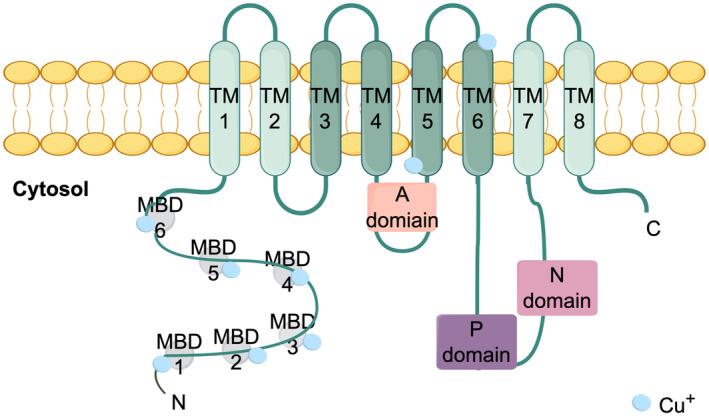
The occurrence and progression of breast cancer are closely linked to copper ion homeostasis. Both copper deficiency and excess can inhibit breast cancer growth, while copper transport systems may contribute to its progression by regulating copper ion transport and the activity of associated proteins. However, a comprehensive review of the roles and applications of copper transport systems in breast cancer remains limited. In this study, we summarize the workflow of copper transport systems and the dual role of copper in cancer, highlighting the contributions of specific members of the copper transport system to breast cancer.
METHODS
A comprehensive search of the PubMed database was conducted to identify articles published over the past 30 years that focus on the relationship between copper transport system members and breast cancer. The findings were synthesized to elucidate the roles and mechanisms of these transporters in the onset and progression of breast cancer.
RESULTS
We identified 13 members of the copper transport system associated with the occurrence, progression, and mortality of breast cancer, including SLC31A1, DMT1, ATP7A, ATP7B, MTs, GSH, ATOX1, CCS, COX17, SCO1, SCO2, and COX11. Our findings revealed that, apart from STEAP, the remaining 12 members were overexpressed in breast cancer. These members influence the onset, progression, and cell death of breast cancer by modulating biological pathways such as intracellular copper ion levels and ROS. Notably, we observed for the first time that depletion of the copper storage protein GSH leads to increased copper ion accumulation, resulting in cuproptosis in breast cancer cells.
CONCLUSION
By integrating the members of the copper transport system in breast cancer, we offer novel insights for the treatment of breast cancer and copper-related therapies.
背景
乳腺癌的发生和发展与铜离子稳态密切相关。铜缺乏和过量均能抑制乳腺癌生长,而铜转运系统可能通过调节铜离子转运及相关蛋白活性促进其进展。然而,关于铜转运系统在乳腺癌中的作用及应用的全面综述仍然有限。在本研究中,我们总结了铜转运系统的工作流程以及铜在癌症中的双重作用,突出了铜转运系统特定成员对乳腺癌的贡献。
方法
对PubMed数据库进行全面检索,以确定过去30年发表的聚焦于铜转运系统成员与乳腺癌关系的文章。综合研究结果以阐明这些转运蛋白在乳腺癌发生和发展中的作用及机制。
结果
我们确定了13个与乳腺癌的发生、发展及死亡率相关的铜转运系统成员,包括SLC31A1、DMT1、ATP7A、ATP7B、MTs、GSH、ATOX1、CCS、COX17、SCO1、SCO2和COX11。我们的研究结果显示,除STEAP外,其余12个成员在乳腺癌中均过度表达。这些成员通过调节细胞内铜离子水平和ROS等生物学途径影响乳腺癌的发生、发展及细胞死亡。值得注意的是,我们首次观察到铜储存蛋白GSH的耗竭导致铜离子积累增加,从而引发乳腺癌细胞的铜死亡。
结论
通过整合乳腺癌中铜转运系统的成员,我们为乳腺癌治疗及铜相关疗法提供了新的见解。


 Zotero 插件