
长链非编码RNA CARMN在癌症中的作用:生物标志物潜力、治疗靶点及免疫反应
The roles of LncRNA CARMN in cancers: biomarker potential, therapeutic targeting, and immune response.
作者信息
Liu Huafeng, Liu Xuewen, Lu Yanjun
机构信息
Department of Oncology, Ganzhou People's Hospital, No.16 Meiguan Avenue, Ganzhou, China.
出版信息
Discov Oncol. 2024 Dec 18;15(1):776. doi: 10.1007/s12672-024-01679-6.
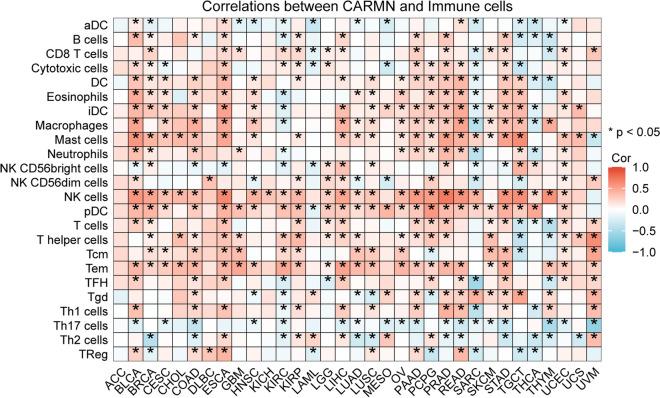
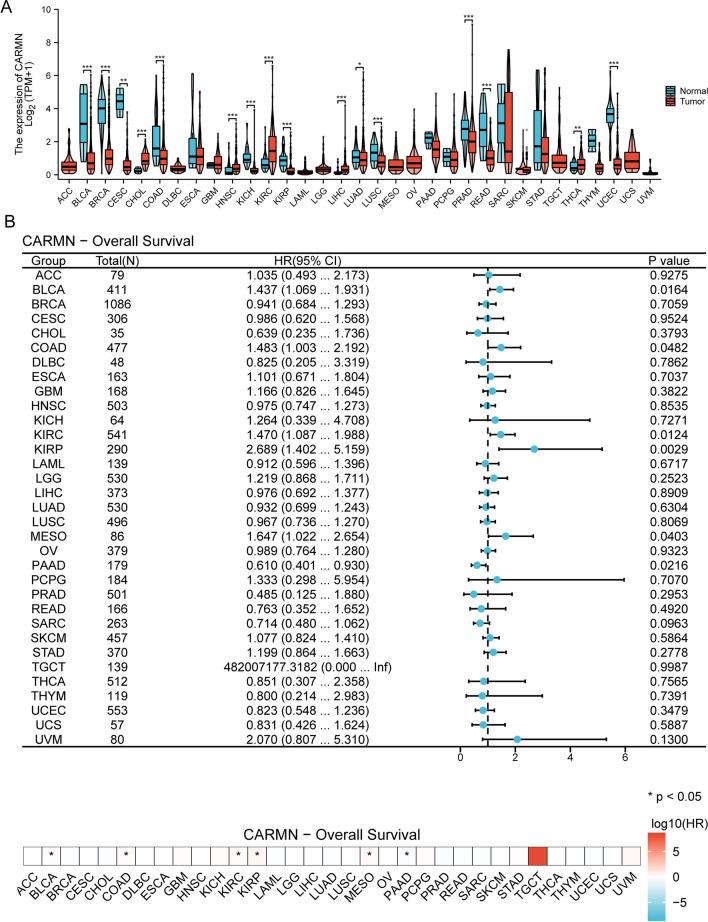
Long non-coding RNAs (LncRNAs) are crucial regulators of gene expression and cellular processes, with significant implications for cancer research. This review focuses on the role of LncRNA CARMN (Cardiac Arrest and Regulated Myocyte Nuclear Protein) in various cancers. CARMN, originally identified for its function in cardiac tissues, has shown dysregulated expression in several tumor types, including cervical, breast, colorectal, and esophageal cancers. Its altered expression often correlates with tumor progression, metastasis, and patient prognosis, suggesting its potential as both a biomarker and therapeutic target. In cervical cancer, CARMN's role as a tumor suppressor is highlighted by its ability to inhibit cell proliferation, migration, and invasion through interaction with the miR-92a-3p/BTG2 axis and modulation of the Wnt/β-catenin signaling pathway. In breast cancer, CARMN acts as an enhancer RNA, affecting epithelial-mesenchymal transition and metastasis by regulating MMP2 via DHX9. The downregulation of CARMN in triple-negative breast cancer is associated with enhanced sensitivity to chemotherapy. In colorectal cancer, CARMN's expression is regulated by m6A methylation and mutant p53, influencing tumor growth through miR-5683 and FGF2. Lastly, in esophageal cancer, genetic variations in CARMN affect cancer susceptibility, with certain SNPs and haplotypes associated with either increased or decreased risk. Additionally, the relationship between CARMN and immune cell dynamics highlights its potential role in cancer immune surveillance and therapy. Finally, we found that CARMN may regulate immune cell exhaustion in the tumor microenvironment by influencing the recruitment and activation of NK cells and T cells, as well as modulating macrophage polarization. This review emphasizes the diverse roles of CARMN across different cancers and its potential as a diagnostic and therapeutic tool. Future research should address the mechanistic details of CARMN's involvement in cancer, validate its clinical utility, and explore its therapeutic potential in combination with existing treatments.
长链非编码RNA(LncRNAs)是基因表达和细胞过程的关键调节因子,对癌症研究具有重要意义。本综述聚焦于LncRNA CARMN(心脏骤停与调节性心肌细胞核蛋白)在各种癌症中的作用。CARMN最初因其在心脏组织中的功能而被鉴定,已在包括宫颈癌、乳腺癌、结直肠癌和食管癌在内的多种肿瘤类型中显示出表达失调。其表达改变通常与肿瘤进展、转移及患者预后相关,表明它具有作为生物标志物和治疗靶点的潜力。在宫颈癌中,CARMN通过与miR-92a-3p/BTG2轴相互作用并调节Wnt/β-连环蛋白信号通路,抑制细胞增殖、迁移和侵袭,从而发挥肿瘤抑制作用。在乳腺癌中,CARMN作为增强子RNA,通过DHX9调节MMP2,影响上皮-间质转化和转移。三阴性乳腺癌中CARMN的下调与化疗敏感性增强有关。在结直肠癌中,CARMN的表达受m6A甲基化和突变型p53调节,通过miR-5683和FGF2影响肿瘤生长。最后,在食管癌中,CARMN的基因变异影响癌症易感性,某些单核苷酸多态性(SNPs)和单倍型与风险增加或降低相关。此外,CARMN与免疫细胞动态之间的关系突出了其在癌症免疫监视和治疗中的潜在作用。最后,我们发现CARMN可能通过影响自然杀伤细胞(NK细胞)和T细胞的募集与激活以及调节巨噬细胞极化,来调节肿瘤微环境中的免疫细胞耗竭。本综述强调了CARMN在不同癌症中的多种作用及其作为诊断和治疗工具的潜力。未来的研究应阐明CARMN参与癌症的机制细节,验证其临床实用性,并探索其与现有治疗方法联合使用的治疗潜力。

 Zotero 插件