
BH3模拟物通过线粒体凋亡机制增强细胞毒性T细胞对急性髓系白血病的杀伤作用。
BH3 Mimetics Augment Cytotoxic T Cell Killing of Acute Myeloid Leukemia via Mitochondrial Apoptotic Mechanism.
作者信息
Yee Cassian, Saxena Kapil, Ryu Esther, Hung Shao-Hsi, Singh Shailbala, Zhang Qi, Zeng Zhihong, Wang Zhe, Konopleva Marina
机构信息
The University of Texas MD Anderson Cancer Center.
University of Texas MD Anderson Cancer Center.
出版信息
Res Sq. 2024 Dec 9:rs.3.rs-5307127. doi: 10.21203/rs.3.rs-5307127/v1.
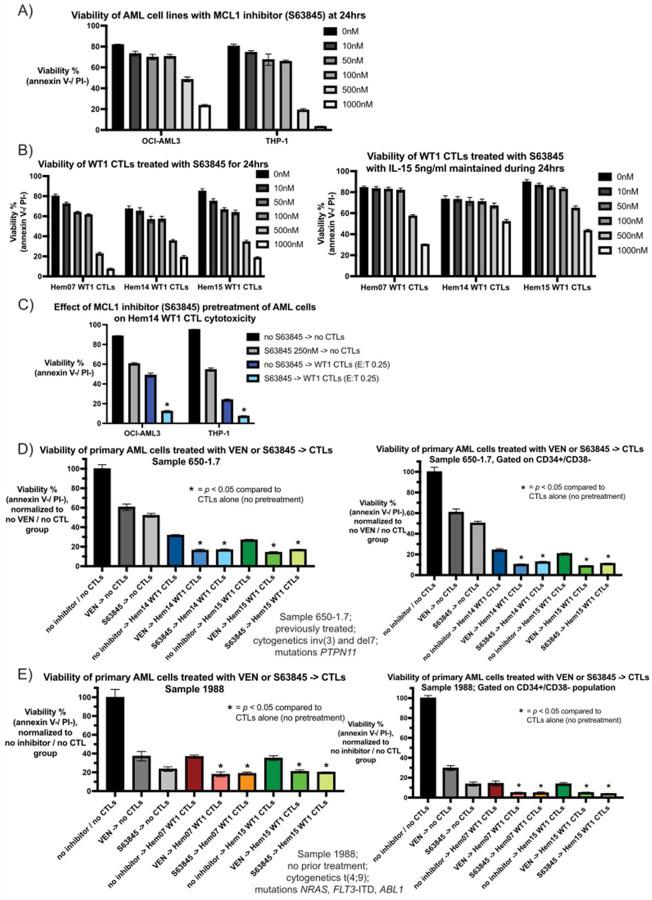
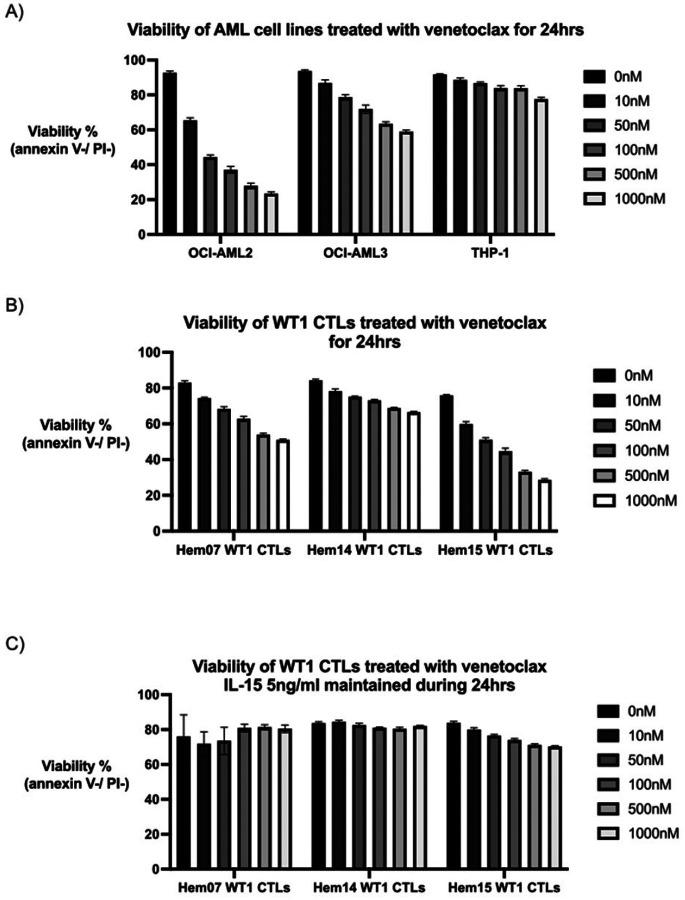
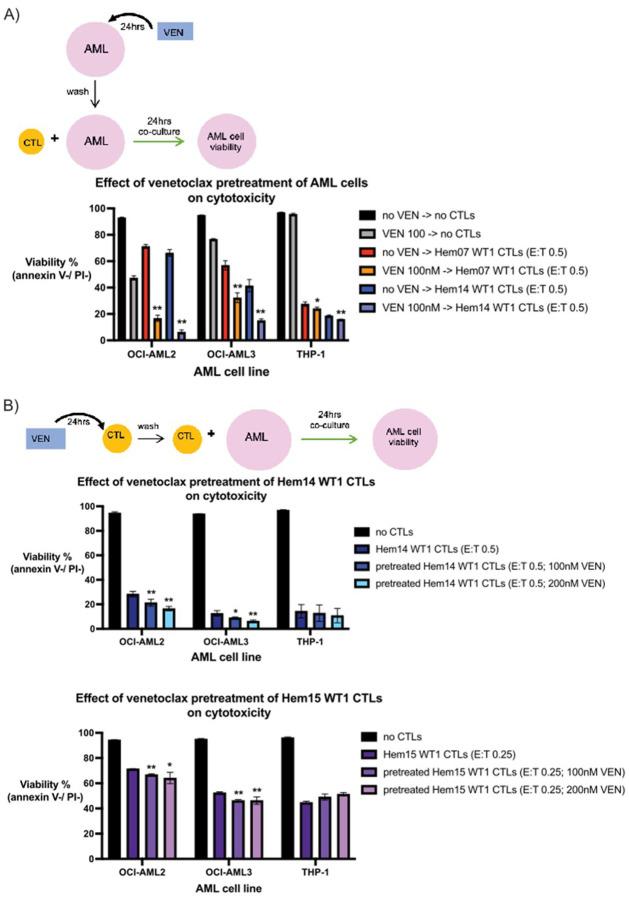
Adoptive cell therapy (ACT) can address an unmet clinical need for patients with relapsed/refractory acute myeloid leukemia (AML), but its effect is often modest in the setting of high tumor burden. In this study, we postulated that strategies to lower the AML apoptotic threshold will augment T cell killing of AML cells. BH3 mimetics, such as venetoclax, are a clinically approved class of compounds that predispose cells to intrinsic apoptosis by inhibiting anti-apoptotic mitochondrial proteins. We explored the anti-leukemic efficacy of BH3 mimetics combined with WT1-specific CD8 + T cells on AML cell lines and primary samples from patients with a diverse array of disease characteristics to evaluate if lowering the cellular apoptotic threshold via inhibition of anti-apoptotic mitochondrial proteins can increase leukemic cell sensitivity to T cell therapy. We found that the combination approach of BH3 mimetic and CD8 + T cells led to significantly increased killing of established AML lines as well as of adverse-risk primary AML leukemic blast cells. In contrast to the hypothesis that enhanced killing would be due to combined activation of the intrinsic and extrinsic apoptotic pathways, we found that CTL-mediated killing of AML cells was accomplished primarily through activation of the intrinsic/mitochondrial apoptotic pathway. This highly effective combinatorial activity due to convergence on the same apoptotic pathway was conserved across multiple AML cell lines and primary samples, suggesting that mitochondrial priming may represent a novel mechanism of optimizing adoptive cell therapy for AML patients.
过继性细胞疗法(ACT)可以满足复发/难治性急性髓系白血病(AML)患者未被满足的临床需求,但其在肿瘤负荷高的情况下效果往往有限。在本研究中,我们推测降低AML凋亡阈值的策略将增强T细胞对AML细胞的杀伤作用。BH3模拟物,如维奈托克,是一类已获临床批准的化合物,通过抑制抗凋亡线粒体蛋白使细胞易于发生内源性凋亡。我们探讨了BH3模拟物与WT1特异性CD8 + T细胞联合使用对AML细胞系以及来自具有不同疾病特征患者的原代样本的抗白血病疗效,以评估通过抑制抗凋亡线粒体蛋白来降低细胞凋亡阈值是否能增加白血病细胞对T细胞疗法的敏感性。我们发现,BH3模拟物与CD8 + T细胞的联合方法导致对已建立的AML细胞系以及高危原发性AML白血病母细胞的杀伤显著增加。与增强杀伤作用是由于内源性和外源性凋亡途径联合激活的假设相反,我们发现CTL介导的对AML细胞的杀伤主要是通过激活内源性/线粒体凋亡途径来实现的。这种由于汇聚于相同凋亡途径而产生的高效组合活性在多个AML细胞系和原代样本中均得以保留,这表明线粒体启动可能代表了一种优化AML患者过继性细胞疗法的新机制。




 Zotero 插件