
探索可解释性在可穿戴数据分析中的应用:系统文献综述
Exploring the Applications of Explainability in Wearable Data Analytics: Systematic Literature Review.
作者信息
Abdelaal Yasmin, Aupetit Michaël, Baggag Abdelkader, Al-Thani Dena
机构信息
College of Science and Engineering, Hamad Bin Khalifa University, Doha, Qatar.
Qatar Computing Research Institute, Hamad Bin Khalifa University, Doha, Qatar.
出版信息
J Med Internet Res. 2024 Dec 24;26:e53863. doi: 10.2196/53863.
BACKGROUND
Wearable technologies have become increasingly prominent in health care. However, intricate machine learning and deep learning algorithms often lead to the development of "black box" models, which lack transparency and comprehensibility for medical professionals and end users. In this context, the integration of explainable artificial intelligence (XAI) has emerged as a crucial solution. By providing insights into the inner workings of complex algorithms, XAI aims to foster trust and empower stakeholders to use wearable technologies responsibly.
OBJECTIVE
This paper aims to review the recent literature and explore the application of explainability in wearables. By examining how XAI can enhance the interpretability of generated data and models, this review sought to shed light on the possibilities that arise at the intersection of wearable technologies and XAI.
METHODS
We collected publications from ACM Digital Library, IEEE Xplore, PubMed, SpringerLink, JMIR, Nature, and Scopus. The eligible studies included technology-based research involving wearable devices, sensors, or mobile phones focused on explainability, machine learning, or deep learning and that used quantified self data in medical contexts. Only peer-reviewed articles, proceedings, or book chapters published in English between 2018 and 2022 were considered. We excluded duplicates, reviews, books, workshops, courses, tutorials, and talks. We analyzed 25 research papers to gain insights into the current state of explainability in wearables in the health care context.
RESULTS
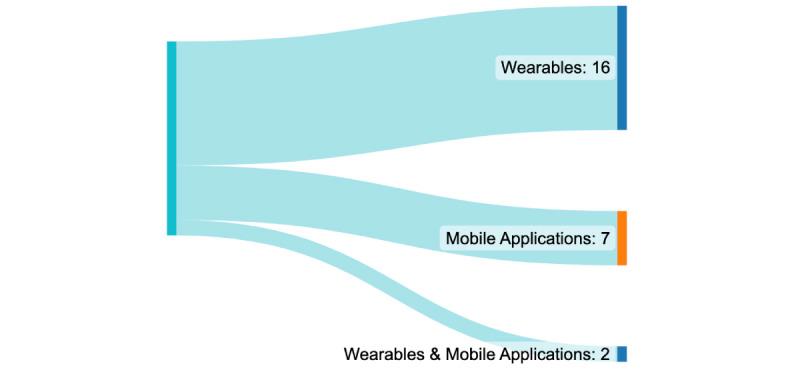
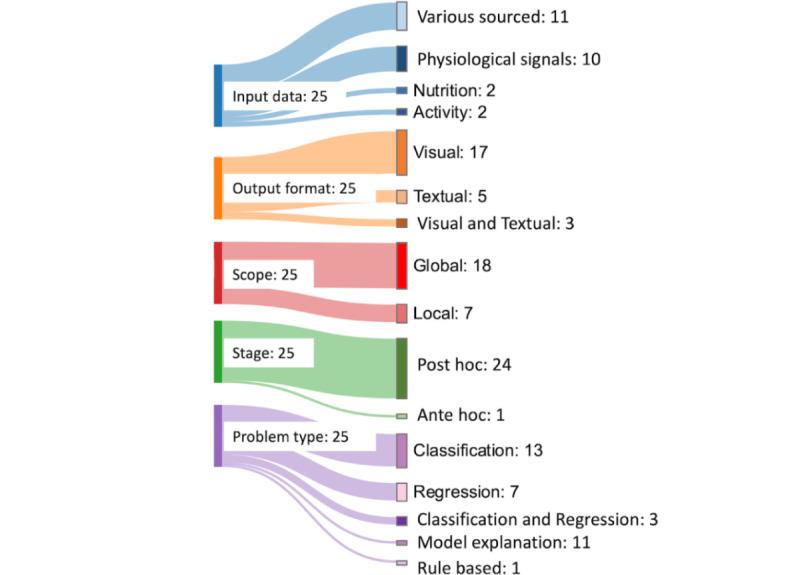
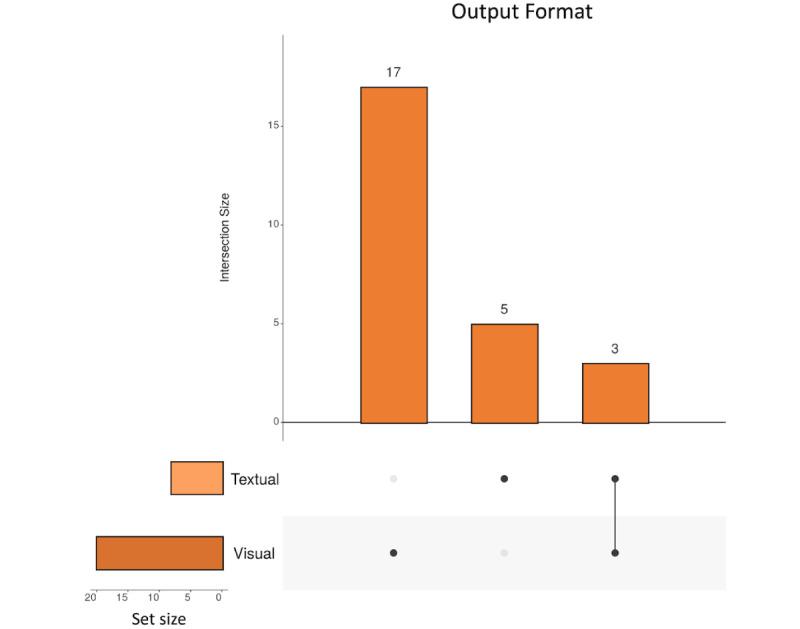
Our findings revealed that wrist-worn wearables such as Fitbit and Empatica E4 are prevalent in health care applications. However, more emphasis must be placed on making the data generated by these devices explainable. Among various explainability methods, post hoc approaches stand out, with Shapley Additive Explanations as a prominent choice due to its adaptability. The outputs of explainability methods are commonly presented visually, often in the form of graphs or user-friendly reports. Nevertheless, our review highlights a limitation in user evaluation and underscores the importance of involving users in the development process.
CONCLUSIONS
The integration of XAI into wearable health care technologies is crucial to address the issue of black box models. While wrist-worn wearables are widespread, there is a notable gap in making the data they generate explainable. Post hoc methods such as Shapley Additive Explanations have gained traction for their adaptability in explaining complex algorithms visually. However, user evaluation remains an area in which improvement is needed, and involving users in the development process can contribute to more transparent and reliable artificial intelligence models in health care applications. Further research in this area is essential to enhance the transparency and trustworthiness of artificial intelligence models used in wearable health care technology.
背景
可穿戴技术在医疗保健领域日益突出。然而,复杂的机器学习和深度学习算法往往导致“黑箱”模型的开发,这些模型对医学专业人员和终端用户缺乏透明度和可理解性。在这种背景下,可解释人工智能(XAI)的整合已成为关键解决方案。通过深入了解复杂算法的内部运作,XAI旨在增强信任并使利益相关者能够负责任地使用可穿戴技术。
目的
本文旨在回顾近期文献并探讨可解释性在可穿戴设备中的应用。通过研究XAI如何增强生成数据和模型的可解释性,本综述旨在阐明可穿戴技术与XAI交叉领域出现的可能性。
方法
我们从ACM数字图书馆、IEEE Xplore、PubMed、SpringerLink、JMIR、《自然》和Scopus收集出版物。符合条件的研究包括基于技术的研究,涉及可穿戴设备、传感器或手机,重点是可解释性、机器学习或深度学习,且在医疗环境中使用了量化自我数据。仅考虑2018年至2022年期间以英文发表的同行评审文章、会议论文或书籍章节。我们排除了重复项、综述、书籍、研讨会、课程、教程和讲座。我们分析了25篇研究论文,以深入了解医疗保健背景下可穿戴设备中可解释性的现状。
结果
我们的研究结果表明,Fitbit和Empatica E4等腕戴式可穿戴设备在医疗保健应用中很普遍。然而,必须更加重视使这些设备生成的数据具有可解释性。在各种可解释性方法中,事后方法脱颖而出,由于其适应性,Shapley值加法解释是一个突出的选择。可解释性方法的输出通常以可视化方式呈现,通常采用图表或用户友好报告的形式。然而,我们的综述突出了用户评估方面的局限性,并强调了让用户参与开发过程的重要性。
结论
将XAI集成到可穿戴医疗保健技术中对于解决黑箱模型问题至关重要。虽然腕戴式可穿戴设备很普遍,但在使它们生成的数据具有可解释性方面存在明显差距。诸如Shapley值加法解释等事后方法因其在直观解释复杂算法方面的适应性而受到关注。然而,用户评估仍然是一个需要改进的领域,让用户参与开发过程有助于在医疗保健应用中建立更透明、更可靠的人工智能模型。该领域的进一步研究对于提高可穿戴医疗保健技术中使用的人工智能模型的透明度和可信度至关重要。





 Zotero 插件