
在染色体易位型肾细胞癌中,缺陷通过ERBB3信号通路促进肿瘤进展。
Deficiency Enhances Tumor Progression via ERBB3 Signaling in -Rearranged Renal Cell Carcinoma.
作者信息
Tang Jinglong, Funasaki Shintaro, Nishizawa Hidekazu, Kuroda Shoichiro, Motoshima Takanobu, Wu Chang, Mawas Amany Sayed, Satou Yorifumi, Arima Yuichiro, Hasumi Hisashi, Jikuya Ryosuke, Makiyama Kazuhide, Oike Yuichi, Tanaka Yasuhito, Baba Masaya, Kamba Tomomi
机构信息
Department of Urology, Graduate School of Medical Sciences, Kumamoto University, Kumamoto 860-8556, Japan.
Division of Molecular and Vascular Biology, IRDA, Kumamoto University, Kumamoto 860-0811, Japan.
出版信息
Curr Issues Mol Biol. 2024 Dec 2;46(12):13675-13695. doi: 10.3390/cimb46120817.
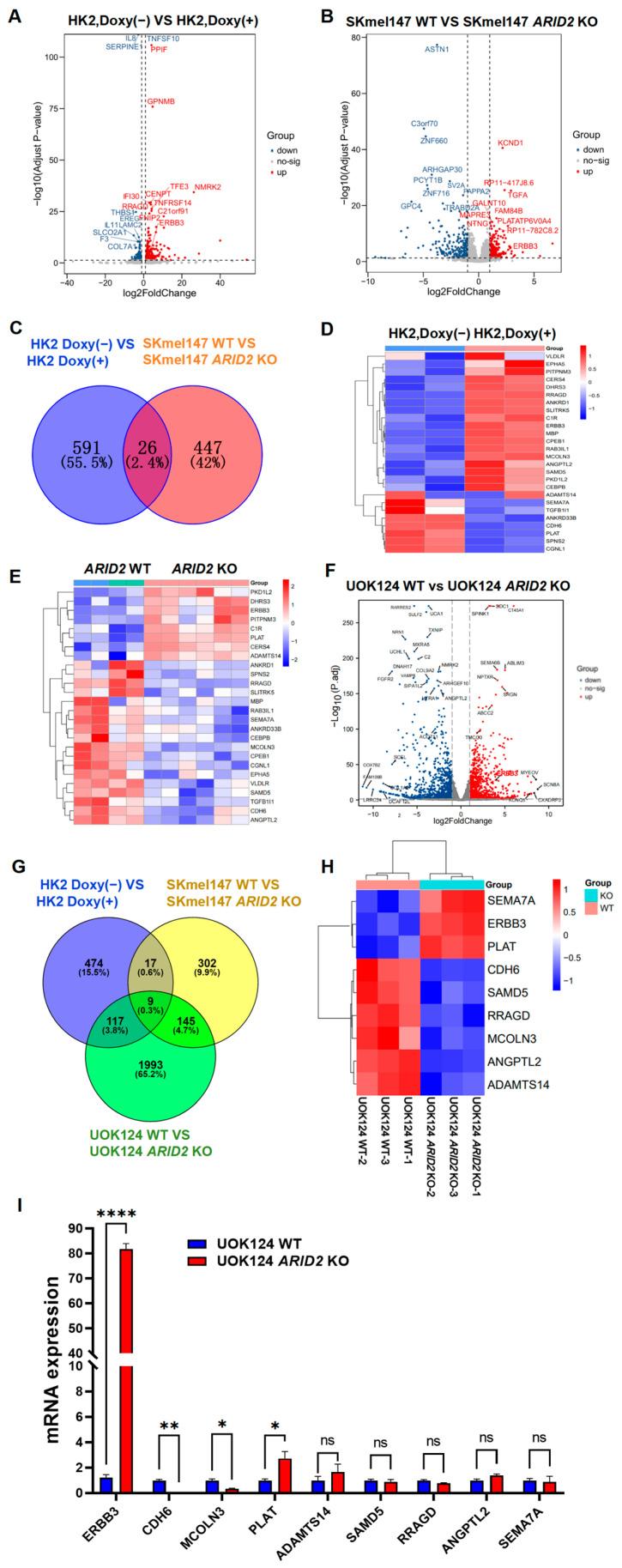
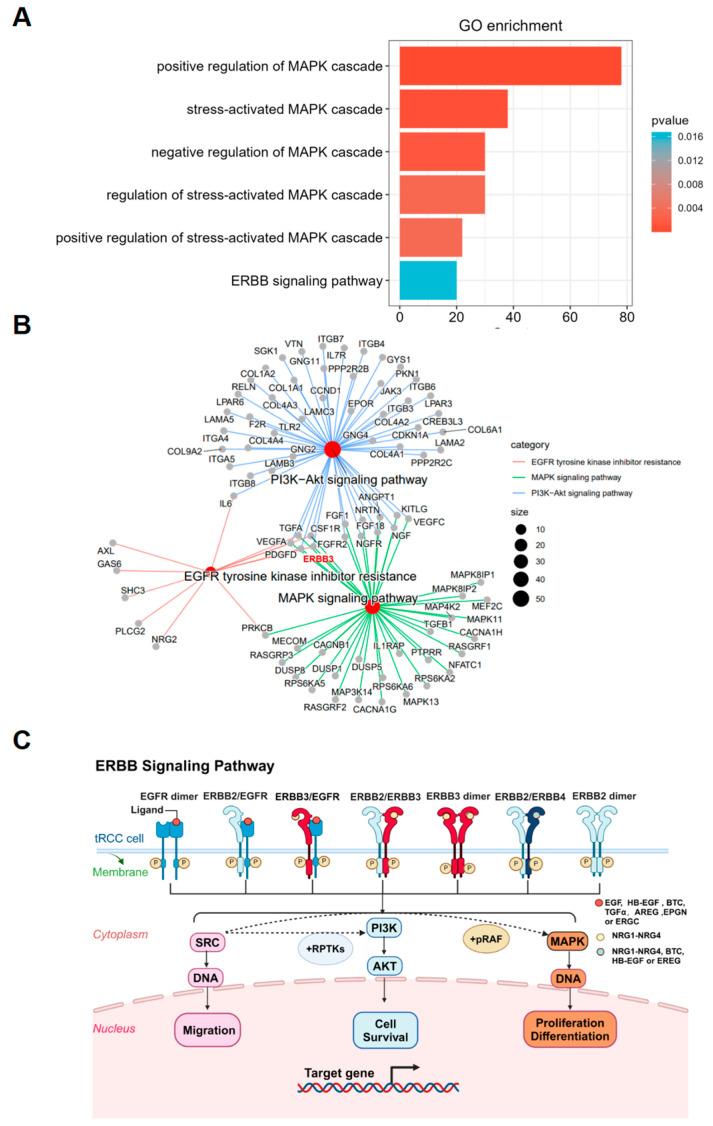
-rearranged Renal Cell Carcinoma (TFE3-RCC) is an aggressive subtype of RCC characterized by Xp11.2 rearrangement, leading to TFE3 fusion proteins with oncogenic potential. Despite advances in understanding its molecular biology, effective therapies for advanced cases remain elusive. This study investigates the role of , a component of the SWI/SNF chromatin remodeling complex, in TFE3-RCC. Through a series of in vitro and in vivo experiments, we confirmed that acts as a tumor suppressor in TFE3-RCC. knockout (KO) enhanced TFE3-RCC cell migration, proliferation, and tumor growth. Transcriptomic analysis revealed ERBB3 as a key target gene regulated by both PRCC-TFE3 and . Chromatin immunoprecipitation (ChIP) assays demonstrated that PRCC-TFE3 directly binds to and upregulates ERBB3 expression, with KO further enhancing this effect. TFE3-RCC KO cells exhibited significant gene expression enrichment in MAPK and ERBB3 signaling pathways. These cells also showed increased activation of ERBB3, EGFR, and selective activation of SRC and MAPK. TFE3-RCC KO cells demonstrated heightened sensitivity to the ERBB3 inhibitor AZD8931 compared to their wild-type counterparts, exhibiting significantly reduced migration and proliferation rates. These findings suggest that the PRCC-TFE3--ERBB3 axis plays a critical role in TFE3-RCC pathogenesis and highlights the potential of targeting ERBB3 in -deficient TFE3-RCC as a therapeutic strategy. This study provides new insights into the molecular mechanisms of TFE3-RCC and suggests avenues for precision treatment of this aggressive cancer.
Xp11.2重排性肾细胞癌(TFE3-RCC)是肾细胞癌的一种侵袭性亚型,其特征为Xp11.2重排,导致具有致癌潜力的TFE3融合蛋白。尽管在理解其分子生物学方面取得了进展,但针对晚期病例的有效治疗方法仍然难以捉摸。本研究调查了SWI/SNF染色质重塑复合物的一个组成部分PRCC在TFE3-RCC中的作用。通过一系列体外和体内实验,我们证实PRCC在TFE3-RCC中作为肿瘤抑制因子发挥作用。PRCC基因敲除(KO)增强了TFE3-RCC细胞的迁移、增殖和肿瘤生长。转录组分析显示ERBB3是受PRCC-TFE3和PRCC共同调控的关键靶基因。染色质免疫沉淀(ChIP)分析表明,PRCC-TFE3直接结合并上调ERBB3表达,PRCC基因敲除进一步增强了这种效应。TFE3-RCC PRCC基因敲除细胞在MAPK和ERBB3信号通路中表现出显著的基因表达富集。这些细胞还显示出ERBB3、EGFR的激活增加以及SRC和MAPK的选择性激活。与野生型细胞相比,TFE3-RCC PRCC基因敲除细胞对ERBB3抑制剂AZD8931表现出更高的敏感性,其迁移和增殖率显著降低。这些发现表明PRCC-TFE3-ERBB3轴在TFE3-RCC发病机制中起关键作用,并突出了在PRCC缺陷的TFE3-RCC中靶向ERBB3作为治疗策略的潜力。本研究为TFE3-RCC的分子机制提供了新的见解,并为这种侵袭性癌症的精准治疗提出了途径。




 Zotero 插件