
含有mRNA的脂质纳米颗粒的转染效力取决于相对负载水平。
Transfection Potency of Lipid Nanoparticles Containing mRNA Depends on Relative Loading Levels.
作者信息
Liao Suiyang, Wang Shuangyu, Wadhwa Abishek, Birkenshaw Alexandra, Fox Kevin, Cheng Miffy Hok Yan, Casmil Irafasha C, Magana Armando Alcazar, Bathula Nuthan Vikas, Ho Chia Hao, Cheng Jin-Yu, Foster Leonard J, Harder Kenneth W, Ross Colin J D, Cullis Pieter R, Blakney Anna K
机构信息
Department of Biochemistry and Molecular Biology, University of British Columbia, Vancouver, British Columbia V6T 1Z3, Canada.
Michael Smith Laboratories, University of British Columbia, Vancouver, British Columbia V6T 1Z4, Canada.
出版信息
ACS Appl Mater Interfaces. 2025 Jan 15;17(2):3097-3105. doi: 10.1021/acsami.4c20077. Epub 2024 Dec 31.
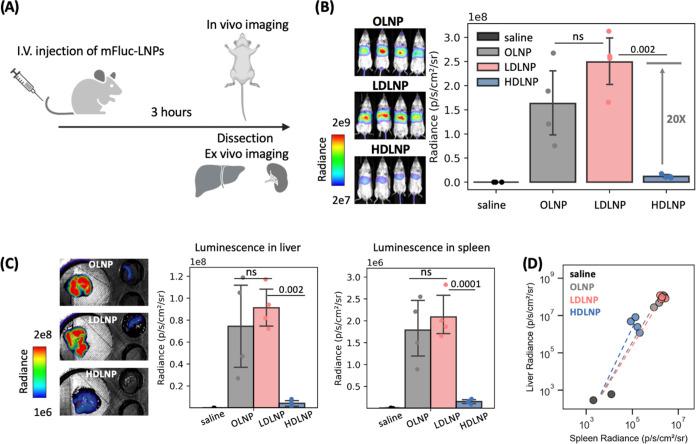
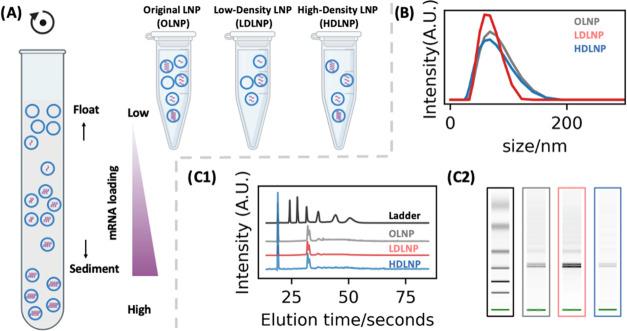
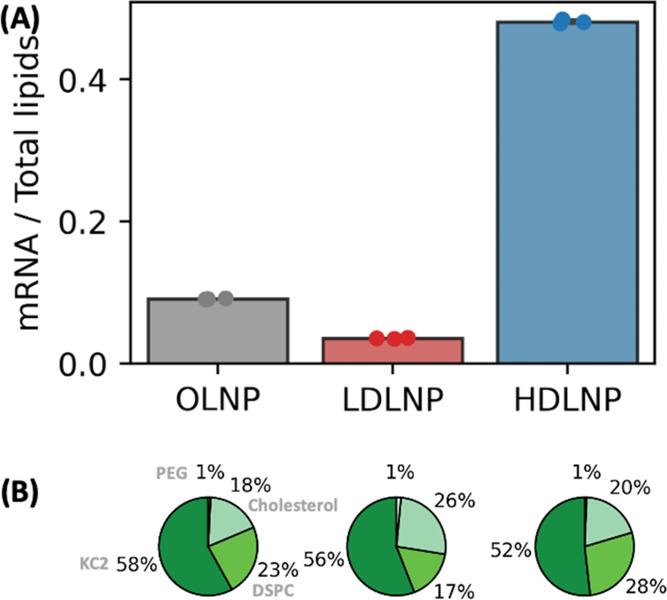
When formulating mRNA into lipid nanoparticles (LNP), various copy numbers of mRNA are encapsulated, leading to a distribution of mRNA loading levels within the LNPs. It is unclear whether the mRNA loading level affects the functional delivery of the message. Here we show that depending on the mRNA loading level, LNPs exhibit distinct mass densities and can be fractionated via ultracentrifugation. Upon fractionation, we investigated if mRNA loading levels influence LNP sizing, lipid composition, and morphology. We further conducted and functional delivery of mRNA and found that the LNP fraction with the highest mRNA loading levels was the least transfection competent.
在将mRNA制备成脂质纳米颗粒(LNP)时,会包裹不同拷贝数的mRNA,导致LNP内mRNA负载水平的分布。目前尚不清楚mRNA负载水平是否会影响信息的功能性传递。在这里,我们表明,根据mRNA负载水平,LNP表现出不同的质量密度,并且可以通过超速离心进行分级分离。分级分离后,我们研究了mRNA负载水平是否会影响LNP的大小、脂质组成和形态。我们进一步进行了mRNA的功能传递,发现mRNA负载水平最高的LNP级分转染能力最差。


 Zotero 插件