
真菌合成的银和硒纳米颗粒的抗菌和抗生物膜作用及其与抗生素对医院细菌的协同作用评估。
Evaluation of the antibacterial and antibiofilm effect of mycosynthesized silver and selenium nanoparticles and their synergistic effect with antibiotics on nosocomial bacteria.
作者信息
Fahmy Nahed Fathallah, Abdel-Kareem Marwa Mahmoud, Ahmed Heba A, Helmy Mena Zarif, Mahmoud Ekram Abdel-Rahman
机构信息
Microbiology and Immunology Department, Faculty of Medicine, Sohag University, Sohag, Egypt.
Botany and Microbiology Department, Faculty of Science, Sohag University, Sohag, 82524, Egypt.
出版信息
Microb Cell Fact. 2025 Jan 4;24(1):6. doi: 10.1186/s12934-024-02604-w.
BACKGROUND
The healthcare sector faces a growing threat from the rise of highly resistant microorganisms, particularly Methicillin-resistant Staphylococcus aureus (MRSA) and multidrug-resistant Pseudomonas aeruginosa (MDR P. aeruginosa). Facing the challenge of antibiotic resistance, nanoparticles have surfaced as promising substitutes for antimicrobial therapy. Recent studies showcase the effectiveness of various fungi species in nanoparticle synthesis. Mycosynthesized silver nanoparticles (AgNPs) and selenium nanoparticles (SeNPs) using Aspergillus carneus MAK 259 has been investigated and demonstrate antibacterial, antibiofilm and synergistic activities against (MRSA) and (MDR P. aeruginosa).
RESULTS
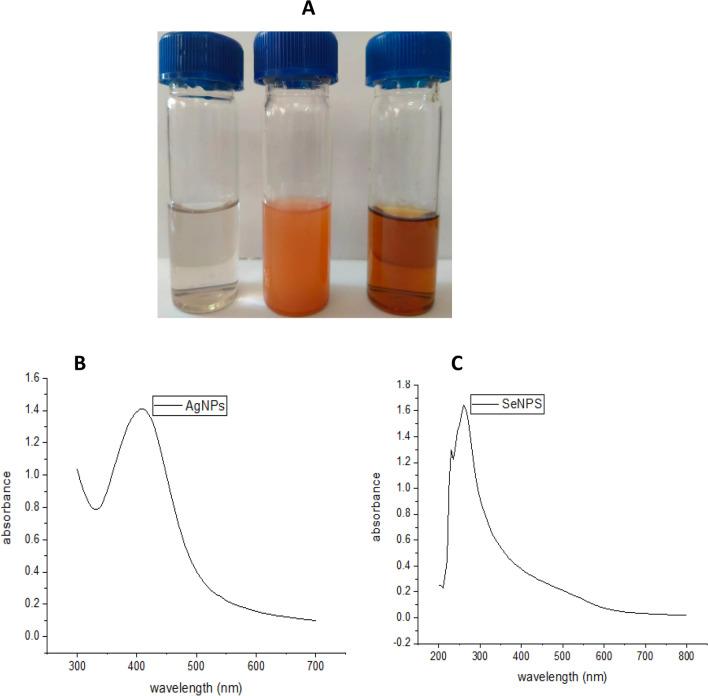
In the current research, silver nanoparticles (AgNPs) and selenium nanoparticles (SeNPs) were produced extracellularly using A. carneus MAK 259 culture supernatants. Colour change, an initial evaluation of the production of AgNPs and SeNPs. Then, UV absorption peaks at 410 nm and 260 nm confirmed the production of AgNPs and SeNPs, respectively. AgNPs and SeNPs were dispersed consistently between 5‒26 nm and 20-77 nm in size, respectively using TEM. FT-IR analysis was used for assessing proteins bound to the produced nanoparticles. The crystallinity and stability of AgNPs and SeNPs was confirmed using X-ray diffraction analysis and zeta potential measurements, respectively. Antibacterial, antibiofilm and synergistic effects of both (NPs) with antibiotics against MRSA and MDR P. aeruginosa were tested by Agar well diffusion, tissue culture plate and disc diffusion method respectively. Both (NPs) inhibited the growth of P. aeruginosa more than S. aureus. But, SeNPs was stronger. AgNPs had stronger antibiofilm effect especially on biofilms producing S. aureus. as regard synergestic effects, Both (NPs) had higher synergestic effects in combination with cell wall inhibiting antibiotics against P. aeuroginosa While, on S. aureus with antibiotics that inhibit protein synthesis and affect metabolic pathways.
CONCLUSIONS
Our study demonstrated that the mycosynthesized SeNPs had remarkable antibacterial effect while, mycosynthesized AgNPs exhibited a considerable antibiofilm effect. Both NPs exhibited higher synergistic effect with antibiotics with different modes of action. This approach could potentially enhance the efficacy of existing antibiotics, providing a new weapon against drug-resistant bacteria where the described silver and selenium nanoparticles play a pivotal role in revolutionizing healthcare practices, offering innovative solutions to combat antibiotic resistance, and contributing to the development of advanced medical technologies.
背景
医疗保健行业面临着来自高度耐药微生物兴起的日益严重的威胁,特别是耐甲氧西林金黄色葡萄球菌(MRSA)和多重耐药铜绿假单胞菌(MDR P. aeruginosa)。面对抗生素耐药性的挑战,纳米颗粒已成为抗菌治疗的有前途的替代品。最近的研究展示了各种真菌物种在纳米颗粒合成中的有效性。已经研究了使用肉色曲霉MAK 259合成的真菌银纳米颗粒(AgNPs)和硒纳米颗粒(SeNPs),并证明了它们对(MRSA)和(MDR P. aeruginosa)具有抗菌、抗生物膜和协同活性。
结果
在当前研究中,使用肉色曲霉MAK 259培养上清液在细胞外产生了银纳米颗粒(AgNPs)和硒纳米颗粒(SeNPs)。颜色变化是对AgNPs和SeNPs产生的初步评估。然后,在410nm和260nm处的紫外吸收峰分别证实了AgNPs和SeNPs的产生。使用透射电子显微镜(TEM)分别测定,AgNPs和SeNPs的粒径分别始终分散在5-26nm和20-77nm之间。傅里叶变换红外光谱(FT-IR)分析用于评估与所产生的纳米颗粒结合的蛋白质。分别使用X射线衍射分析和zeta电位测量来确认AgNPs和SeNPs的结晶度和稳定性。通过琼脂孔扩散法、组织培养板法和纸片扩散法分别测试了两种(纳米颗粒)与抗生素对MRSA和MDR P. aeruginosa的抗菌、抗生物膜和协同作用。两种(纳米颗粒)对铜绿假单胞菌生长的抑制作用均大于金黄色葡萄球菌。但是,SeNPs更强。AgNPs具有更强的抗生物膜作用,尤其是对产生生物膜的金黄色葡萄球菌。关于协同作用,两种(纳米颗粒)与抑制细胞壁的抗生素联合使用时,对铜绿假单胞菌具有更高的协同作用,而对金黄色葡萄球菌则与抑制蛋白质合成和影响代谢途径的抗生素联合使用时具有更高的协同作用。
结论
我们的研究表明,真菌合成的SeNPs具有显著的抗菌作用,而真菌合成的AgNPs表现出相当大的抗生物膜作用。两种纳米颗粒与具有不同作用方式的抗生素均表现出更高的协同作用。这种方法有可能提高现有抗生素的疗效,为对抗耐药细菌提供一种新武器,其中所述的银和硒纳米颗粒在彻底改变医疗保健实践、提供对抗抗生素耐药性的创新解决方案以及促进先进医疗技术的发展方面发挥着关键作用。



 Zotero 插件