
饮食对肥胖症患者高密度脂蛋白的影响。
Effect of Diet on HDL in Obesity.
作者信息
Bacchetti Tiziana, Morresi Camilla, Simonetti Oriana, Ferretti Gianna
机构信息
Department of Life and Environmental Sciences, Polytechnic University of Marche, 60131 Ancona, Italy.
Clinic of Dermatology, Department of Clinical and Molecular Sciences, Polytechnic University of Marche, 60126 Ancona, Italy.
出版信息
Molecules. 2024 Dec 17;29(24):5955. doi: 10.3390/molecules29245955.
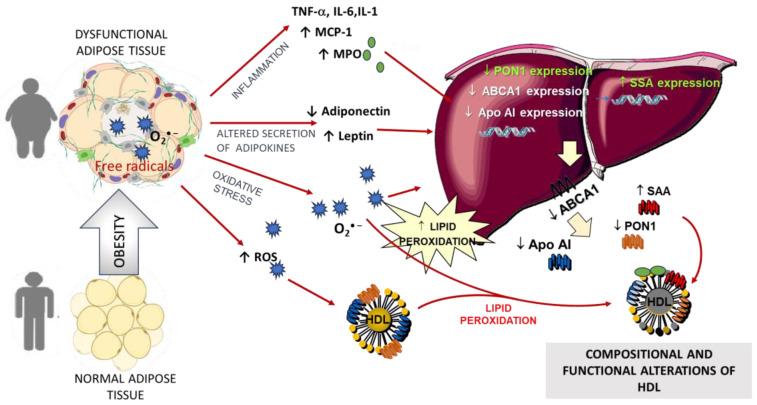
Alterations of plasma lipoprotein levels and oxidative stress are frequently observed in obese patients, including low high-density lipoprotein (HDL) cholesterol (HDL-C) levels and alterations of HDL composition. Dysfunctional HDL with lower antioxidant and anti-inflammatory properties have also been demonstrated in obesity. There is increasing evidence that white adipose tissue (WAT) participates in several metabolic activities and modulates HDL-C levels and function. In obese subjects, the changes in morphology and function of adipose tissue lead to impaired regulatory function and are associated with a state of low-grade chronic inflammation, with increased release of pro-inflammatory adipokines and cytokines. These alterations may affect HDL metabolism and functions; thus, adipose tissue is considered a potential target for the prevention and treatment of obesity. A cornerstone of obesity prevention and therapy is lifestyle modification through dietary changes, which is reflected in the modulation of plasma lipoprotein metabolism. Some dietary components and metabolites directly affect the composition and structure of HDL and modulate its anti-inflammatory and vasoprotective properties. The aims of the review are to summarize the crosstalk between adipocytes and HDL dysfunction in human obesity and to highlight recent discoveries on beneficial dietary patterns as well as nutritional components on inflammation and HDL function in human obesity.
肥胖患者中经常观察到血浆脂蛋白水平和氧化应激的改变,包括高密度脂蛋白(HDL)胆固醇(HDL-C)水平降低以及HDL组成的改变。在肥胖症中也已证实具有较低抗氧化和抗炎特性的功能失调HDL。越来越多的证据表明,白色脂肪组织(WAT)参与多种代谢活动并调节HDL-C水平和功能。在肥胖受试者中,脂肪组织形态和功能的变化导致调节功能受损,并与低度慢性炎症状态相关,促炎脂肪因子和细胞因子的释放增加。这些改变可能影响HDL代谢和功能;因此,脂肪组织被认为是预防和治疗肥胖症的潜在靶点。肥胖预防和治疗的基石是通过饮食改变来调整生活方式,这反映在血浆脂蛋白代谢的调节上。一些饮食成分和代谢产物直接影响HDL的组成和结构,并调节其抗炎和血管保护特性。本综述的目的是总结人类肥胖中脂肪细胞与HDL功能障碍之间的相互作用,并强调关于有益饮食模式以及营养成分对人类肥胖炎症和HDL功能影响的最新发现。


 Zotero 插件