
作为过氧化物酶模拟物的铂@ 氧化锌钴微球:增强的催化活性及在L-半胱氨酸检测中的应用
Pt@ZnCoO Microspheres as Peroxidase Mimics: Enhanced Catalytic Activity and Application for L-Cysteine Detection.
作者信息
Liao Shuqi, Deng Weisen, Yang Feng, Zhou Jutao, Wu Ling, Yu Donghong, Cao Zhong
机构信息
Hunan Provincial Key Laboratory of Materials Protection for Electric Power and Transportation & Hunan Provincial Key Laboratory of Cytochemistry, School of Chemistry and Chemical Engineering, Changsha University of Science and Technology, Changsha 410114, China.
Department of Chemistry and Bioscience, Aalborg University, DK-9220 Aalborg, Denmark.
出版信息
Molecules. 2025 Jan 5;30(1):187. doi: 10.3390/molecules30010187.
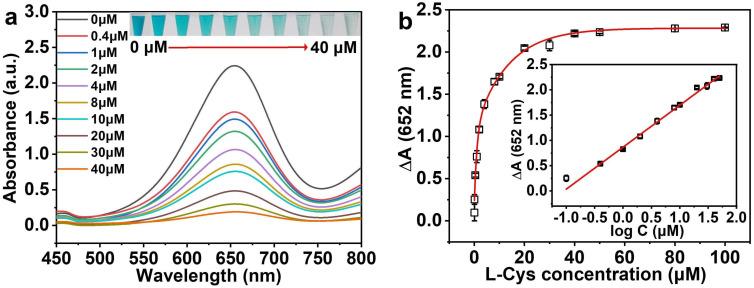
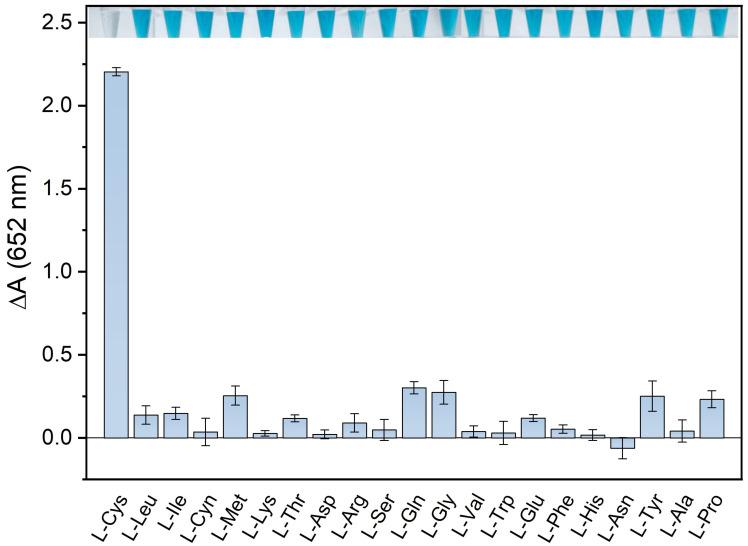
Compared to natural enzymes, the development of efficient artificial simulated enzymes, such as those based on bimetallic materials with high catalytic activity and good stability, is an important way until now. Herein, we employed ZnCoO microspheres as carriers to synthesize Pt-doped composites with different amounts using a one-pot method. The morphology and structure of the synthesized materials were characterized using XRD, SEM, BET, FT-IR, XPS, and Zeta potential techniques. It was found that Pt adhered well to the surface of ZnCoO microspheres, with a 12.5% Pt doped ratio exhibiting abundant oxygen vacancies, excellent substrate affinity, and high peroxidase-like activity. Using fluorescent probes and electrochemical methods, the peroxidase-like catalytic mechanism has been explored that Pt@ZnCoO microspheres can accelerate the electron transfer between HO and 3,3',5,5'-tetramethylbenzidine (TMB). Based on the optimal loading ratio of 12.5% of Pt@ZnCoO, a colorimetric sensor for visual detection of L-cysteine (L-Cys) was constructed, exhibiting a wide linear range of 0.150 µM and a low detection limit of 0.0163 µM. The sensor possesses good selectivity, reusability, and usage stability, which can be well applied to the determination of L-Cys in health product capsules with recovery rates of 96.9%103.7% and RSD of 1.07%~6.50%. This work broadens the application prospects of spinel materials such as ZnCoO in the field of biological analysis and also provides inspiration for the development of new artificial simulated enzymes.
与天然酶相比,开发高效的人工模拟酶,如基于具有高催化活性和良好稳定性的双金属材料的酶,是目前的一种重要方法。在此,我们采用ZnCoO微球作为载体,通过一锅法合成了不同含量的Pt掺杂复合材料。使用XRD、SEM、BET、FT-IR、XPS和Zeta电位技术对合成材料的形貌和结构进行了表征。发现Pt很好地附着在ZnCoO微球表面,12.5%的Pt掺杂率表现出丰富的氧空位、优异的底物亲和力和高类过氧化物酶活性。利用荧光探针和电化学方法,探索了Pt@ZnCoO微球能够加速HO与3,3',5,5'-四甲基联苯胺(TMB)之间电子转移的类过氧化物酶催化机制。基于12.5%的Pt@ZnCoO最佳负载比,构建了一种用于可视化检测L-半胱氨酸(L-Cys)的比色传感器,其线性范围宽达0.150 μM,检测限低至0.0163 μM。该传感器具有良好的选择性、可重复使用性和使用稳定性,可很好地应用于保健品胶囊中L-Cys的测定,回收率为96.9%103.7%,相对标准偏差为1.07%~6.50%。这项工作拓宽了ZnCoO等尖晶石材料在生物分析领域的应用前景,也为新型人工模拟酶的开发提供了启示。


 Zotero 插件