
应激与隐匿性2型糖尿病诱发年轻成年患者口腔机会性感染:一例报告
Oral Opportunistic Infection Induced by Stress and Silent Type 2 Diabetes Mellitus in Young Adult Patient: A Case Report.
作者信息
Karina Dhini, Heldayani Iin, Hidayat Wahyu
机构信息
Oral Medicine Residency Program, Faculty of Dentistry, Universitas Padjadjaran, Bandung, Indonesia.
Department of Oral Medicine, Faculty of Dentistry, Universitas Padjadjaran, Bandung, Indonesia.
出版信息
Int Med Case Rep J. 2025 Jan 11;18:59-66. doi: 10.2147/IMCRJ.S488127. eCollection 2025.
INTRODUCTION
Opportunistic infections (IO) are infections of microbiota (fungi, viruses, bacteria, or parasites) that generally do not cause disease but turn into pathogens when the body's defense system is compromised. This can be triggered by various factors, one of which is due to a weakened immune system due to Diabetes Mellitus (DM), which increases the occurrence of opportunistic infections, especially in the oral cavity. Fungal (oral candidiasis) and viral (recurrent intraoral herpes) infections can occur in the oral cavity of DM patients. Recurrent intraoral herpes (RIH) is generally a recurrent herpes virus infection with one of the triggers being stress.
OBJECTIVE
To determine the role of stress and silent type 2 DM and which is thought to trigger opportunistic infections in oral cavity.
CASE
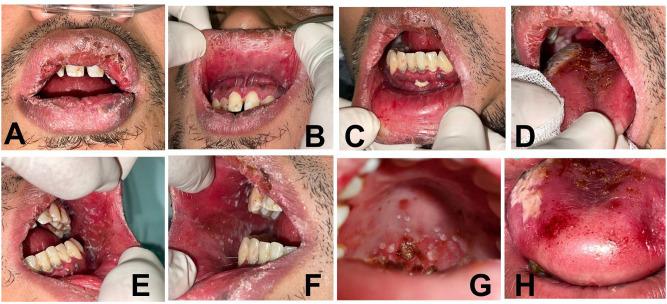
A 34-year-old man was referred with complaints of white patches in the mouth, sore throat a difficulty swallowing and opening the mouth. Extraoral examination, yellow-black crusts were found on the lips. Intraoral and tongue examination revealed white plaque that could be scraped off, and a mouth mirror was attached. The hard palate showed vesicles that spread to the soft palate. Laboratory tests were abnormal for blood sugar, anti-HSV-1 IgG, and presence of hyphae. Mild anxiety and moderate stress. The working diagnosis was pseudomembranous candidiasis RIH, exfoliative cheilitis, and xerostomia. Differential diagnosis was erythema multiforme.
CASE MANAGEMENT
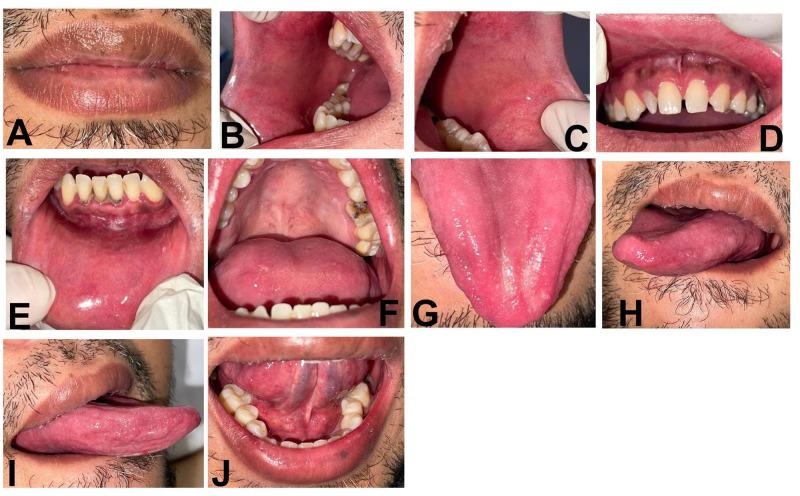
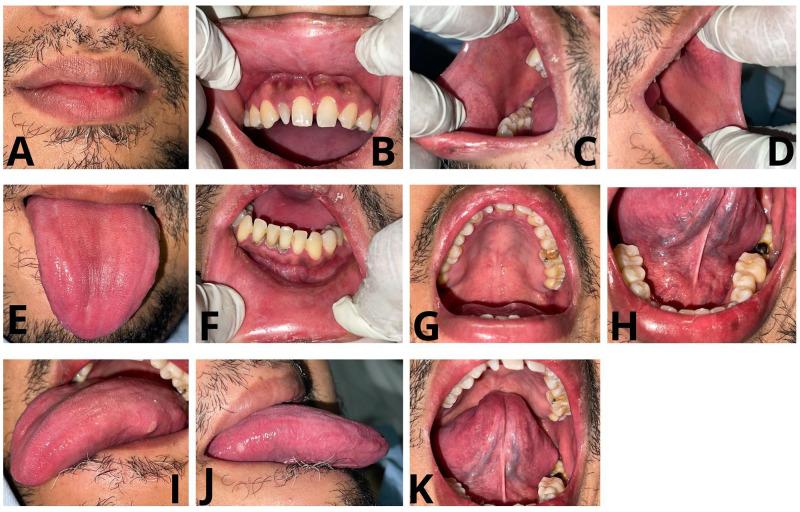
Pharmacologic dental management was fluconazole injection, acyclovir, NaCL 0.9%, chlorine dioxide mouthwash, and petroleum jelly. Non-pharmacologic therapy dental included oral hygiene instruction and education on oral therapy and referral to the internal medicine clinic for DM management. After two weeks of collaborative treatment between oral medicine and internal medicine, there was significant improvement.
CONCLUSION
Silent type 2 DM and stress can cause a decrease in the immune system, triggering opportunistic infections, namely RIH and candidiasis.
引言
机会性感染(IO)是微生物群(真菌、病毒、细菌或寄生虫)感染,通常不会引发疾病,但当人体防御系统受损时会转变为病原体。这可能由多种因素触发,其中之一是糖尿病(DM)导致免疫系统减弱,从而增加了机会性感染的发生率,尤其是在口腔。糖尿病患者口腔中可能会发生真菌(口腔念珠菌病)和病毒(复发性口腔疱疹)感染。复发性口腔疱疹(RIH)通常是一种复发性疱疹病毒感染,其触发因素之一是压力。
目的
确定压力和隐匿性2型糖尿病的作用,以及它们被认为引发口腔机会性感染的原因。
病例
一名34岁男性因口腔出现白色斑块、喉咙疼痛、吞咽和张口困难前来就诊。口外检查发现嘴唇上有黄黑色痂皮。口内及舌部检查发现白色斑块可刮除,并附着有口镜。硬腭可见水疱,蔓延至软腭。实验室检查显示血糖、抗单纯疱疹病毒1型IgG及菌丝存在异常。存在轻度焦虑和中度压力。初步诊断为假膜性念珠菌病、复发性口腔疱疹、剥脱性唇炎和口干症。鉴别诊断为多形红斑。
病例管理
药物治疗包括氟康唑注射液、阿昔洛韦、0.9%氯化钠、二氧化氯漱口水和凡士林。非药物治疗包括口腔卫生指导、口腔治疗教育以及转诊至内科诊所进行糖尿病管理。经过口腔医学和内科两周的联合治疗后,病情有显著改善。
结论
隐匿性2型糖尿病和压力可导致免疫系统下降,引发机会性感染,即复发性口腔疱疹和念珠菌病。

 Zotero 插件