
微生物源聚脱氧核糖核苷酸的首次报告:一种可持续且改良的基于鲑鱼的聚脱氧核糖核苷酸替代品。
First Report on Microbial-Derived Polydeoxyribonucleotide: A Sustainable and Enhanced Alternative to Salmon-Based Polydeoxyribonucleotide.
作者信息
Chae Doobyeong, Oh Sae-Woong, Choi Yoon-Seo, Kang Dae-Jung, Park Chun-Woong, Lee Jongsung, Seo Won-Sang
机构信息
Department of Cosmetics Industry, Graduate School, Chungbuk National University, Cheongju 28160, Republic of Korea.
Molecular Dermatology Laboratory, Department of Integrative Biotechnology, College of Biotechnology and Bioengineering, Sungkyunkwan University, Suwon 16419, Republic of Korea.
出版信息
Curr Issues Mol Biol. 2025 Jan 9;47(1):41. doi: 10.3390/cimb47010041.
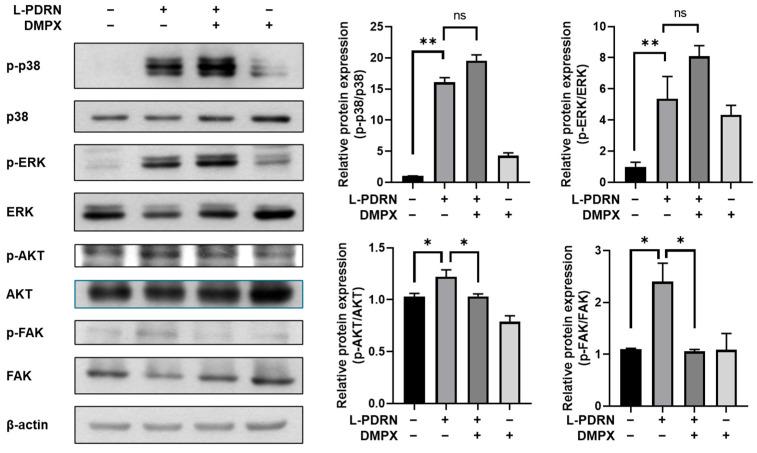
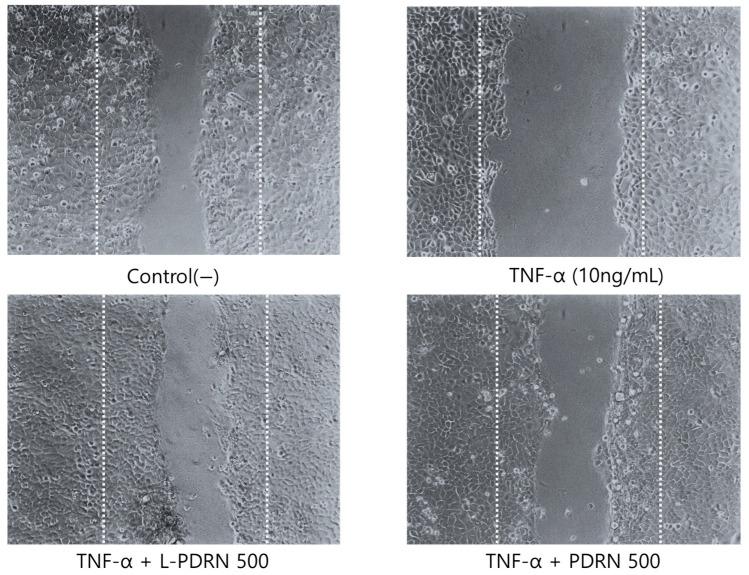
Polydeoxyribonucleotide (PDRN) has emerged as a potent bioactive compound with proven efficacy in wound healing, tissue regeneration, and anti-inflammatory applications and is predominantly derived from salmonid gonads. However, this study presents a groundbreaking advancement by successfully extracting and characterizing PDRN from microbial sources, specifically , marking the first report to utilize microbial-, biome-, or -derived PDRN (L-PDRN). The findings demonstrate the enhanced biological properties of L-PDRN over traditional salmon-derived PDRN across several assays. L-PDRN exhibited superior antioxidant activity, with significantly higher SOD-like and DPPH radical scavenging activities compared to PDRN, particularly at higher concentrations. In wound-healing assays, L-PDRN demonstrated superior efficacy in promoting cell migration and wound closure, even under inflammatory conditions induced by tumor necrosis factor (TNF-α). Additionally, L-PDRN demonstrated the potential for enhanced immunostimulatory effects under non-inflammatory conditions while maintaining anti-inflammatory properties under lipopolysaccharide (LPS) stimulation. Electrophoretic analysis revealed that L-PDRN consists of smaller DNA fragments (under 100 bp) compared to salmon-derived PDRN (200-800 bp), suggesting greater bioavailability and skin absorption. Mechanistic studies confirmed that L-PDRN activates the focal adhesion kinase (FAK) and protein kinase B (AKT) signaling pathway through the A2A receptor, similar to PDRN, while also engaging alternative pathways for p38 and ERK phosphorylation, highlighting its signaling versatility. This study underscores the potential of L-PDRN as a multifunctional and sustainable alternative to salmon-derived PDRN, offering enhanced bioactivity, scalability, and environmental benefits. The novel approach of utilizing microbial-derived PDRN opens new avenues for therapeutic applications in oxidative stress management, tissue regeneration, and immune modulation, paving the way for a paradigm shift in PDRN sourcing and functionality.
聚脱氧核糖核苷酸(PDRN)已成为一种具有强大生物活性的化合物,在伤口愈合、组织再生和抗炎应用方面具有已证实的功效,并且主要来源于鲑鱼性腺。然而,本研究取得了一项突破性进展,成功地从微生物来源中提取并表征了PDRN,具体而言,这标志着首次报道利用微生物、生物群落或生物源衍生的PDRN(L-PDRN)。研究结果表明,在多项检测中,L-PDRN比传统鲑鱼来源的PDRN具有更强的生物学特性。L-PDRN表现出卓越的抗氧化活性,与PDRN相比,超氧化物歧化酶样和二苯基苦味酰基自由基清除活性显著更高,尤其是在较高浓度下。在伤口愈合检测中,L-PDRN在促进细胞迁移和伤口闭合方面表现出卓越的功效,即使在肿瘤坏死因子(TNF-α)诱导的炎症条件下也是如此。此外,L-PDRN在非炎症条件下显示出增强免疫刺激作用的潜力,同时在脂多糖(LPS)刺激下保持抗炎特性。电泳分析表明,与鲑鱼来源的PDRN(200-800 bp)相比,L-PDRN由更小的DNA片段(小于100 bp)组成,这表明其具有更高的生物利用度和皮肤吸收率。机制研究证实,L-PDRN与PDRN类似,通过A2A受体激活粘着斑激酶(FAK)和蛋白激酶B(AKT)信号通路,同时还涉及p38和ERK磷酸化的替代途径,突出了其信号传导的多功能性。本研究强调了L-PDRN作为鲑鱼来源PDRN的多功能和可持续替代品的潜力,具有增强的生物活性



 Zotero 插件