
利用非抗生素策略对抗多重耐药临床病原体,特别提及抗菌肽及其涂层
Harnessing Non-Antibiotic Strategies to Counter Multidrug-Resistant Clinical Pathogens with Special Reference to Antimicrobial Peptides and Their Coatings.
作者信息
Mishra Shyam Kumar, Akter Tanzina, Urmi Umme Laila, Enninful George, Sara Manjulatha, Shen Jiawei, Suresh Dittu, Zheng Liangjun, Mekonen Elias Shiferaw, Rayamajhee Binod, Labricciosa Francesco M, Sartelli Massimo, Willcox Mark
机构信息
School of Optometry and Vision Science, Faculty of Health and Medicine, University of New South Wales, Sydney, NSW 2052, Australia.
Department of Microbiology, Tribhuvan University Teaching Hospital, Institute of Medicine, Kathmandu 44600, Nepal.
出版信息
Antibiotics (Basel). 2025 Jan 9;14(1):57. doi: 10.3390/antibiotics14010057.
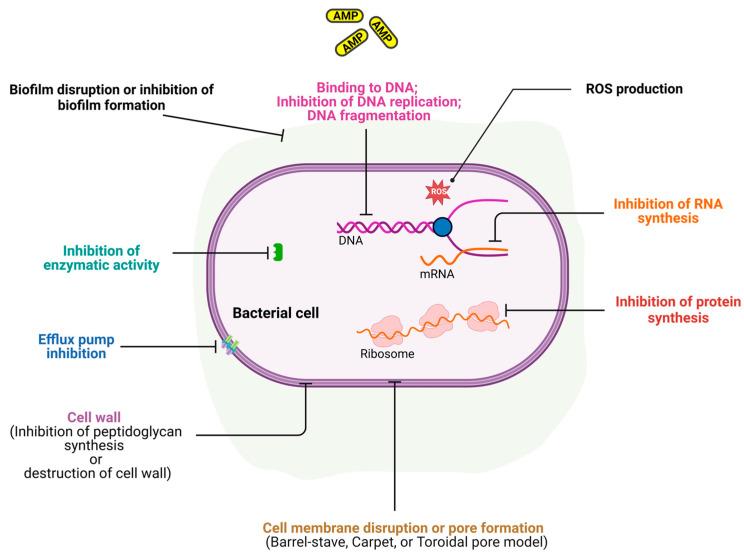
Antimicrobial resistance is a critical global challenge in the 21st century, validating Sir Alexander Fleming's warning about the misuse of antibiotics leading to resistant microbes. With a dwindling arsenal of effective antibiotics, it is imperative to concentrate on alternative antimicrobial strategies. Previous studies have not comprehensively discussed the advantages and limitations of various strategies, including bacteriophage therapy, probiotics, immunotherapies, photodynamic therapy, essential oils, nanoparticles and antimicrobial peptides (AMPs) within a single review. This review addresses that gap by providing an overview of these various non-antibiotic antimicrobial strategies, highlighting their pros and cons, with a particular emphasis on antimicrobial peptides (AMPs). We explore the mechanism of action of AMPs against bacteria, viruses, fungi and parasites. While these peptides hold significant promise, their application in mainstream drug development is hindered by challenges such as low bioavailability and potential toxicity. However, advancements in peptide engineering and chemical modifications offer solutions to enhance their clinical utility. Additionally, this review presents updates on strategies aimed at improving the cost, stability and selective toxicity of AMPs through the development of peptidomimetics. These molecules have demonstrated effective activity against a broad range of pathogens, making them valuable candidates for integration into surface coatings to prevent device-associated infections. Furthermore, we discuss various approaches for attaching and functionalising these peptides on surfaces. Finally, we recommend comprehensive in vivo studies to evaluate the efficacy of AMPs and their mimetics, investigate their synergistic combinations with other molecules and assess their potential as coatings for medical devices.
抗菌耐药性是21世纪一项严峻的全球性挑战,这证实了亚历山大·弗莱明爵士关于滥用抗生素会导致产生耐药微生物的警告。随着有效抗生素的储备日益减少,集中精力研究替代抗菌策略势在必行。以往的研究尚未在一篇综述中全面讨论各种策略的优缺点,包括噬菌体疗法、益生菌、免疫疗法、光动力疗法、精油、纳米颗粒和抗菌肽(AMPs)。本综述通过概述这些各种非抗生素抗菌策略,突出它们的优缺点,特别强调抗菌肽(AMPs),来填补这一空白。我们探讨了抗菌肽对细菌、病毒、真菌和寄生虫的作用机制。虽然这些肽具有巨大的潜力,但它们在主流药物开发中的应用受到诸如低生物利用度和潜在毒性等挑战的阻碍。然而,肽工程和化学修饰方面的进展提供了提高其临床效用的解决方案。此外,本综述介绍了旨在通过开发拟肽来提高抗菌肽的成本效益、稳定性和选择性毒性的策略的最新情况。这些分子已显示出对多种病原体具有有效的活性,使其成为整合到表面涂层以预防与器械相关感染的有价值候选物。此外,我们讨论了在表面连接这些肽并使其功能化的各种方法。最后,我们建议进行全面的体内研究,以评估抗菌肽及其模拟物的疗效,研究它们与其他分子的协同组合,并评估它们作为医疗器械涂层的潜力。



 Zotero 插件