
一种基于微尺度热泳的酶促RNA甲基转移酶检测方法能够发现DNA甲基转移酶2(DNMT2)抑制剂。
A microscale thermophoresis-based enzymatic RNA methyltransferase assay enables the discovery of DNMT2 inhibitors.
作者信息
Nidoieva Zarina, Sabin Mark O, Dewald Tristan, Weldert Annabelle C, Hoba Sabrina N, Helm Mark, Barthels Fabian
机构信息
Institute of Pharmaceutical and Biomedical Sciences, Johannes Gutenberg-University, Mainz, Germany.
Department of Molecular, Cellular, and Developmental Biology, Yale University, New Haven, CT, USA.
出版信息
Commun Chem. 2025 Feb 3;8(1):32. doi: 10.1038/s42004-025-01439-9.
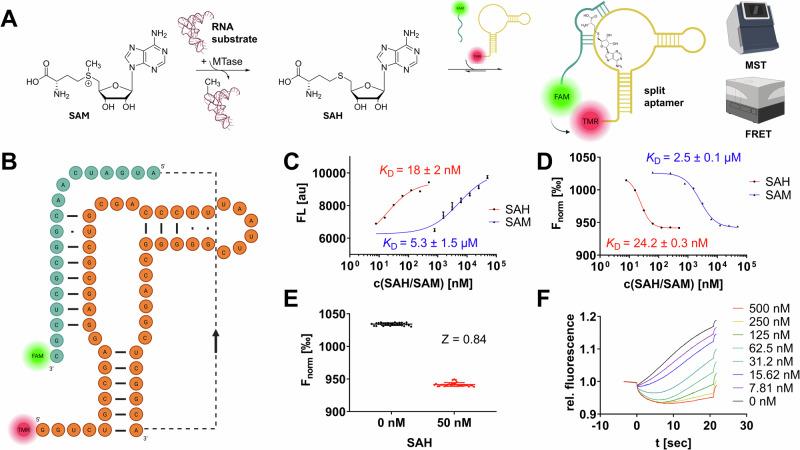
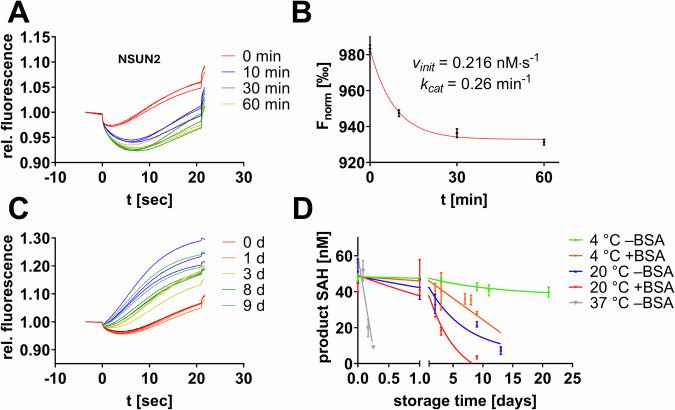
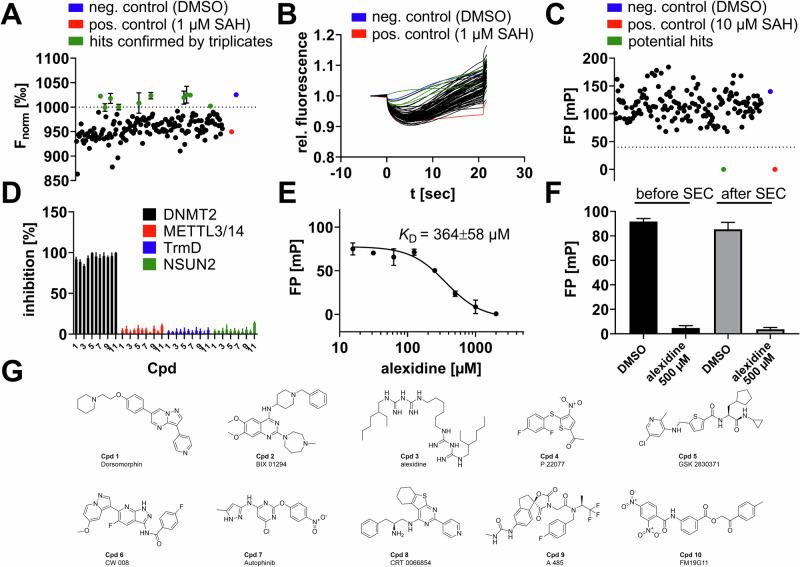
RNA methyltransferases (MTases) have recently become increasingly important in drug discovery. Yet, most frequently utilized RNA MTase assays are limited in their throughput and hamper this rapidly evolving field of medicinal chemistry. This study developed a microscale thermophoresis (MST)-based split aptamer assay for enzymatic MTase investigations, improving current methodologies by offering a non-proprietary, cost-effective, and highly sensitive approach. Our findings demonstrate the assay's effectiveness across different RNA MTases, including inhibitor characterization of METTL3/14, DNMT2, NSUN2, and S. aureus TrmD, enabling future drug discovery efforts. Using this concept, a pilot screening on the cancer drug target DNMT2 discovered several hit compounds with micromolar potency.
RNA甲基转移酶(MTases)最近在药物发现中变得越来越重要。然而,最常用的RNA MTase检测方法在通量方面存在局限性,阻碍了这个快速发展的药物化学领域。本研究开发了一种基于微量热泳动(MST)的分裂适体检测方法用于酶促MTase研究,通过提供一种非专利、经济高效且高度灵敏的方法改进了现有方法。我们的研究结果证明了该检测方法在不同RNA MTases中的有效性,包括METTL3/14、DNMT2、NSUN2和金黄色葡萄球菌TrmD的抑制剂表征,为未来的药物发现工作提供了可能。利用这一概念,对癌症药物靶点DNMT2进行的初步筛选发现了几种具有微摩尔效力的命中化合物。



 Zotero 插件