
多组学分析揭示了复发性I期非小细胞肺癌的生物学和临床见解。
Multi-omics analyses reveal biological and clinical insights in recurrent stage I non-small cell lung cancer.
作者信息
Wang Chengdi, Li Jingwei, Chen Jingyao, Wang Zhoufeng, Zhu Guonian, Song Lujia, Wu Jiayang, Li Changshu, Qiu Rong, Chen Xuelan, Zhang Li, Li Weimin
机构信息
Department of Pulmonary and Critical Care Medicine, State Key Laboratory of Respiratory Health and Multimorbidity, West China Hospital, Sichuan University, Chengdu, Sichuan, China.
Laboratory of Precision Therapeutics, Targeted Tracer Research and Development Laboratory, Frontiers Science Center for Disease-related Molecular Network, West China Hospital, Sichuan University, Chengdu, Sichuan, China.
出版信息
Nat Commun. 2025 Feb 10;16(1):1477. doi: 10.1038/s41467-024-55068-2.
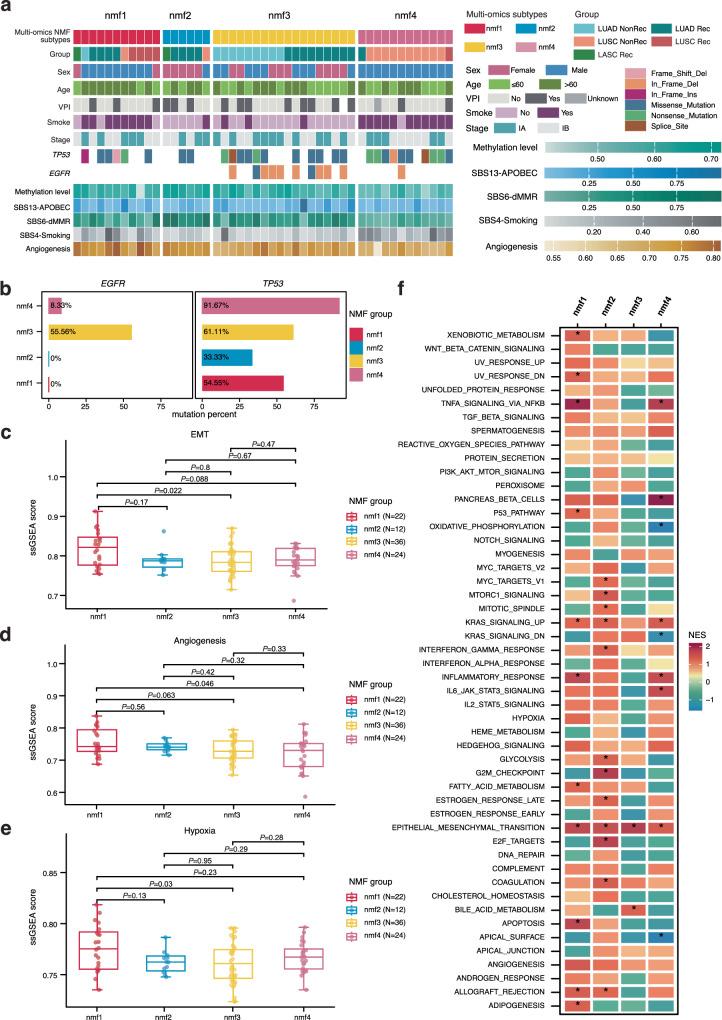
Post-operative recurrence rates of stage I non-small cell lung cancer (NSCLC) range from 20% to 40%. Nonetheless, the molecular mechanisms underlying recurrence hitherto remain largely elusive. Here, we generate genomic, epigenomic and transcriptomic profiles of paired tumors and adjacent tissues from 122 stage I NSCLC patients, among which 57 patients develop recurrence after surgery during follow-up. Integrated analyses illustrate that the presence of predominantly solid or micropapillary histological subtypes, increased genomic instability, and APOBEC-related signature are associated with recurrence. Furthermore, TP53 missense mutation in DNA-binding domain could contribute to shorter time to recurrence. DNA hypomethylation is pronounced in recurrent NSCLC, and PRAME is the significantly hypomethylated and overexpressed gene in recurrent lung adenocarcinoma (LUAD). Mechanistically, hypomethylation at TEAD1 binding site facilitates the transcriptional activation of PRAME. Inhibition of PRAME restrains the tumor metastasis via downregulation of epithelial-mesenchymal transition-related genes. We also identify that enrichment of AT2 cells with higher copy number variation burden, exhausted CD8 + T cells and Macro_SPP1, along with the reduced interaction between AT2 and immune cells, is essential for the formation of ecosystem in recurrent LUAD. Finally, multi-omics clustering could stratify the NSCLC patients into 4 subclusters with varying recurrence risk and subcluster-specific therapeutic vulnerabilities. Collectively, this study constitutes a promising resource enabling insights into the biological mechanisms and clinical management for post-operative recurrence of stage I NSCLC.
I期非小细胞肺癌(NSCLC)的术后复发率在20%至40%之间。尽管如此,迄今为止复发背后的分子机制在很大程度上仍不清楚。在此,我们生成了122例I期NSCLC患者配对肿瘤组织和相邻组织的基因组、表观基因组和转录组图谱,其中57例患者在随访期间术后出现复发。综合分析表明,主要为实性或微乳头组织学亚型的存在、基因组不稳定性增加以及与载脂蛋白B编辑酶催化多肽样蛋白(APOBEC)相关的特征与复发相关。此外,DNA结合域中的TP53错义突变可能导致复发时间缩短。DNA低甲基化在复发性NSCLC中很明显,黑色素瘤优先表达抗原(PRAME)是复发性肺腺癌(LUAD)中显著低甲基化且过表达的基因。从机制上讲,TEAD1结合位点的低甲基化促进了PRAME的转录激活。抑制PRAME可通过下调上皮-间质转化相关基因来抑制肿瘤转移。我们还发现,具有较高拷贝数变异负担的2型肺泡上皮细胞(AT2)、耗竭的CD8 + T细胞和Macro_SPP1的富集,以及AT2与免疫细胞之间相互作用的减少,对于复发性LUAD生态系统的形成至关重要。最后,多组学聚类可将NSCLC患者分为4个具有不同复发风险和亚组特异性治疗脆弱性的亚组。总体而言,本研究构成了一个有前景的资源,有助于深入了解I期NSCLC术后复发的生物学机制和临床管理。


 Zotero 插件