
跨组织和疾病的SPP1巨噬细胞全景:综述
The Landscape of SPP1 Macrophages Across Tissues and Diseases: A Comprehensive Review.
作者信息
Palma Alessandro
机构信息
Department of Biology and Biotechnologies "Charles Darwin", Sapienza University of Rome, Rome, Italy.
出版信息
Immunology. 2025 Oct;176(2):179-196. doi: 10.1111/imm.13952. Epub 2025 May 21.
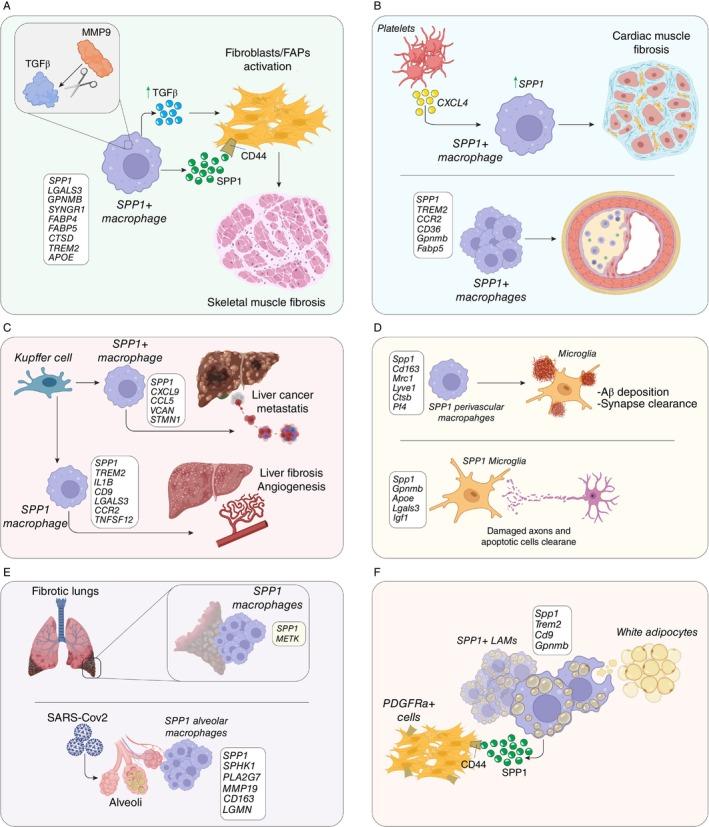
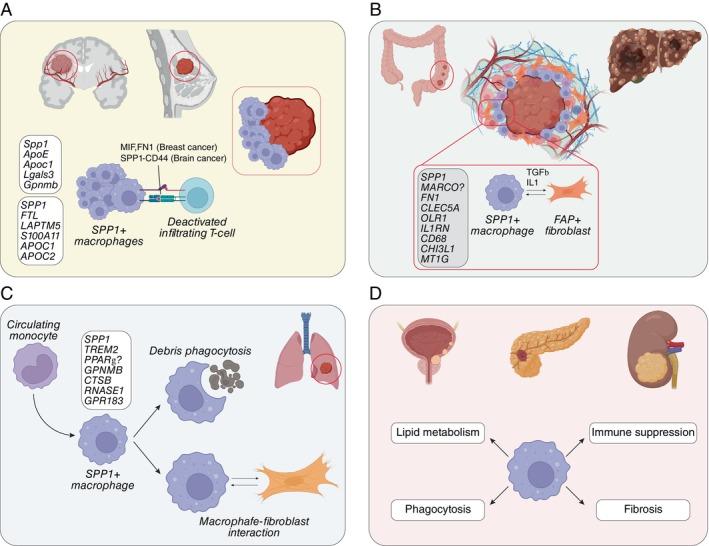
Macrophages play a critical role in shaping the immune landscape of various diseases, with secreted phosphoprotein 1 (SPP1)-expressing macrophages emerging as a distinct subset implicated in both cancerous and non-cancerous conditions. Leveraging recent advances in single-cell RNA sequencing, numerous studies have identified SPP1 macrophages across diverse pathological contexts, shedding light on their functional heterogeneity. In cancer, SPP1 tumour-associated macrophages contribute to tumour growth, angiogenesis, and immune evasion, often interacting with T cells and stromal components to sustain an immunosuppressive microenvironment. Conversely, in non-cancerous diseases, these macrophages exhibit both profibrotic and disease-promoting properties, depending on the tissue context. This review provides a comprehensive synthesis of the latest findings on SPP1 macrophages, highlighting their roles in tumour progression, immune suppression, tissue remodelling, and fibrosis. By comparing their shared traits and tissue-specific differences, we explore how SPP1 macrophages adapt to distinct microenvironments and influence disease progression. Understanding their conserved and context-dependent functions may open new avenues for therapeutic targeting.
巨噬细胞在塑造各种疾病的免疫格局中发挥着关键作用,表达分泌型磷蛋白1(SPP1)的巨噬细胞作为一个独特的亚群出现,与癌症和非癌症疾病均有关联。利用单细胞RNA测序的最新进展,众多研究已在不同病理背景下鉴定出SPP1巨噬细胞,揭示了它们的功能异质性。在癌症中,SPP1肿瘤相关巨噬细胞促进肿瘤生长、血管生成和免疫逃逸,常与T细胞和基质成分相互作用以维持免疫抑制微环境。相反,在非癌症疾病中,这些巨噬细胞根据组织背景表现出促纤维化和促进疾病的特性。本综述全面综合了关于SPP1巨噬细胞的最新发现,突出了它们在肿瘤进展、免疫抑制、组织重塑和纤维化中的作用。通过比较它们的共同特征和组织特异性差异,我们探讨了SPP1巨噬细胞如何适应不同的微环境并影响疾病进展。了解它们的保守功能和依赖于背景的功能可能为治疗靶点开辟新途径。

 Zotero 插件