
肠道IgA与全身IgG发生功能性相互作用,以增强抗肺炎球菌疫苗反应。
Gut IgA functionally interacts with systemic IgG to enhance antipneumococcal vaccine responses.
作者信息
Gutzeit Cindy, Grasset Emilie K, Matthews Dean B, Maglione Paul J, Britton Graham J, Miller Haley, Magri Giuliana, Tomalin Lewis, Stapylton Matthew, Canales-Herrerias Pablo, Sominskaia Musia, Guzman Mauricio, Pybus Marc, Tejedor Vaquero Sonia, Radigan Lin, Tachó-Piñot Roser, Martín Nalda Andrea, García Prat Marina, Martinez Gallo Monica, Dieli-Crimi Romina, Clemente José C, Mehandru Saurabh, Suarez-Farinas Mayte, Faith Jeremiah J, Cunningham-Rundles Charlotte, Cerutti Andrea
机构信息
Department of Medicine, Precision Immunology Institute, Icahn School of Medicine at Mount Sinai, New York, NY 10029, USA.
Department of Pediatrics, Weill Cornell Medicine, New York, NY 10021, USA.
出版信息
Sci Adv. 2025 Feb 14;11(7):eado9455. doi: 10.1126/sciadv.ado9455. Epub 2025 Feb 12.
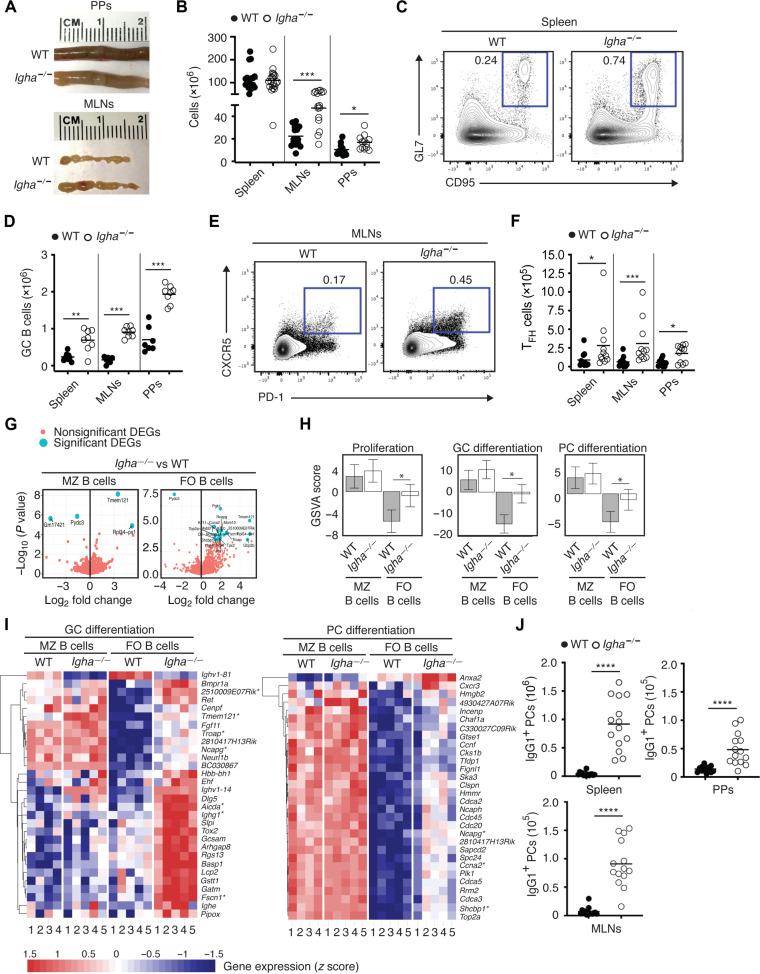
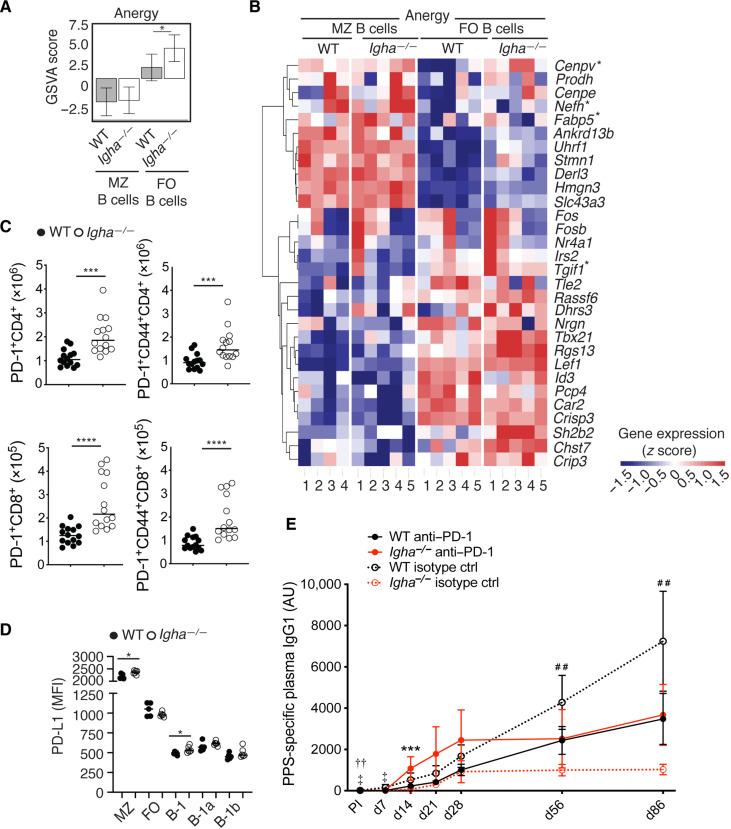
The gut microbiota enhances systemic immunoglobulin G (IgG) responses to vaccines, but it is unknown whether this effect involves IgA, which coats intestinal microbes. That IgA may amplify postimmune IgG production is suggested by the impaired IgG response to pneumococcal vaccines in some IgA-deficient patients. Here, we found that antipneumococcal but not total IgG production was impaired in mice with IgA deficiency. The positive effect of gut IgA on antipneumococcal IgG responses started very early in life and could implicate gut bacteria, as these responses were attenuated in germ-free mice recolonized with gut microbes from IgA-deficient donors. IgA could exert this effect by constraining the systemic translocation of gut antigens, which was associated with chronic immune activation, including T cell overexpression of programmed cell death protein 1 (PD-1). This inhibitory receptor may attenuate antipneumococcal IgG production by causing B cell hyporesponsiveness, which improved upon anti-PD-1 treatment. Thus, gut IgA functionally interacts with systemic IgG to enhance antipneumococcal vaccine responses.
肠道微生物群可增强全身对疫苗的免疫球蛋白G(IgG)反应,但这种效应是否涉及包裹肠道微生物的IgA尚不清楚。一些IgA缺陷患者对肺炎球菌疫苗的IgG反应受损,提示IgA可能会放大免疫后IgG的产生。在这里,我们发现IgA缺陷小鼠的抗肺炎球菌IgG产生受损,但总IgG产生未受影响。肠道IgA对抗肺炎球菌IgG反应的积极作用在生命早期就开始了,并且可能与肠道细菌有关,因为在用来自IgA缺陷供体的肠道微生物重新定殖的无菌小鼠中,这些反应减弱了。IgA可能通过限制肠道抗原的全身易位来发挥这种作用,这与慢性免疫激活有关,包括程序性细胞死亡蛋白1(PD-1)的T细胞过度表达。这种抑制性受体可能通过导致B细胞反应低下而减弱抗肺炎球菌IgG的产生,抗PD-1治疗后这种情况有所改善。因此,肠道IgA与全身IgG在功能上相互作用,以增强抗肺炎球菌疫苗反应。


 Zotero 插件