
变革睡眠监测:可穿戴设备及远程设备在推进家庭多导睡眠图技术中的应用综述及其在预测神经疾病中的作用
Transforming Sleep Monitoring: Review of Wearable and Remote Devices Advancing Home Polysomnography and Their Role in Predicting Neurological Disorders.
作者信息
Vitazkova Diana, Kosnacova Helena, Turonova Daniela, Foltan Erik, Jagelka Martin, Berki Martin, Micjan Michal, Kokavec Ondrej, Gerhat Filip, Vavrinsky Erik
机构信息
Institute of Electronics and Photonics, Faculty of Electrical Engineering and Information Technology, Slovak University of Technology, Ilkovicova 3, 81219 Bratislava, Slovakia.
Department of Psychology, Faculty of Arts, Comenius University, Gondova 2, 81102 Bratislava, Slovakia.
出版信息
Biosensors (Basel). 2025 Feb 17;15(2):117. doi: 10.3390/bios15020117.
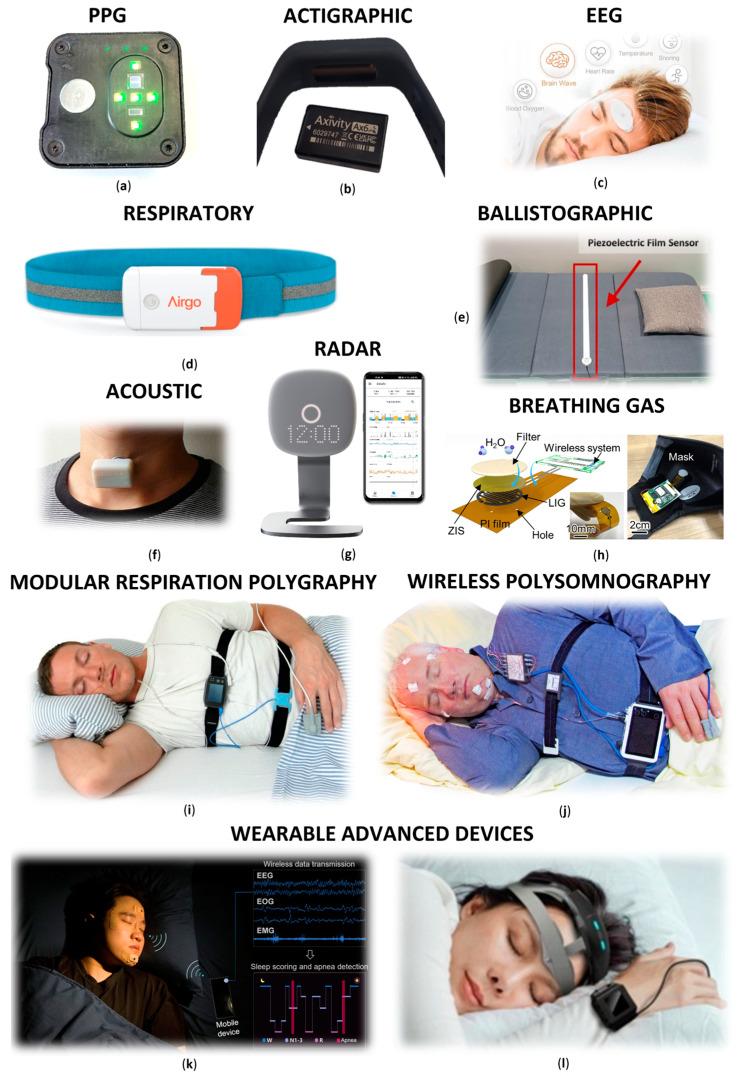
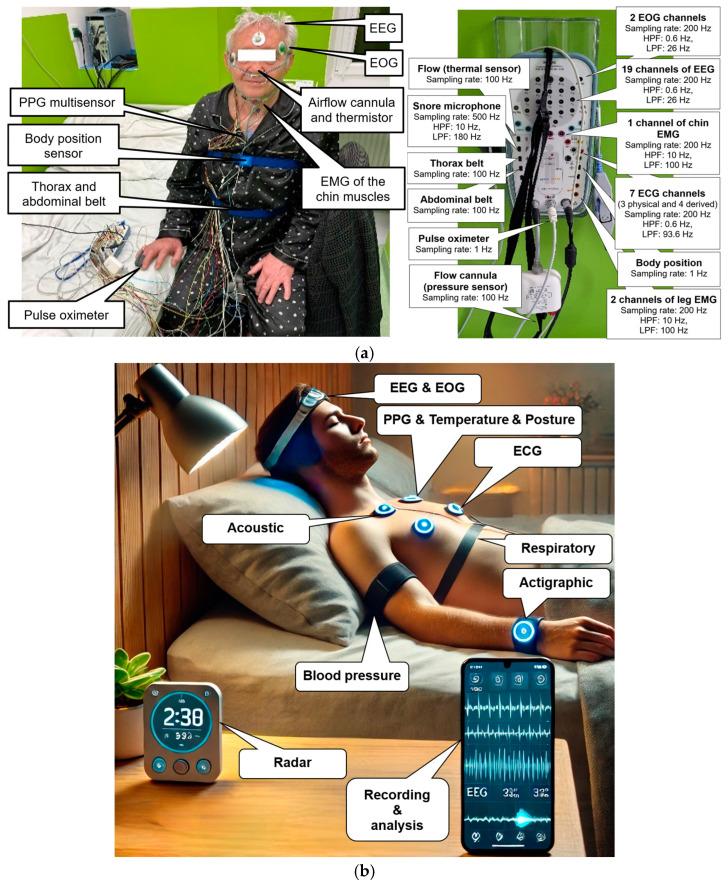
This paper explores the progressive era of sleep monitoring, focusing on wearable and remote devices contributing to advances in the concept of home polysomnography. We begin by exploring the basic physiology of sleep, establishing a theoretical basis for understanding sleep stages and associated changes in physiological variables. The review then moves on to an analysis of specific cutting-edge devices and technologies, with an emphasis on their practical applications, user comfort, and accuracy. Attention is also given to the ability of these devices to predict neurological disorders, particularly Alzheimer's and Parkinson's disease. The paper highlights the integration of hardware innovations, targeted sleep parameters, and partially advanced algorithms, illustrating how these elements converge to provide reliable sleep health information. By bridging the gap between clinical diagnosis and real-world applicability, this review aims to elucidate the role of modern sleep monitoring tools in improving personalised healthcare and proactive disease management.
本文探讨了睡眠监测的发展历程,重点关注可穿戴设备和远程设备对家庭多导睡眠图概念进步的贡献。我们首先探索睡眠的基本生理学,为理解睡眠阶段及生理变量的相关变化奠定理论基础。然后,综述转向对特定前沿设备和技术的分析,重点关注其实际应用、用户舒适度和准确性。还关注了这些设备预测神经疾病,特别是阿尔茨海默病和帕金森病的能力。本文强调了硬件创新、目标睡眠参数和部分先进算法的整合,说明了这些要素如何汇聚以提供可靠的睡眠健康信息。通过弥合临床诊断与实际适用性之间的差距,本综述旨在阐明现代睡眠监测工具在改善个性化医疗和疾病主动管理中的作用。
 Zotero 插件