
胰腺癌免疫治疗进展:新兴过继性细胞疗法简要综述
Advancing Immunotherapy in Pancreatic Cancer: A Brief Review of Emerging Adoptive Cell Therapies.
作者信息
Sherpally Deepak, Manne Ashish
机构信息
Department of Internal Medicine, New York Medical College, Metropolitan, New York, NY 10029, USA.
Department of Internal Medicine, Division of Medical Oncology, The Arthur G. James Cancer Hospital and Richard J. Solove Research Institute, The Ohio State University Comprehensive Cancer Center, Columbus, OH 43210, USA.
出版信息
Cancers (Basel). 2025 Feb 9;17(4):589. doi: 10.3390/cancers17040589.
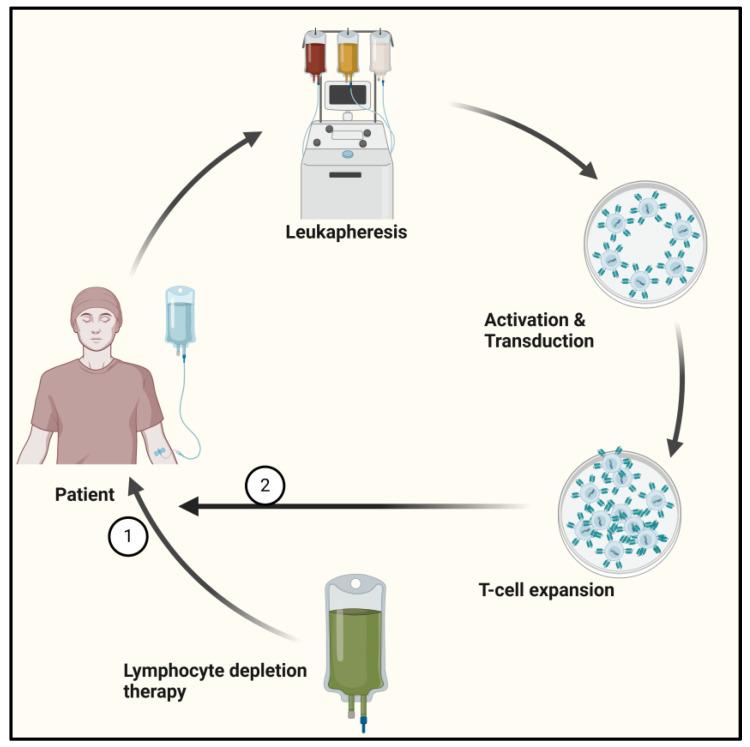
Pancreatic cancer has the lowest 5-year survival rate (13%) among major cancers and is the third leading cause of cancer-related deaths in the United States. The high lethality of this cancer is attributed to its insidious onset, late-stage diagnosis, rapid progression, and limited treatment options. Addressing these challenges requires a deeper understanding of the complex tumor microenvironment to identify novel therapeutic targets. Newer approaches like adoptive cell therapy have shown remarkable success in treating hematological malignancies, but their application in solid tumors, particularly pancreatic cancer, is still in the early stages of development. ACT broadly involves isolating immune cells (T lymphocytes, Natural Killer cells, and macrophages) from the patient, followed by genetic engineering to enhance and mount a specific anti-tumor response. Various ACT modalities are under investigation for pancreatic cancer, including chimeric antigen receptor T cells (CAR-T), chimeric antigen receptor NK cells (CAR-NK), tumor-infiltrating lymphocytes (TIL), T-cell receptor (TCR)-engineered T cells, and cytokine-induced killer cells (CIK). Major hurdles have been identifying actionable tumor antigens and delivering focused cellular therapies to overcome the immunosuppressive and dense fibrotic stroma surrounding the pancreatic cancer. Further studies are needed to explore the limitations faced by cellular therapy in pancreatic cancer and identify novel combination treatment approaches in order to improve clinical outcomes.
胰腺癌在主要癌症中5年生存率最低(13%),是美国癌症相关死亡的第三大主要原因。这种癌症的高致死率归因于其发病隐匿、晚期诊断、进展迅速以及治疗选择有限。应对这些挑战需要更深入地了解复杂的肿瘤微环境,以确定新的治疗靶点。像过继性细胞疗法这样的新方法在治疗血液系统恶性肿瘤方面已显示出显著成效,但其在实体瘤,尤其是胰腺癌中的应用仍处于早期发展阶段。过继性细胞疗法大致包括从患者体内分离免疫细胞(T淋巴细胞、自然杀伤细胞和巨噬细胞),然后进行基因工程改造以增强并引发特定的抗肿瘤反应。目前正在对多种过继性细胞疗法用于胰腺癌进行研究,包括嵌合抗原受体T细胞(CAR-T)、嵌合抗原受体自然杀伤细胞(CAR-NK)、肿瘤浸润淋巴细胞(TIL)、T细胞受体(TCR)工程化T细胞以及细胞因子诱导的杀伤细胞(CIK)。主要障碍在于确定可操作的肿瘤抗原以及提供针对性的细胞疗法,以克服胰腺癌周围的免疫抑制和致密的纤维化基质。需要进一步研究来探索细胞疗法在胰腺癌中面临的局限性,并确定新的联合治疗方法,以改善临床结果。

 Zotero 插件