
来自OC01的益生菌衍生代谢产物将肿瘤相关巨噬细胞重编程为炎症性抗肿瘤表型:对结肠癌细胞增殖和迁移的影响。
Probiotic-Derived Metabolites from OC01 Reprogram Tumor-Associated Macrophages to an Inflammatory Anti-Tumoral Phenotype: Impact on Colorectal Cancer Cell Proliferation and Migration.
作者信息
Garavaglia Beatrice, Vallino Letizia, Ferraresi Alessandra, Amoruso Angela, Pane Marco, Isidoro Ciro
机构信息
Laboratory of Molecular Pathology, Department of Health Sciences, Università del Piemonte Orientale, Via P. Solaroli 17, 28100 Novara, Italy.
Probiotical S.p.A., Via E. Mattei, 3, 28100 Novara, Italy.
出版信息
Biomedicines. 2025 Feb 3;13(2):339. doi: 10.3390/biomedicines13020339.
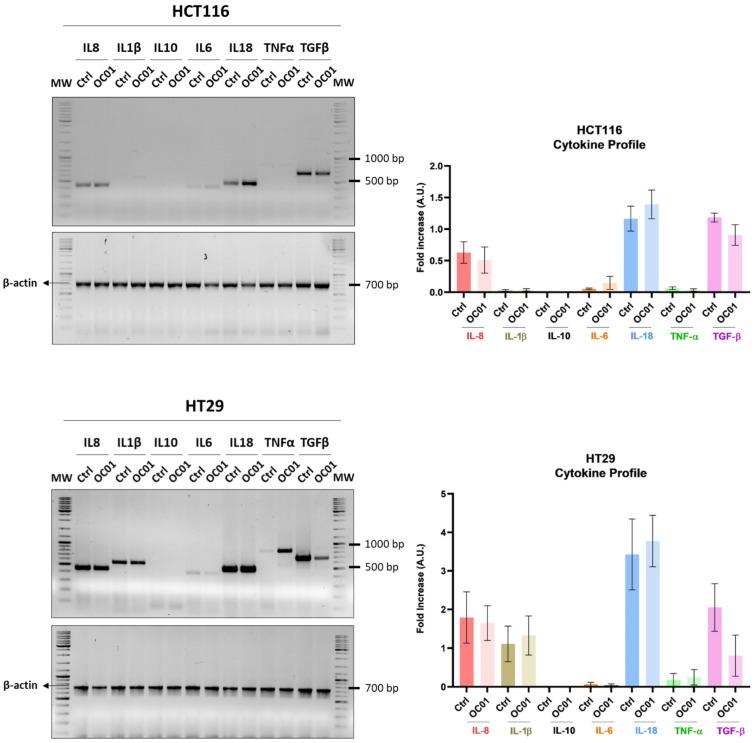
Tumor-associated macrophages (TAMs) are key players in the colorectal cancer (CRC) tumor microenvironment (TME), representing the most abundant immune cells within it. The interplay between the intestinal microbiota, macrophages, and cancer cells significantly impacts tumor progression by driving macrophage polarization. Particularly, the polarization into the pro-tumoral M2-like TAM phenotype promotes the extracellular matrix remodeling, cancer cell proliferation, metastasis, immune suppression, and therapy resistance. Probiotic metabolites can disrupt this crosstalk, possibly reverting the TAM polarization toward a pro-inflammatory anti-tumoral phenotype, thus potentially benefiting the intestinal mucosa and opposing CRC progression. Previously, we showed that OC01 metabolites counter interleukin (IL)-6-induced CRC proliferation and migration. Here, we explore how probiotics affect CRC secretome and how this influences TAM polarization, which then impacts CRC malignancy. The conditioning medium (CM) from CRC cells indeed promoted the polarization of macrophage toward the M2-like phenotype, whereas the CM from CRC pre-treated with OC01 metabolites induced a pro-inflammatory macrophage phenotype, characterized by NLRP3 inflammasome activation and reactive oxygen species (ROS) production, and by decreased expression of the M2 phenotype markers CD206 and CD163. Consistently, the expression of tumor growth factor (TGF)-β, a promoter of M2 macrophage polarization, was reduced in CRC cells treated with OC01. The pro-inflammatory macrophages inhibited CRC proliferation and migration. Overall, our study highlights the potential of metabolites from OC01 to reprogram the metabolism in cancer cells and thus reshape the TME by shifting TAMs toward a more inflammatory and anti-tumoral phenotype, emphasizing the promise of probiotics in advancing novel therapeutic approaches for CRC.
肿瘤相关巨噬细胞(TAMs)是结直肠癌(CRC)肿瘤微环境(TME)中的关键参与者,是其中数量最多的免疫细胞。肠道微生物群、巨噬细胞和癌细胞之间的相互作用通过驱动巨噬细胞极化显著影响肿瘤进展。特别是,向促肿瘤的M2样TAM表型极化会促进细胞外基质重塑、癌细胞增殖、转移、免疫抑制和治疗抗性。益生菌代谢产物可以破坏这种相互作用,可能使TAM极化转变为促炎性抗肿瘤表型,从而可能有益于肠黏膜并对抗CRC进展。此前,我们表明OC01代谢产物可对抗白细胞介素(IL)-6诱导的CRC增殖和迁移。在此,我们探讨益生菌如何影响CRC分泌组,以及这如何影响TAM极化,进而影响CRC恶性肿瘤。来自CRC细胞的条件培养基(CM)确实促进了巨噬细胞向M2样表型极化,而用OC01代谢产物预处理的CRC的CM诱导了促炎性巨噬细胞表型,其特征在于NLRP3炎性小体激活和活性氧(ROS)产生,以及M2表型标志物CD206和CD163的表达降低。一致地,在用OC01处理的CRC细胞中,M2巨噬细胞极化的促进因子肿瘤生长因子(TGF)-β的表达降低。促炎性巨噬细胞抑制CRC增殖和迁移。总体而言,我们的研究突出了OC01代谢产物在重新编程癌细胞代谢从而通过将TAMs转变为更具炎症性和抗肿瘤表型来重塑TME方面的潜力,强调了益生菌在推进CRC新型治疗方法方面的前景。



 Zotero 插件