
表型、生理和转录组分析揭示了栽培红生菜和野生生菜幼苗对盐胁迫的不同反应。
Phenotypic, Physiological, and Transcriptomic Analyses Reveal Different Responses to Salt Stress in Cultivated Red Lettuce and Wild Lettuce Seedlings.
作者信息
Chen Wei, Lian Jiahao, Hong Caiyun, Sun Shuguang, Hao Jia, Huang Shengqi, Wang Jialin, Guan Yue, Lu Zhenwei, Wang Zhenlong, Zhu Shixin, Wei Zhen
机构信息
School of Life Sciences, Zhengzhou University, Zhengzhou 450001, China.
National Innovation Centre for Bio-Breeding Industry, Xinxiang 453519, China.
出版信息
Int J Mol Sci. 2025 Apr 6;26(7):3425. doi: 10.3390/ijms26073425.
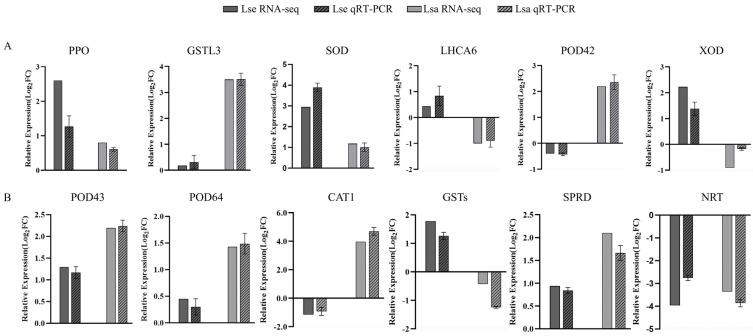
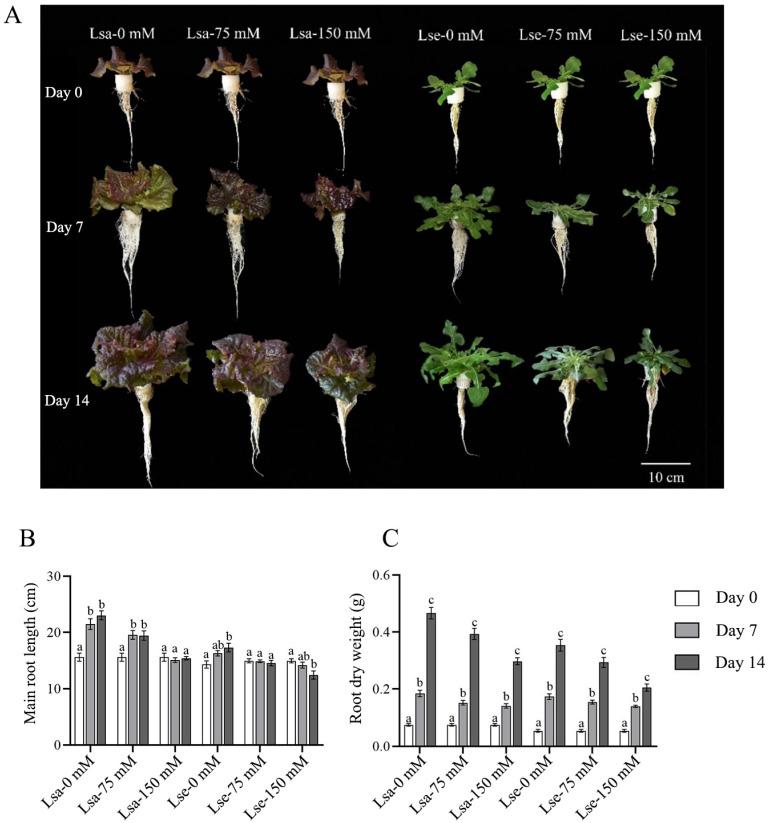
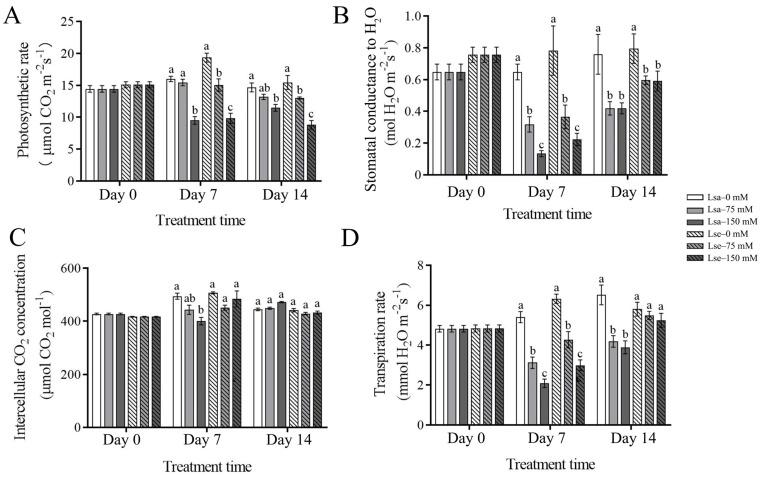
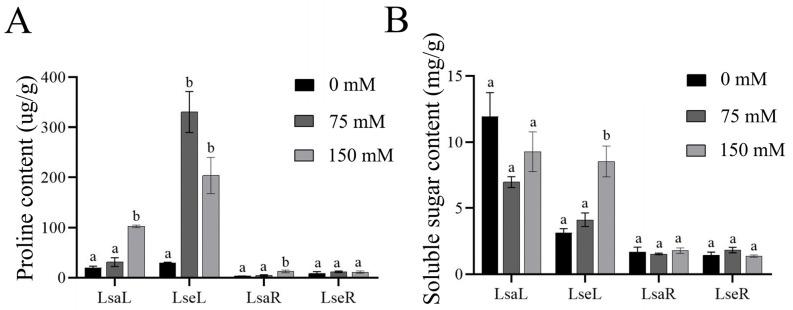
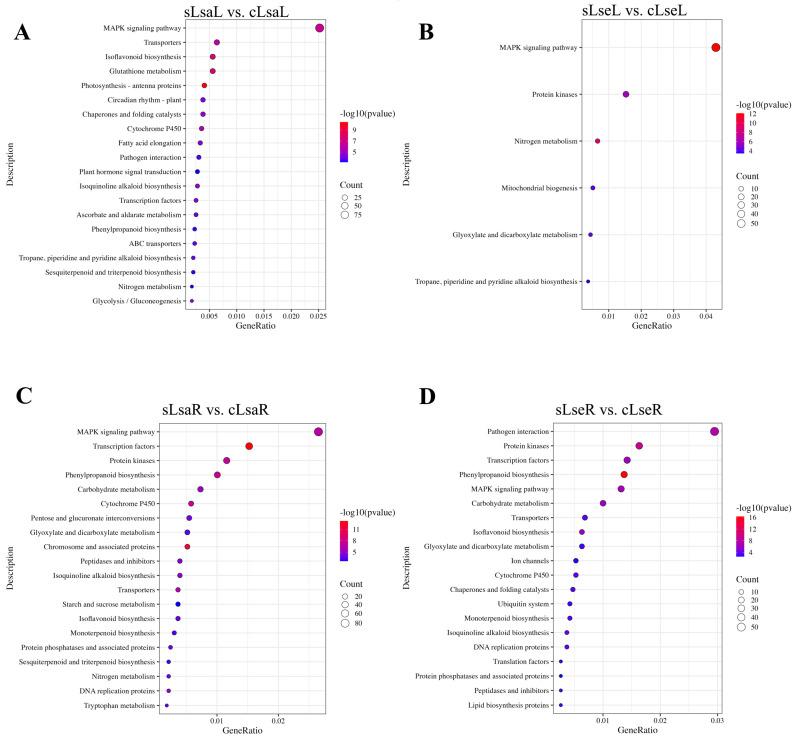
Cultivated lettuce ( L.) is considered one of the most important economic vegetables worldwide; however, it is subjected to different stresses (salt stress, etc.) during its growth and development, resulting in yield reductions. In this study, we selected cultivated red lettuce and wild lettuce species ( L.) to investigate the phenotypic and physiological changes in these lettuce under different salt treatment conditions. Functional annotation and enrichment analysis of the differentially expressed genes (DEGs) in the lettuce leaves and roots between the control and salt treatments were performed, identifying the key genes responding to salt stress. The results showed that the growth of the two types of lettuce was limited by salt stress, with decreased leaf area, main root length, biomass, and photosynthesis parameters noted. The cultivated red lettuce and the wild lettuce exhibited similar trends in terms of the variation in their antioxidant enzymatic activity and the content of osmoregulatory compounds in their leaves. The results of our transcriptomic analysis revealed that the mitogen-activated protein kinase (MAPK) signaling pathway, transporters, cytochrome P450, phenylpropanoid biosynthesis, and isoflavonoid biosynthesis were involved in the response to salt stress in the lettuce seedlings. The red lettuce cultivar showed a greater abundance of DEGs related to secondary metabolite biosynthesis and aquaporins under the salt treatment, resulting in a salinity-tolerant capacity comparable to that of the wild lettuce species. These results reveal important biosynthesis pathways that may play a key role in the salt tolerance of lettuce seedlings and provide key candidate genes that could be functionally characterized further and utilized to genetically improve new salt-tolerant varieties.
栽培生菜(L.)被认为是全球最重要的经济蔬菜之一;然而,它在生长发育过程中会受到不同胁迫(盐胁迫等),导致产量下降。在本研究中,我们选择了栽培红生菜和野生生菜品种(L.)来研究这些生菜在不同盐处理条件下的表型和生理变化。对对照和盐处理之间生菜叶片和根中差异表达基因(DEG)进行了功能注释和富集分析,确定了响应盐胁迫的关键基因。结果表明,两种生菜的生长均受到盐胁迫的限制,叶面积、主根长度、生物量和光合作用参数均下降。栽培红生菜和野生生菜在叶片抗氧化酶活性变化和渗透调节化合物含量方面表现出相似趋势。我们的转录组分析结果表明,丝裂原活化蛋白激酶(MAPK)信号通路、转运蛋白、细胞色素P450、苯丙烷生物合成和异黄酮生物合成参与了生菜幼苗对盐胁迫的响应。盐处理下,红生菜品种在与次生代谢物生物合成和水通道蛋白相关的DEG方面表现出更高丰度,从而使其耐盐能力与野生生菜品种相当。这些结果揭示了可能在生菜幼苗耐盐性中起关键作用的重要生物合成途径,并提供了可进一步进行功能表征并用于遗传改良新耐盐品种的关键候选基因。




 Zotero 插件