
老年人对水痘-带状疱疹病毒的中和抗体与结合抗体及T细胞反应的特征分析
Characterization of neutralizing versus binding antibody and T cell responses to varicella-zoster virus in the elderly.
作者信息
Mangmee Suthee, Kardkarnklai Supasek, Phuphanitcharoenkun Suphanun, Suthisawat Sarocha, Li-Khit Oranit, Kamchompoo Nattaya, Coad Rae Apaivongse, Wongprompitak Patimaporn, Soongsathitanon Jarupa, Dharakul Tararaj, Suwannakarn Kamol, Chaimayo Chutikarn, Muangpaisan Weerasak, Intalapaporn Somboon, Assantachai Prasert, Boonnak Kobporn
机构信息
Department of Immunology, Faculty of Medicine Siriraj Hospital, Mahidol University, Bangkok, 10700, Thailand.
Department of Microbiology, Faculty of Medicine Siriraj Hospital, Mahidol University, Bangkok, 10700, Thailand.
出版信息
Sci Rep. 2025 Apr 21;15(1):13776. doi: 10.1038/s41598-025-98107-8.
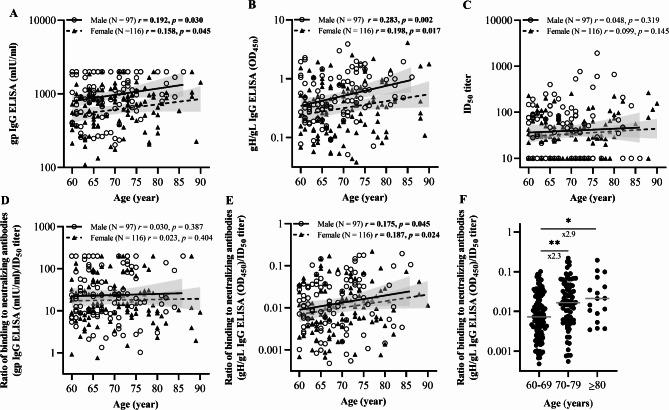
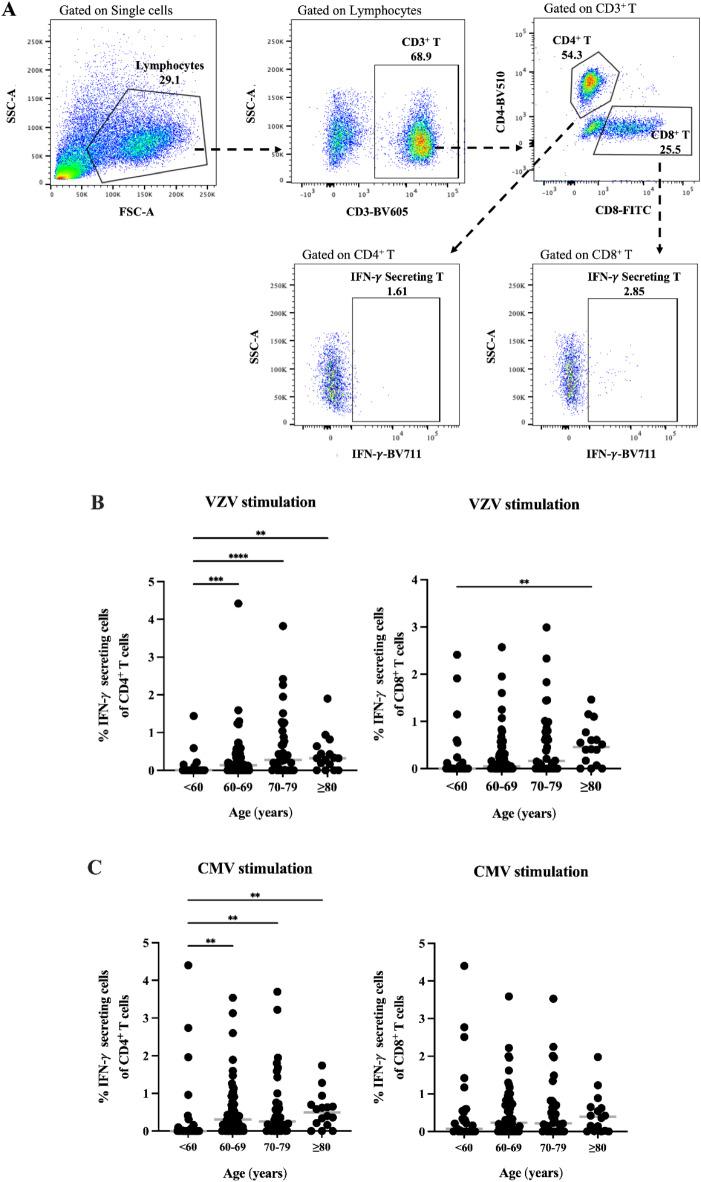
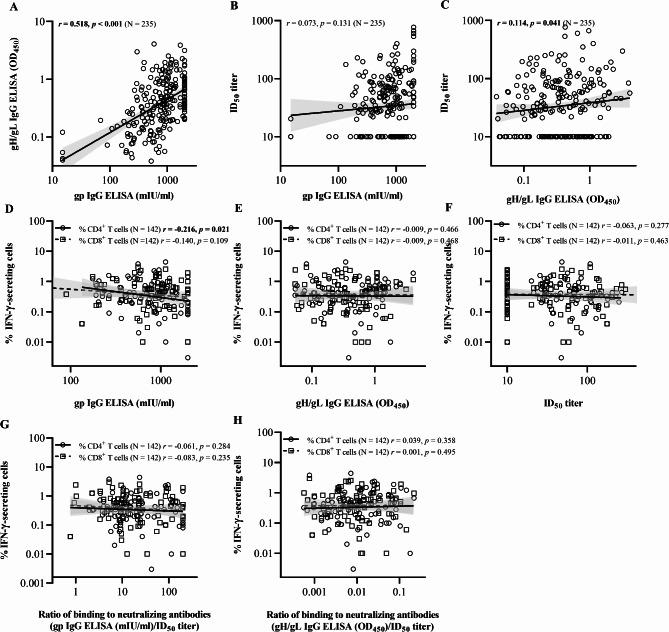
Age-related immune changes increase the risk of herpes zoster (HZ) caused by varicella-zoster virus (VZV) reactivation. Understanding immune responses to VZV is crucial for reducing the burden of HZ in aging populations. Due to the limited availability of data regarding the VZV immune profiles of elderly individuals, particularly in developing countries, more comprehensive immunological investigations are warranted. A total of 213 participants aged ≥ 60 years were included in this study. VZV-neutralizing antibodies (NAb) and glycoprotein-binding antibodies (BAb) were quantified. Furthermore, VZV-specific T cell subsets and their functionality were evaluated using flow cytometry. Elderly individuals demonstrated a high VZV seropositivity rate of 98.6%, exceeding that of the younger adults. Interestingly, VZV-BAb increased, whereas the proportion of NAb decreased with age, with a significantly lower proportion in the elderly aged ≥ 70 years. The elderly showed decreased naïve T cells and accumulated VZV-specific aged T cells; central memory and effector memory CD4 and CD8 T cells, and terminal effector memory CD8 T cells; with elevated expression of senescence and exhaustion markers, indicating functional impairment. Nonetheless, VZV-specific functional T cells; percentages of VZV-specific interferon-γ-secreting CD4 and CD8 T cells; were not diminished. These findings provide insights into aging VZV immune profiles, which will facilitate the development of age-specific HZ vaccination policies.
与年龄相关的免疫变化会增加由水痘-带状疱疹病毒(VZV)再激活引起的带状疱疹(HZ)风险。了解对VZV的免疫反应对于减轻老年人群中HZ的负担至关重要。由于关于老年个体VZV免疫谱的数据有限,特别是在发展中国家,因此有必要进行更全面的免疫学研究。本研究共纳入了213名年龄≥60岁的参与者。对VZV中和抗体(NAb)和糖蛋白结合抗体(BAb)进行了定量分析。此外,使用流式细胞术评估了VZV特异性T细胞亚群及其功能。老年个体的VZV血清阳性率高达98.6%,超过了年轻人。有趣的是,VZV-BAb随年龄增加而升高,而NAb的比例则随年龄下降,在≥70岁的老年人中比例显著降低。老年人的初始T细胞减少,VZV特异性衰老T细胞积累;中央记忆和效应记忆CD4和CD8 T细胞,以及终末效应记忆CD8 T细胞;衰老和耗竭标志物的表达升高,表明功能受损。尽管如此,VZV特异性功能性T细胞;VZV特异性分泌干扰素-γ的CD4和CD8 T细胞的百分比;并未减少。这些发现为衰老的VZV免疫谱提供了见解,这将有助于制定针对特定年龄的HZ疫苗接种政策。


 Zotero 插件