
绘制免疫治疗潜力:空间转录组学在揭示头颈部鳞状细胞癌肿瘤免疫微环境中的应用
Mapping immunotherapy potential: spatial transcriptomics in the unraveling of tumor-immune microenvironments in head and neck squamous cell carcinoma.
作者信息
Choi Seo-Won, Kim Jeong Heon, Hong Jisu, Kwon Minsu
机构信息
Department of Otolaryngology-Head and Neck Surgery, Asan Medical Center, University of Ulsan College of Medicine, Seoul, Republic of Korea.
出版信息
Front Immunol. 2025 Apr 8;16:1568590. doi: 10.3389/fimmu.2025.1568590. eCollection 2025.
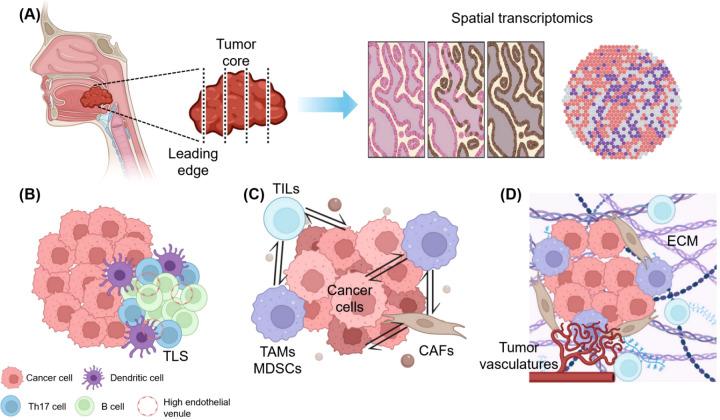
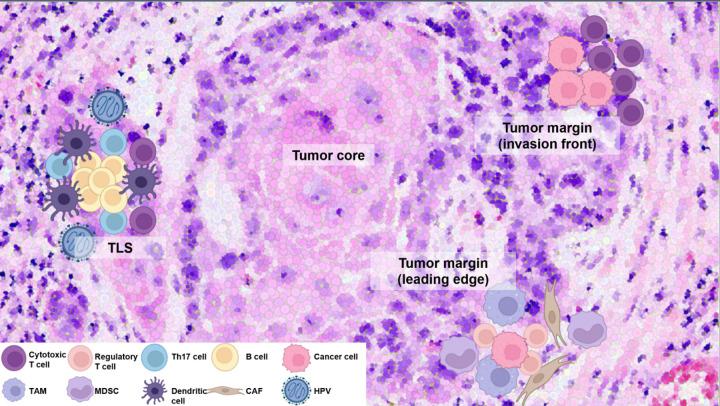
Head and neck squamous cell carcinoma (HNSCC) often exhibits poor response rates to immune checkpoint inhibitor (ICI) therapies, largely owing to the intricate composition and spatial organization of immune cells within the tumor-immune microenvironment (TIME). The diversity of immune cell populations, their spatial relationships, and dynamic interactions significantly influence the immunosuppressive nature of the TIME, thereby limiting the efficacy of immunotherapy. To address these challenges and enhance the therapeutic potential of ICIs in HNSCC, a comprehensive analysis of the TIME is essential. Spatial transcriptomics (ST), a cutting-edge technology, enables high-resolution mapping of gene expression within the spatial context of the tumor, providing critical insights into the functional roles and interactions of immune cells in the TIME. This review highlights the importance of ST in uncovering the complexities of the TIME in HNSCC and proposes strategies for leveraging these insights to develop more effective immunotherapeutic approaches. By integrating spatial and molecular information, this review aims to pave the way for personalized and precision-based treatments in HNSCC, ultimately improving patient outcomes.
头颈部鳞状细胞癌(HNSCC)对免疫检查点抑制剂(ICI)疗法的反应率往往较低,这在很大程度上归因于肿瘤免疫微环境(TIME)中免疫细胞复杂的组成和空间组织。免疫细胞群体的多样性、它们的空间关系以及动态相互作用显著影响了TIME的免疫抑制特性,从而限制了免疫治疗的效果。为应对这些挑战并增强ICI在HNSCC中的治疗潜力,对TIME进行全面分析至关重要。空间转录组学(ST)作为一项前沿技术,能够在肿瘤的空间背景下对基因表达进行高分辨率定位,为深入了解TIME中免疫细胞的功能作用和相互作用提供关键见解。本综述强调了ST在揭示HNSCC中TIME复杂性方面的重要性,并提出了利用这些见解开发更有效免疫治疗方法的策略。通过整合空间和分子信息,本综述旨在为HNSCC的个性化和精准治疗铺平道路,最终改善患者预后。
 Zotero 插件